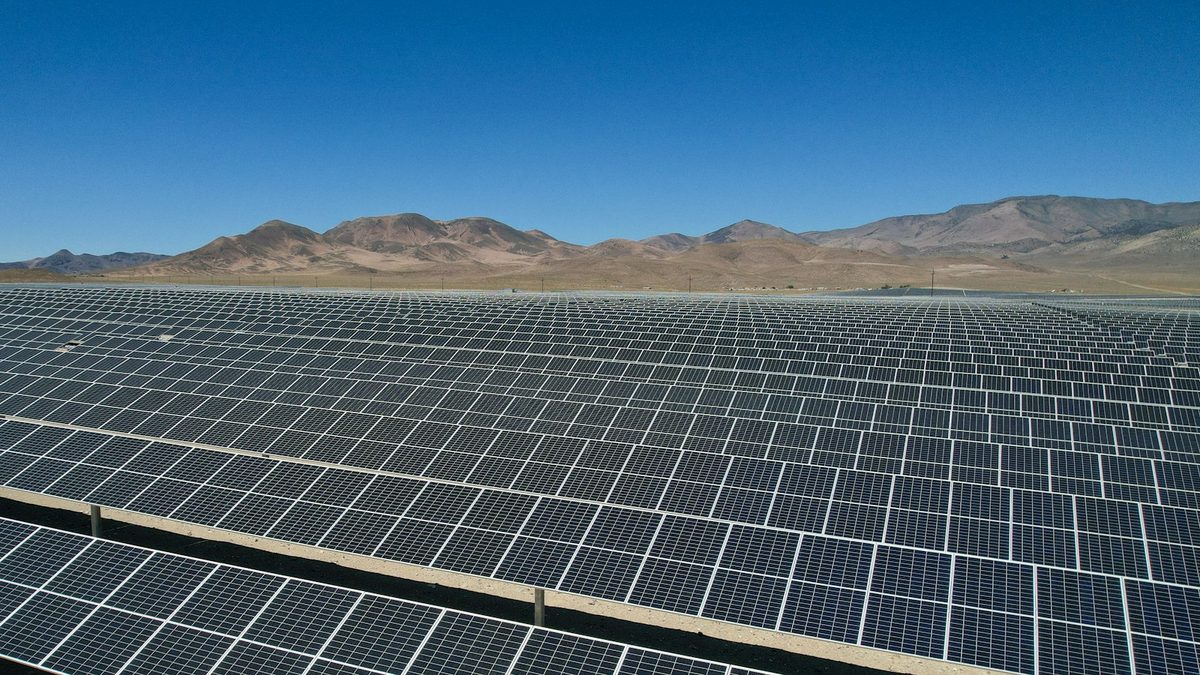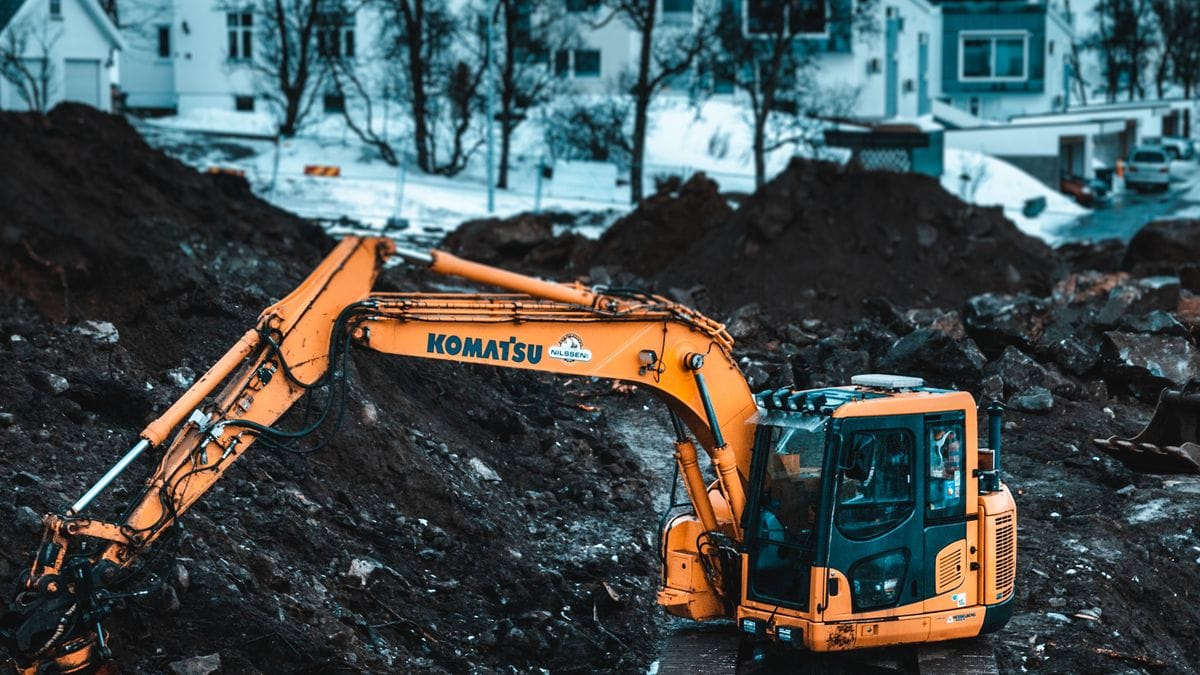
Xpanner launched the X1 Piling R6 on 26 October, a pile-driving system for utility-scale solar and battery energy storage sites that the company says runs a full cycle — travel to the pile, align, hammer, hold plumb — from a single button press, with one operator supervising from a remote controller. The release went out over GlobeNewswire with a dual dateline from Santa Fe Springs, California and Seoul, and is readable via the Manila Times’ syndication of it.
We covered Xpanner in June, when it raised $18 million and sold automation like a software subscription — a retrofit kit bolted to machines contractors already owned, with capabilities licensed task by task. The X1 is the same commercial logic applied to a different unit of sale, and the change is worth stating precisely, because it is easy to miss in the launch coverage.
The subscription now includes the machine
Per the release, the X1 pairs Xpanner’s automation stack with the Everstar R6 crawler base machine, and a single agreement covers the machine, the X1 automation kit, Xpanner Connect and Xpanner On-Site Support. The company delivers the service directly — demo and site validation through training, operation and maintenance — and Solar Power World reports that during site validation Xpanner reviews each customer’s pile schedule to confirm reveal heights and embedment.
That is a different proposition from a kit on a contractor’s own carrier. It takes the hardest part of the retrofit model — whether the automation behaves on a machine the vendor did not specify, maintained by a crew the vendor does not train — off the customer’s side of the line. Reading it as a deliberate narrowing of the retrofit thesis is analysis, not something the company has said; the release does not characterise it as a change in model at all, and Xpanner’s own site still describes the X1 automation kit as “a retrofit kit powered by Xpanner’s machine control and Physical AI, built for fast deployment and task specific automation.”
The specifications, all from the release and the trade reports of it: a 97 kW (130 hp) engine; a high-frequency hydraulic hammer rated up to 1,260 joules (929 ft-lb) across three energy settings; piles up to 7.0 metres (23 feet) driven to a maximum depth of 4.8 metres (15.7 feet); a guide rail that shifts 300 mm fore and aft and 500 mm side to side; an upper body that rotates 180 degrees, so the hammer can reach targets without tramming the machine; and an operating weight of 14,330 lb. Positioning uses dual-antenna GNSS with RTK correction, which the company says delivers centimetre-level accuracy. pv magazine USA reports the unit can drive piles flush to grade without adapters, and that down-the-hole drilling, auger drilling and ground screwing are listed as optional mast configurations. The release frames screw driving, pre-drilling, DTH and auger drilling as potential future capabilities rather than shipping ones.
The 45%, and what it is measured against
Xpanner says the X1 delivers a 45% faster cycle time than the previous generation, with the automation stack carried over from its PD10 platform. pv magazine USA notes the figure is attributed to the company, names no baseline machine, and is not set against an independent measurement. That is the honest state of the claim, and it is the normal state of claims in this category — the same was true of the productivity figures in Gritt’s $26 million round and of most of what Planted said when it raised $31.8 million for a solar construction fleet.
The deployment numbers need the same care, and they attach to the predecessor rather than to the new machine. Xpanner says its automation has been deployed on more than 67 US jobsites with more than 10 of the country’s top EPCs, and that it is behind more than 15 GW of US solar projects. pv magazine is explicit that the 67-jobsite figure refers to the earlier PD10 platform, which the X1 builds on. The release names no customers and no EPCs, though the wider record does: our June piece named Mortenson, Black & Veatch and QCells among the early customers for the retrofit kit. Xpanner’s own site lists solar farm and civil projects in Arizona, Texas, Colorado, Missouri and Australia without quantities, and says the company was named a BuiltWorlds Global Robotics Top 50 company for four consecutive years, 2023 to 2026.
The data is the part that compounds
The specification that will matter longest is not in the hammer. As the X1 works, it records each pile’s position, depth and plumb and posts it to a live project map in Xpanner Connect, the web-based dashboard bundled into the subscription.
Pile installation is one of the few construction activities where the as-built record is both unambiguous and commercially decisive. Tracker rows are unforgiving about reveal height; a pile out of plumb or short on embedment becomes a torque-tube alignment problem weeks later, when the crew that drove it has moved two sites along. Today that record is a surveyor’s spot check and a foreman’s memory. A machine that produces a per-pile record as a by-product of driving the pile turns QA from an inspection activity into a reporting one.
It also, over enough sites, produces the asset that makes the autonomy better: thousands of logged cycles against known soil conditions, reveal heights and refusals. That loop is what separates a machine-control product from a physical-AI one, on the reading this newsroom has applied to the category — and it is the same bet, in a far more repetitive task, that Bedrock made at a $4.1 billion valuation two days ago on earthmoving. Whether Xpanner is using the data that way is not something the release says, and we have not established it.
Why solar, again
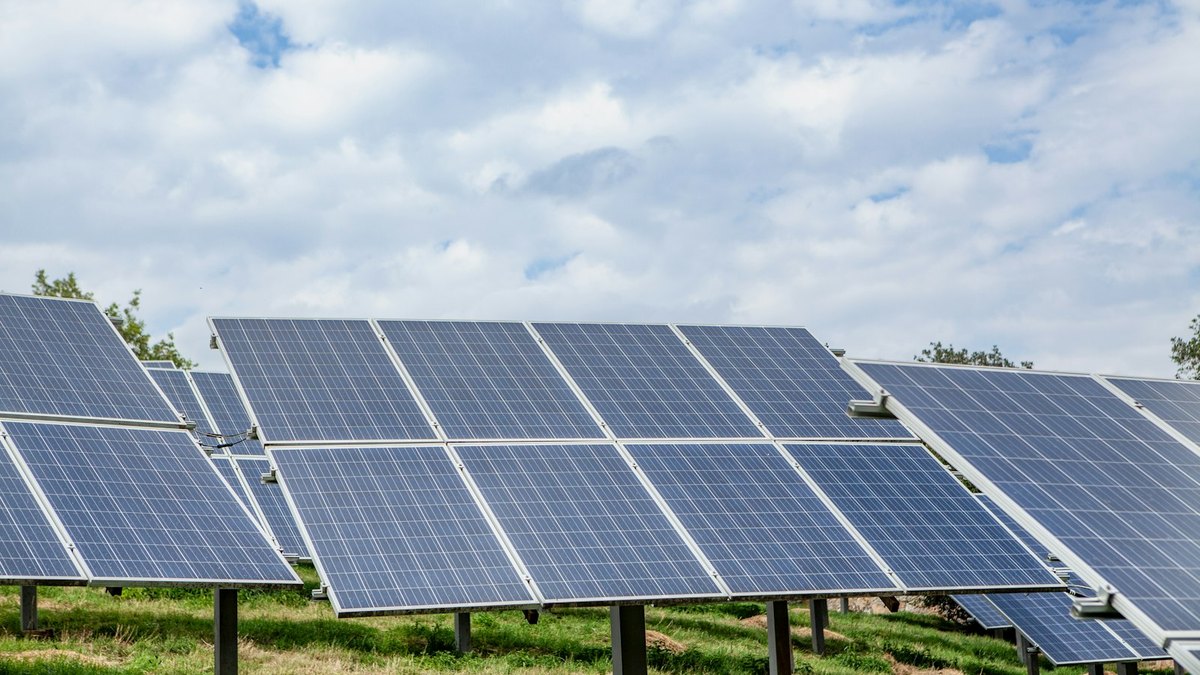
Utility-scale solar has taken up construction robotics faster than most of the sectors this newsroom covers, for a reason we have given before and which holds here: it is the closest thing outdoor construction has to a factory floor. The same pile, the same torque, the same motion repeated across a site, on graded ground, with no interior and no trades stacked above. Australia’s industrial policy backed robot factories over robot pilots on roughly that logic.
Chief executive and co-founder Henri Lee ties the launch to crew availability and to demand: “X1 lets one operator drive every pile plumb with a single touch,” he says, and “solar and BESS builders are racing to bring new power online for the grid and for AI data centers.” The second half of that sentence is the commercial engine under most of the solar automation announcements we have covered in the past six months, and it is also where the labour argument gets its force: Lee’s framing is that builders cannot find enough skilled crews to keep up with that demand.
One operator instead of a two-person crew is the release’s own framing of the labour change. It is a specific, checkable claim about how the machine is meant to be run, and it is the number a contractor will test first.
What to watch
A named EPC on the X1 Piling R6 specifically, rather than on the retrofit kit or the PD10 lineage that precede it. An independent cycle-time measurement, since the 45% currently rests on the company’s own comparison. And what the subscription actually costs — neither the release nor the trade coverage we have read gives a price, which for an offer that now bundles a crawler carrier is the single most consequential missing number.