Xpanner has raised $18 million in a Series B bridge round, and the most interesting number in the announcement is not the size of the raise. It is the revenue line: $3 million in 2023, $7 million in 2024, $21 million in 2025 — and a $1 million operating profit on $8 million of revenue in the first quarter of 2026. In a corner of the market where most companies are still burning capital to prove a robot can do a job at all, Xpanner is quietly billing for it.
The round, reported by Crunchbase News, was led by Korea Investment Partners with KB Investment Co., bringing total funding to $38 million since the company was founded in 2020. The “bridge” label and the modest size relative to the headline robotics rounds of 2026 are easy to read as a step down. They are better read as a company that does not need to raise much because it is close to funding itself.
Automation as a Service
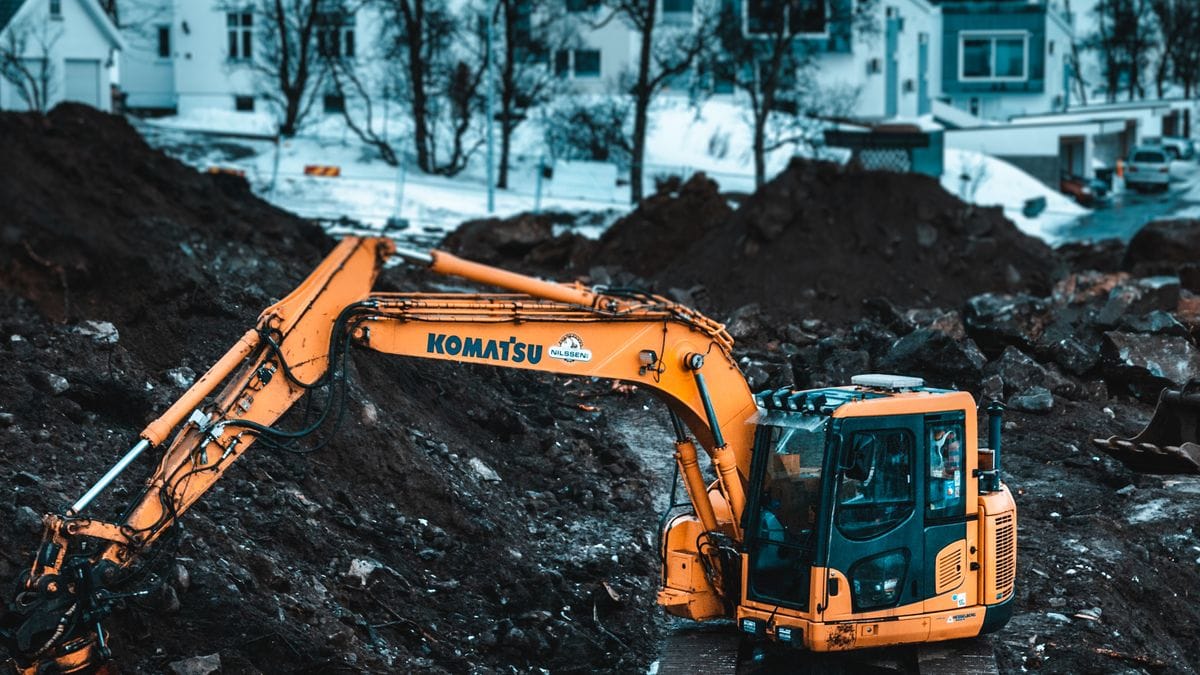
Xpanner’s wedge is a deliberate refusal to sell hardware. Rather than building a new autonomous machine and asking a contractor to buy it, the company retrofits the excavators, loaders and dozers a contractor already owns with a kit of sensors, compute and software — and then sells autonomy by the task on a subscription.
The pitch the founders use is that a machine becomes “like a smartphone gaining new capabilities through app updates.” A contractor licenses piling today, adds material handling next quarter, turns on trenching or grading when a job calls for it. The hardware stays put; the capabilities arrive as software. Once a kit is installed, the marginal cost of selling another automation license is close to zero — which is exactly why the company is posting 80%-plus gross margins, a figure that looks more like enterprise software than heavy equipment.
That model solves the single hardest problem in construction robotics: getting the machine onto the site in the first place. A contractor weighing a six- or seven-figure purchase of a purpose-built autonomous excavator has to bet a capital budget on an unproven category. A contractor subscribing to a task license on a machine they already trust is making a far smaller, far more reversible decision. Xpanner has lowered the activation energy, and the revenue curve suggests the market noticed.
A Team That Knows the Iron
The founders are not roboticists who discovered construction. They are equipment people who added autonomy. Chief executive Henri Lee spent two decades in executive roles at Bobcat and Hyundai Infracore. CTO David Shin led robotics at Volvo Construction Equipment for twenty years. CFO and CSO Ryan Park spent more than a decade in heavy equipment at Bobcat before eight years in venture capital.
That pedigree matters in a market where credibility is won on the iron, not in the demo. Selling a retrofit kit means convincing a contractor to let an outside system take control of a machine they depend on for daily revenue. The people doing the convincing came from the companies that built those machines. The early customer list reflects it: Mortenson, Black & Veatch and QCells are not experimental adopters — they are large, sophisticated builders with real schedules to protect.
Pointed at the Build-Out That Pays
Xpanner’s growth markets are the same ones pulling in capital across the sector: battery energy storage systems, solar farms, and AI data-center construction. These are the verticals where the work is repetitive, the footprints are enormous, the schedules are brutal, and the skilled-labour shortage bites hardest — the conditions under which task-specific automation pays for itself fastest.
It is the same gravitational pull visible in August Robotics’ $30 million Series B for autonomous drilling aimed squarely at data centers, and in Bedrock Robotics’ $270 million raise to retrofit autonomy onto earthmoving fleets. Xpanner sits between them: it shares Bedrock’s retrofit-not-replace philosophy, but wraps it in a subscription model rather than a sale, and chases the structured, repeatable site work of energy and data-center projects rather than the messy outdoor frontier of general earthmoving.
Why the Profit Line Matters
The defining feature of the 2026 physical-AI boom is that money has rushed in faster than proof. Global venture funding for physical AI has reportedly blown past $37 billion this year, shattering prior records, and much of it is chasing companies whose deployments are still pilots. Against that backdrop, a startup that reached monthly break-even in 2025 and is targeting full-year profitability in 2026 is an outlier — and a useful reality check on what a durable construction-automation business actually looks like.
It is worth being clear-eyed about the limits. A “Series B bridge” can signal a company extending its runway between priced rounds rather than raising from a position of pure strength, and $21 million of revenue, while real, is still small against the ambitions of the category. The automation-as-a-service model also concentrates risk in installation and support: every retrofit kit is a physical integration that has to work reliably on a machine Xpanner did not build, in conditions it does not control.
But those are the risks of a company that has chosen to ship rather than to demo. In a field where the standard milestone is “the robot worked on a test site,” Xpanner’s standard milestone is an invoice. That is the rarer achievement, and the $18 million is capital to keep widening the gap between the two.