August Robotics has raised $30 million in a Series B round to scale a fleet of autonomous robots aimed at one of the fastest-growing and most labour-starved corners of construction: the prefabrication and fit-out work behind the global data-center build-out.
The round, announced on May 21, was led by Big Pi Ventures, with participation from Blackbird, Skip Capital, Tanarra, Future Family Office and GS Futures. Founded in 2017 and led by chief executive Alex Wyatt, August Robotics has spent most of its life out of the headlines while companies building self-driving excavators and bricklaying gantries soaked up attention. This raise is the clearest signal yet that the company has found a wedge — and that the wedge is artificial intelligence’s hunger for physical infrastructure.
The Bet on Data Centers
August Robotics’ headline product is a line of autonomous drilling robots developed in partnership with DeWalt, the power-tool brand owned by Stanley Black & Decker. The robots are aimed at large prefabricated construction projects, and the company has been explicit that AI data-center construction is the priority application. The systems are already operational at multiple data-center sites across the United States and Europe.
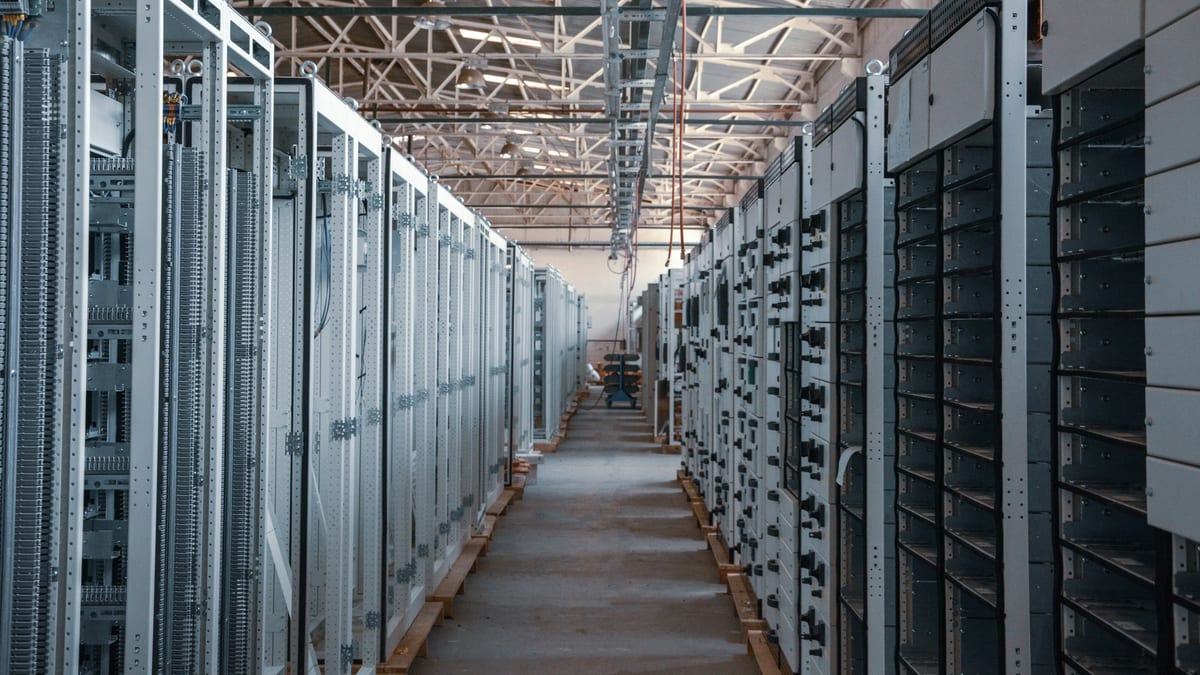
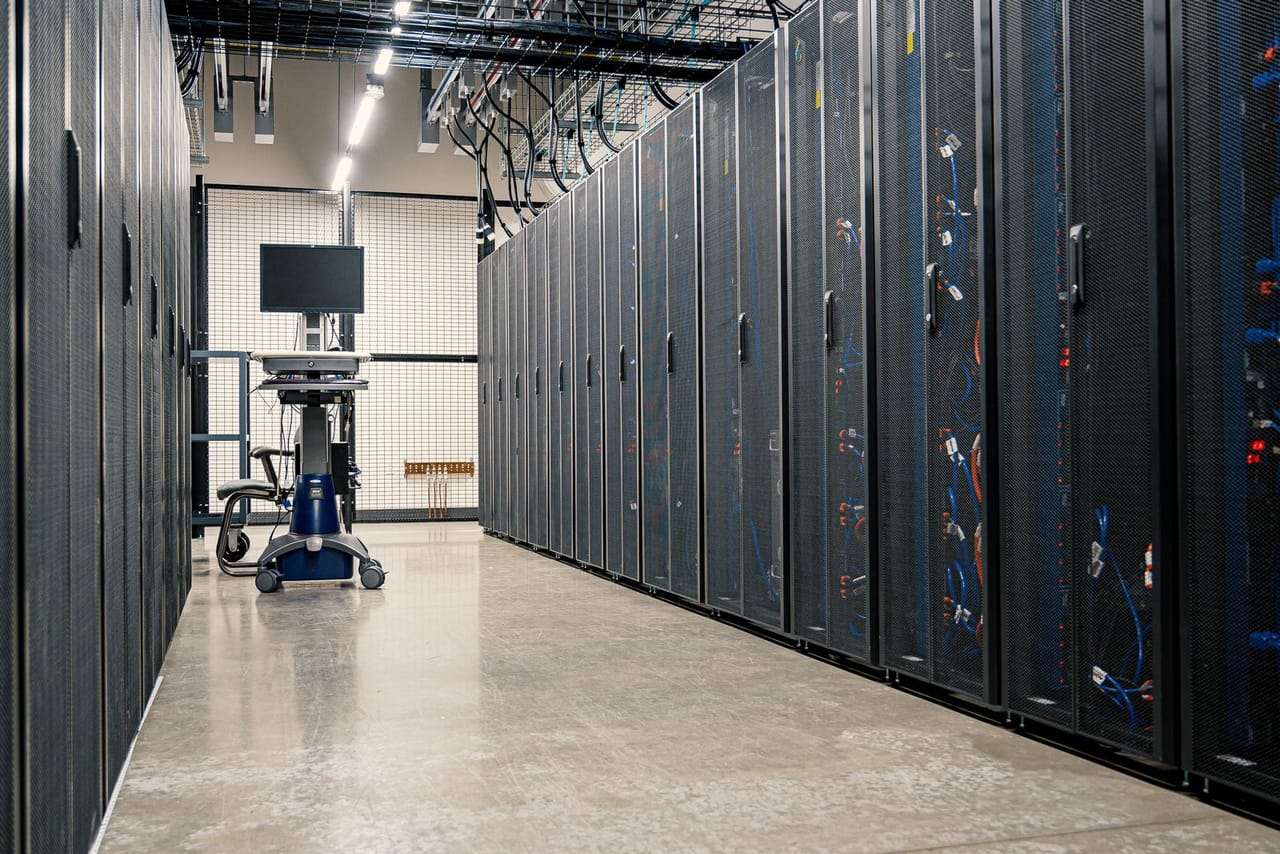
The logic is straightforward once you look at what data-center construction actually involves. A hyperscale facility is, in large part, a vast repetitive grid: thousands of identical anchor points drilled into concrete slabs and structural steel to hang cable trays, busways, containment systems and equipment racks. The work is precise, monotonous, physically punishing, and required at enormous scale on a compressed schedule. It is, in other words, exactly the kind of task that breaks human crews and exactly the kind a robot can do consistently for sixteen hours a day.
“With this Series B funding, we will expand into new markets and geographies, continue scaling our AI and robotics platform, and accelerate development of the next generation of robots that automate dirty, dangerous and dull tasks,” Wyatt said.
That “dirty, dangerous and dull” framing is the standard robotics pitch, but in the data-center context it maps to a genuine economic pressure. The hyperscalers building these facilities — and the contractors racing to deliver them — are not short of capital. They are short of skilled tradespeople willing and able to drill tens of thousands of holes on a deadline that slips by the week.
Why a Drilling Robot, and Not an Excavator
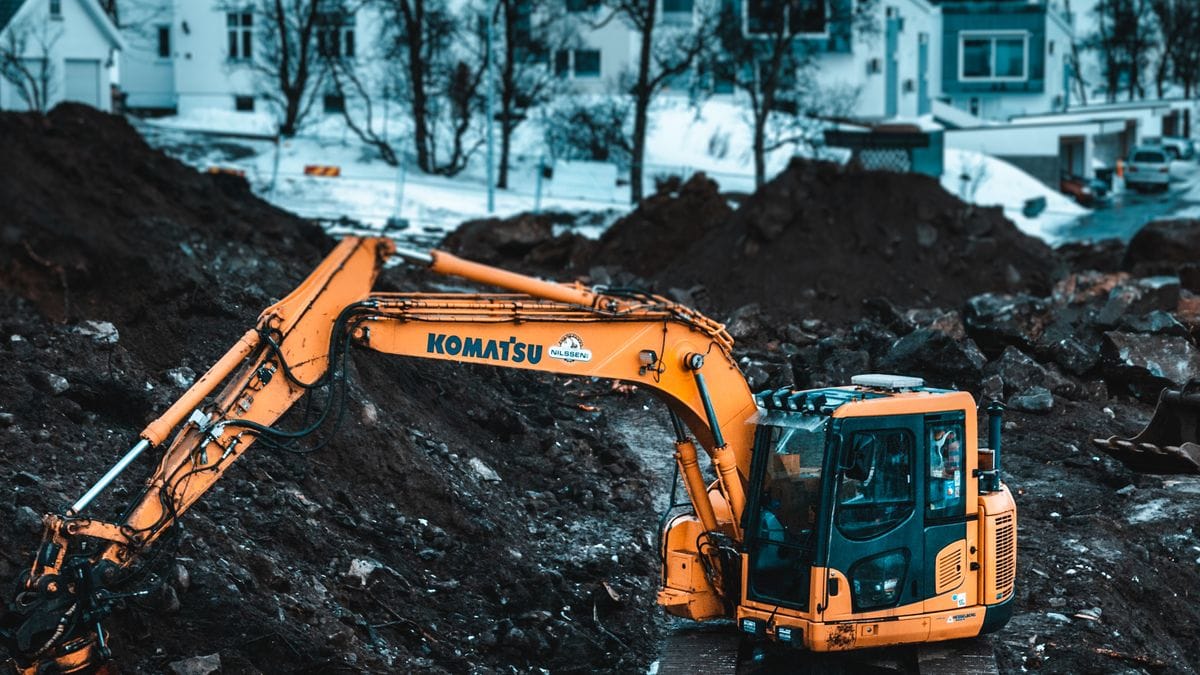
The most interesting thing about August Robotics’ positioning is what it is not trying to do. The marquee names in construction robotics — companies like Bedrock Robotics, which raised $270 million to retrofit autonomy onto excavators and dozers — are attacking earthmoving, the messy, variable, outdoor work of moving dirt. That is a harder autonomy problem: unstructured environments, changing grade, weather, and unpredictable obstacles.
August Robotics has chosen the opposite end of the difficulty spectrum. Indoor prefabrication and fit-out happens in a controlled environment with known geometry. The robot is not improvising across a muddy site; it is executing a precise, pre-planned pattern against a structure whose dimensions are defined in advance. That constraint is a feature. It means the autonomy problem is tractable today, with current sensors and current models, rather than dependent on a future breakthrough.
The trade-off is the size of the prize. Earthmoving autonomy, if it works, addresses a colossal share of total construction labour. A drilling-and-layout robot addresses a narrower slice. But August Robotics appears to have concluded — reasonably — that a narrow task it can automate reliably and ship today beats a broad task it can only demo. The DeWalt partnership reinforces this: rather than reinventing the tool, the company has wrapped autonomy around hardware that contractors already trust.
The Hardware-Plus-Fleet Model
August Robotics describes its offering as more than a single robot. The platform combines the robots themselves with software and fleet-management tools that let multiple machines coordinate — navigating a site, dividing up work, and adjusting to job-site conditions in real time. That fleet layer is where the durable value tends to accumulate in robotics businesses. A single autonomous machine is a tool; a coordinated fleet with a software brain that improves as it logs more sites is a platform.
It also fits the economics of the target market. A hyperscale data center is not one drilling job; it is the same drilling job repeated across an enormous footprint, and increasingly across a portfolio of near-identical facilities built to standardised reference designs. A contractor who can roll a coordinated fleet from one campus to the next, carrying the layout logic with it, compounds the value of every site the system has already seen.
Where the Money Goes
The new capital is earmarked for scaling the robotics platform, expanding AI development, building new products for construction, infrastructure and industrial applications, and standing up new facilities in Europe and Australia. The Australian expansion is notable given the investor syndicate — Blackbird and Skip Capital are among the most prominent names in Australian venture — and suggests the company sees its supervised, indoor-prefabrication model travelling well across the developed markets where data-center construction is concentrated.
Geographic expansion is the right instinct for this kind of business. Because the work is standardised and the environment controlled, a system proven on a data center in Virginia should transfer to one in Dublin or Sydney with far less re-engineering than an outdoor earthmoving robot would require crossing the same borders. The constraint that makes the autonomy tractable also makes the business portable.
The Honest Risk
The risk in August Robotics’ strategy is concentration. By tying its near-term growth so tightly to data-center construction, the company is exposed to the trajectory of a single, famously cyclical category of capital spending. The AI infrastructure boom is real and enormous today, but it is also the kind of build-out that has historically overshot and corrected. A company whose flagship deployments are all data centers is, to some degree, a leveraged bet on that spending continuing.
The hedge is in the language: “construction, infrastructure and industrial applications.” Drilling and fastening at scale is not unique to data centers — it shows up in warehouses, manufacturing plants, transit infrastructure and any large repetitive structure. If August Robotics can prove the model in the demanding, well-funded data-center market and then port it to adjacent prefab-heavy verticals, the concentration risk eases. The Series B is, in effect, the capital to attempt exactly that diversification while the data-center wave is still cresting.
For now, the company has done something most construction-robotics startups still struggle with: it has found paying work for autonomous machines on real, active job sites, in a category where the customer’s pain is acute and the budget is available. In a field crowded with impressive demos, deployed-and-billing is the metric that matters.