Most construction-technology startups win by going narrow: one task, one workflow, one wedge into a fragmented industry. All3 has raised $25 million in seed funding to do the opposite — to build robots, design software and manufacturing all at once, and bind them into a single system for producing buildings.
The round, reported by Robotics & Automation News, was led by RTP Global with significant participation from SuperSeed and additional backing from Begin Capital, s16vc and VNV Global. It is among the largest seed rounds in European construction robotics this year, and the breadth of the ambition is precisely what makes it worth watching — and worth scrutinising.
Three Layers, One System
All3, led by co-founder and chief executive Rodion Shishkov and run out of R&D facilities in London and Belgrade, describes an integrated platform with three parts.
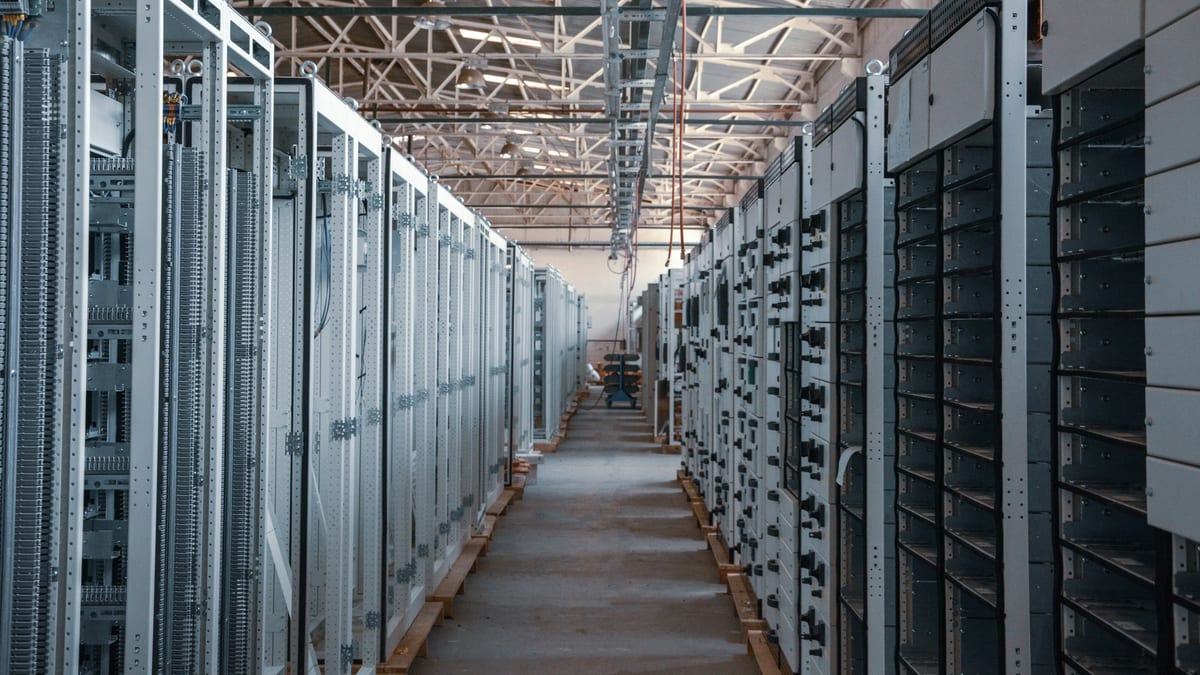
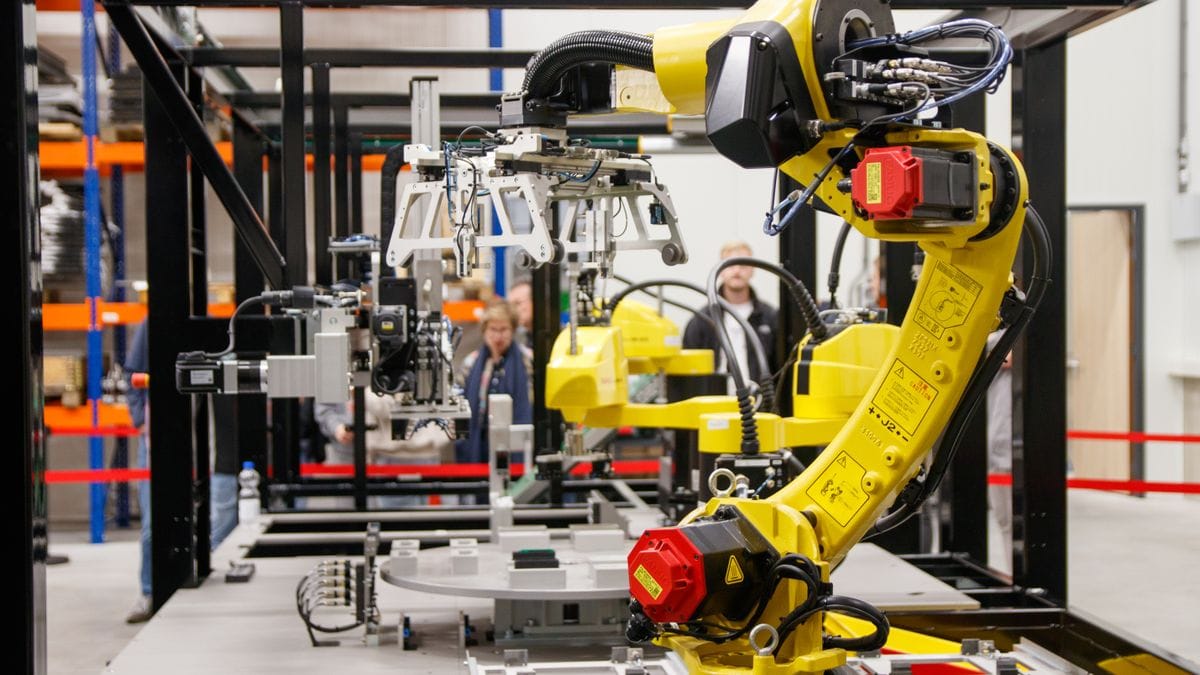
The first is AI design software that lets architects and developers design buildings without the constraints that have always made prefabrication rigid. The second is robotic factories that manufacture custom components from those designs — not a fixed catalogue of standardised panels, but parts shaped to the project. The third is the All3 Mantis, an autonomous legged robot built for on-site assembly of those components in dense, awkward urban sites where traditional modular construction struggles to fit.
The claimed payoff is aggressive: roughly 30% lower cost, timelines cut in half, and 25% less embodied carbon than conventional construction. Those are seed-stage numbers, and they should be read as targets the company is funded to chase rather than results it has banked at scale. But the logic behind them is coherent.
The Problem It’s Actually Attacking
Prefabrication has been construction’s perpetual almost-revolution. Building components in a controlled factory and assembling them on site should be faster, cheaper and cleaner than pouring and framing everything in the open air. In practice, it keeps stalling on the same wall: rigidity. Factory lines are optimised for a fixed set of standardised parts, so anything bespoke — the irregular footprint, the tight urban infill site, the architect who wants a building that does not look like a shipping container — breaks the economics. The flexibility that makes on-site construction so wasteful is also what makes it able to build anything, anywhere.
All3’s thesis is that AI design plus robotic manufacturing dissolves that trade-off. If the design software can generate buildable custom components automatically, and the factory robots can produce them without retooling, then prefab stops being limited to repetitive standardised parts. You get the cost and speed of the factory without surrendering the variety of on-site work. The Mantis robot is the final link — the piece that lets those custom components be assembled in real, constrained urban environments rather than only in greenfield modular settings.
Early Validation, and the Honest Caveat
The reason to take the breadth seriously is that there is traction underneath it. All3 says it has already processed more than 100,000 square metres of residential projects through its software, and has secured a construction pipeline across Germany for 2026 and 2027. That is meaningful for a seed-stage company: software volume and a named near-term pipeline are harder to manufacture than a rendering.
The reason for caution is the same as the reason for interest. Vertically integrated companies that try to own three hard layers at once — design, manufacturing and field robotics — are taking on three execution risks simultaneously, in an industry that has humbled better-capitalised attempts. The most cautionary reference point is Katerra, the SoftBank-backed effort to vertically integrate construction manufacturing that collapsed after burning roughly $2 billion. All3 is building with a fraction of that capital and a robotics-and-AI layer Katerra never had, but the strategic shape — own the whole stack, change the building itself — is unmistakably in the same lineage.
Why Europe, and Why Now
The geography is not incidental. Europe combines acute housing shortages, some of the world’s most aggressive embodied-carbon regulation, and a chronic construction-labour deficit — a policy and demand environment that rewards exactly the cost, speed and carbon gains All3 is promising. The 25%-lower-embodied-carbon claim is a commercial lever as much as an environmental one, in a market where carbon is increasingly priced and regulated rather than merely reported.
It also fits a broader shift in where construction capital is flowing. After years in which the money chased software — document tools, scheduling platforms, estimating engines — 2026 has been the year capital moved toward machines that change the work on the site itself. All3 is the most architecturally ambitious version of that bet: not a robot that helps build the building, but a system that re-engineers how the building comes to exist at all.
For now, the company has the rarest seed-stage asset in hard-tech: a concrete near-term pipeline to build against. The next two years in Germany will tell whether the integrated thesis holds — or whether construction’s oldest lesson, that owning every layer is the fastest way to break, claims another ambitious challenger.