Sensera Systems has closed a $27 million Series B round, and the strategic logic behind it is one of the cleaner stories in construction AI: a company that won the hardware battle is now spending to win the software one.
The round, announced February 26, was led by 10 Atlantic Group with additional investment from Egis Capital Partners — continuing a partnership that dates to 2023 — and MUUS Asset Management. The capital is earmarked for advancing AI-powered features in real-time video analytics, jobsite monitoring and actionable insights.
The Hardware Was the Easy Part
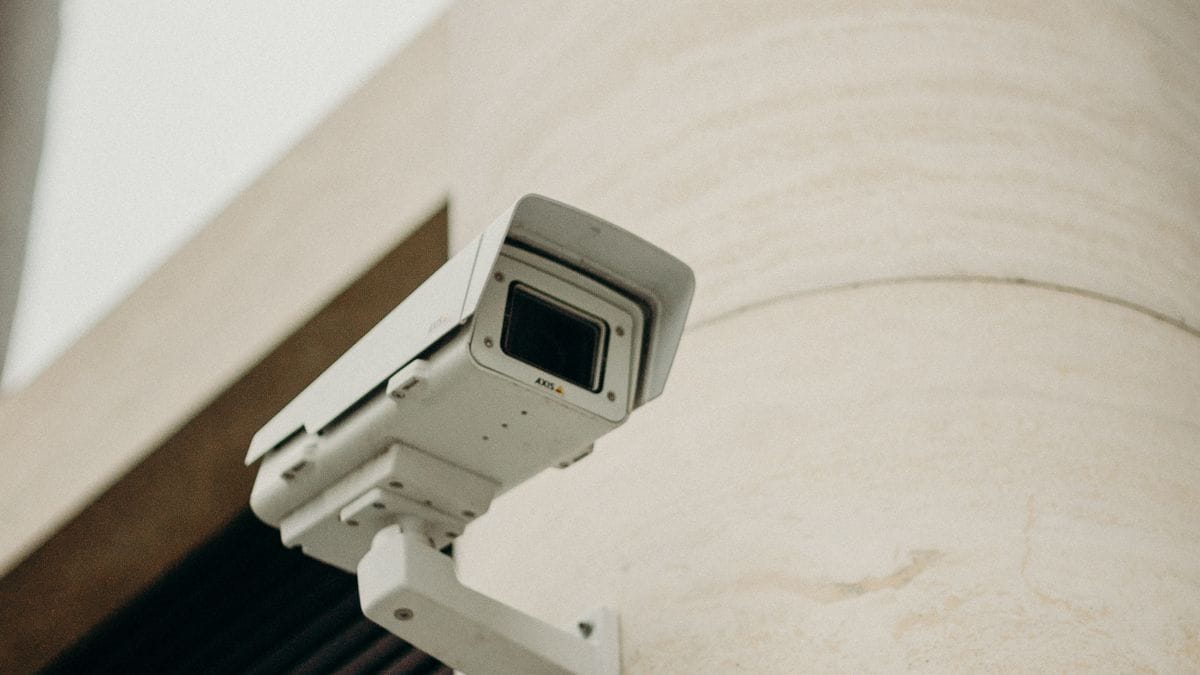
Sensera, based in Golden, Colorado, makes self-contained, solar-powered, wirelessly connected cameras for construction sites. The hardware design solves the unglamorous problems that have killed plenty of job-site monitoring efforts: no power runs to trench, no network cable to pull, no IT department to involve. A unit goes up on a pole, runs on the sun, and streams over cellular. That self-sufficiency is why Sensera’s cameras have ended up watching a large number of active sites — the company has spent years getting the eyes installed.
But cameras are increasingly a commodity. The defensible value is not the photons hitting the sensor; it is what the software does with them. This is the move the Series B is funding: Sensera’s SiteCloud platform uses AI to turn the captured video into insight delivered to field teams’ phones in real time, so a crew can act on what the camera sees rather than scrubbing through footage after the fact. The company is, in effect, trying to climb from being a hardware vendor to being an intelligence platform that happens to own its own sensors.
Why Owning the Camera Matters
That ownership is a real advantage, and it is worth being precise about why. Many construction computer-vision companies are software-only: they ingest video from whatever cameras a contractor already has, which means inconsistent angles, resolutions, uptime and coverage. Sensera controls the entire pipeline — the placement, the hardware, the connectivity and the model. A vertically integrated stack like that can guarantee the data quality its AI depends on, rather than hoping the customer’s existing cameras are good enough.
It is the same structural edge that OpenSpace has pressed by standardising 360-degree capture across a thousand data-center projects, and that companies like Buildots have built around helmet-mounted cameras: own the capture layer, and the data that trains and feeds your models stops being a liability you inherit from the customer and becomes an asset you control.
The Crowded Lens
Sensera is raising into one of the most contested categories in the sector. AI-powered visual monitoring of job sites has drawn a wave of capital, because the pitch — turn every camera into an always-on inspector for safety, progress and security — is intuitive and the underlying pain is real. The same week’s funding flows include companies attacking adjacent slices of it, and the broader category sits alongside the computer-vision safety monitoring tools and the field-AI assistants like FYLD, which has cut serious worksite injuries by replacing static safety forms with analysed video.
That crowding is the central risk. When a category is obvious, differentiation gets hard, and “AI insights from job-site video” describes a dozen companies. Sensera’s answer is the integrated hardware-plus-software stack and an installed base it has spent years building — switching costs that a pure-software competitor cannot easily replicate. The continued backing from Egis, an investor since 2023, reads as conviction that the installed base is a moat rather than a commodity.
The Real Test
The honest question for Sensera is whether the AI layer is genuinely differentiated or merely table stakes bolted onto a hardware business. Real-time video analytics is a phrase every competitor in the space uses; the proof is in whether SiteCloud surfaces insights specific and reliable enough that a superintendent changes a decision because of them — not just a dashboard of clips, but a flag that catches the safety violation, the schedule slip or the security breach in time to matter.
What is not in question is the wisdom of the strategic direction. A company that has already solved the hard, physical problem of getting reliable, self-powered eyes onto thousands of sites is in an enviable position to layer intelligence on top. The $27 million is the capital to make that climb — from the company that owns the cameras to the company that owns what the cameras understand.