Construction is the most dangerous industry in America. In 2024, the sector accounted for roughly one in five worker fatalities — more than any other industry, despite representing less than 5% of the total workforce. The four leading causes — falls, being struck by objects, electrocution, caught-in or caught-between hazards — have been the same for decades. OSHA calls them the “Fatal Four.” The industry has known about them for as long as OSHA has tracked them.
The problem has never been knowledge. It has been detection. A safety manager cannot be everywhere at once. Weekly safety audits catch what was wrong last Tuesday. Morning toolbox talks address hazards that someone thought to mention. Neither is a substitute for knowing, in real time, that a worker on the fourth floor is not wearing a harness.
That gap is where AI-powered safety monitoring has found its market. Over the past three years, a set of companies has built systems that convert fixed cameras, drone footage, and field worker video into continuous, automated safety alerts. The technology works. The adoption picture is complicated.
How the Systems Work
The core capability is computer vision: AI models trained to recognise specific safety conditions from camera imagery in real time. The leading platforms — Sensera Systems, DroneDeploy, and FYLD among them — have developed AI that can reliably detect:
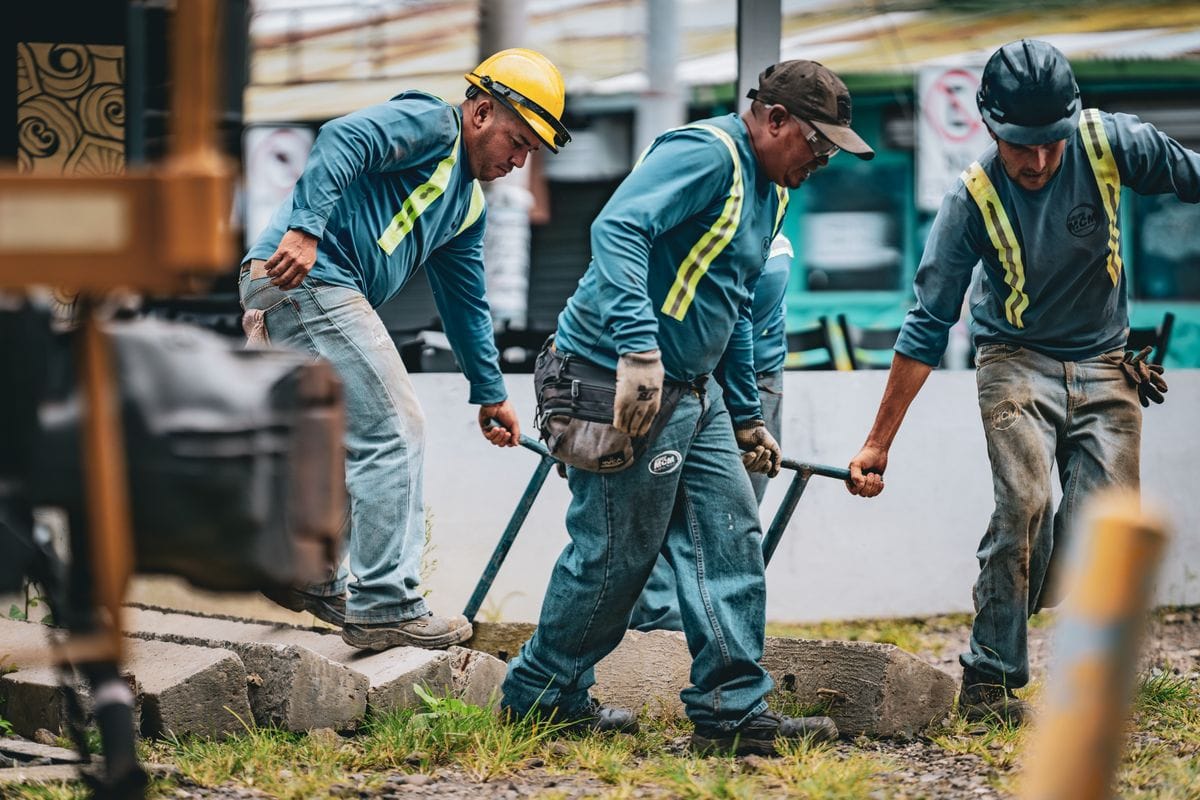
- PPE compliance: whether workers are wearing hard hats, high-visibility vests, and safety glasses in zones where they are required
- Fall exposure: unguarded edges, missing guardrails, workers near leading edges without fall protection
- Exclusion zone violations: workers entering areas immediately adjacent to active crane picks, excavations, or heavy equipment movements
- Ladder and scaffold risks: improper ladder angles, unsecured scaffold platforms, workers carrying loads while climbing
Each of these is a hazard that a human safety manager could catch — if they were standing in the right place at the right moment. The AI systems run continuously across every camera feed, every minute of the work day, without fatigue.
Sensera Systems, which raised a $27 million Series B in February 2026 led by 10 Atlantic Group, runs its SiteCloud platform on fixed cameras deployed across the job site perimeter and key interior locations. The system analyses the imagery against a library of OSHA-referenced hazard categories and generates alerts that go to the safety manager’s phone or dashboard within seconds of detection.
DroneDeploy’s Safety AI module adds a dimension Sensera does not cover: analysis of 360-degree site imagery captured by drones or cameras mounted on hard hats, cross-referenced against the site’s safety plan to flag deviations from safe work method statements. The combination of fixed camera surveillance and periodic captured-imagery analysis gives safety teams a more complete picture than either approach alone.
FYLD, which recently closed its $41 million Series B, takes a different approach to the same problem: rather than relying on fixed cameras watching workers, it asks workers to capture short videos of their work conditions, then analyses those videos for hazards the workers themselves may not have identified. The distinction matters for distributed infrastructure projects — pipelines, road works, energy networks — where fixed camera coverage is impractical across miles of linear construction.
The Numbers That Make the Case
The headline outcome figure that safety AI companies cite is incident reduction, and the numbers being reported are significant enough to warrant scrutiny.
FYLD reports reductions in serious worksite injuries and incidents of up to 48% across its customer base, which includes Kiewit Corporation, Quanta Services, and Ferrovial. Those customers represent some of the most safety-conscious and heavily scrutinised infrastructure contractors in the world — they do not deploy safety technology based on vendor claims; they measure outcomes.
Major contractors deploying computer vision safety tools have reported double-digit reductions in safety incidents since 2024. The mechanism is well-understood: early detection of precursor conditions reduces the probability of an incident, and real-time alerts allow corrective action before exposure becomes injury.
There are more than 60 active patent filings related to construction site safety monitoring using computer vision as of 2026, which reflects both the commercial interest in the space and the significant technical differentiation that remains between platforms.
The Adoption Challenges
The safety improvements are real. The adoption curve is slower than the technology would suggest it should be.
Three obstacles recur in conversations with safety managers and technology directors at large GCs.
Camera infrastructure cost and complexity. Deploying a fixed camera network on a large commercial site is not a trivial undertaking. Cameras need power, network connectivity, and mounting positions that provide useful coverage of high-risk areas. On a site that changes configuration every few weeks as construction progresses, that infrastructure needs to move. The upfront investment and operational burden is meaningful, particularly for smaller contractors.
Alert fatigue. Early deployments of safety AI generated alert volumes that safety managers could not act on effectively. A system that flags 200 events per day on a busy job site quickly becomes background noise. The platforms that have gained traction have invested heavily in reducing false positives and prioritising alerts by severity — the alert that someone is walking too close to an excavation edge needs to reach someone faster than the alert that a visitor briefly removed their hard hat in the site office.
Privacy and legal exposure. AI-powered surveillance of workers raises legitimate questions about privacy, data use, and potential liability. In jurisdictions with strong worker data protections — the UK, Germany, and increasingly US states with privacy legislation — deploying continuous AI monitoring requires careful legal review, worker notification, and data governance frameworks that many construction firms are not yet equipped to manage. The legal and regulatory landscape around AI safety monitoring is evolving rapidly, and firms deploying these tools without legal guidance are taking on risk they may not have fully evaluated.
What Good Adoption Looks Like
The contractors getting the most out of AI safety monitoring share several characteristics. They started with a specific, high-risk workflow — crane picks, excavation work, work-at-height — rather than attempting to monitor the entire site simultaneously. They treated alert calibration as an ongoing process, adjusting sensitivity and alert routing based on field feedback in the first month of deployment. And they communicated with workers about what the system was and was not doing, which reduced the resistance that surveillance tools reliably generate when deployed without explanation.
The safety AI tools available in 2026 are meaningfully better than the first-generation products that entered the market four years ago. Alert precision has improved. Integration with site management platforms — connecting a safety flag in the AI system to an open issue in Procore or Autodesk Forma — has become standard. The case for deploying them on high-risk project types is now well-established.
The Fatal Four are not going away because of technology alone. But for the first time, the technology exists to monitor for their precursors continuously and at scale. What happens next depends less on the tools than on the willingness of the industry to use them.
FYLD’s $41M Series B and Buildots’ $166M in total funding — two companies whose computer vision platforms sit at the centre of this shift — suggest that investors, at least, have made their judgement.