
Why would one of the people who built modern artificial intelligence put money into a construction-technology seed round? That is the question worth sitting with in Primepoint’s $10 million raise. Among the individual backers of the round, the company lists Yann LeCun — described in its announcement as Executive Chairman at AMI Labs and former Chief AI Scientist at Meta, and one of the researchers whose work on deep learning the entire current AI boom rests on, the company announced.
Primepoint, a San Mateo-based startup founded in 2024, is not building another chatbot. It is going after one of the hardest problems in construction software: getting a computer to actually read a set of construction drawings — the linework, the tags, the cross-sheet references — rather than just the words printed on them. The round came in two portions, according to the announcement: an initial $4 million co-led by Penny Jar Capital and NextView Ventures, followed by a $6 million tranche led by Navitas Capital, with GS Futures and Aglaé Ventures participating.
Why drawings are the hard part
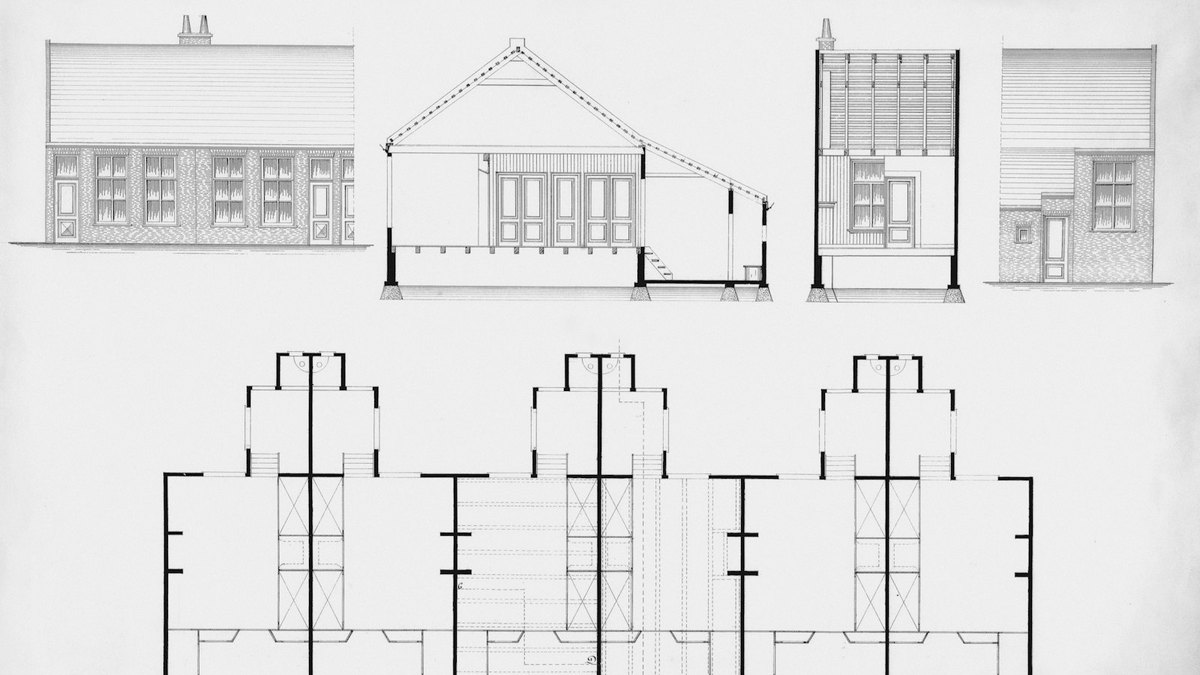
The reason a computer-vision pioneer might care about construction is in the shape of the problem. Most “AI for construction documents” tools are, under the hood, text tools: they do well with specifications, contracts and submittals because those are prose, and large language models are extraordinary at prose. Drawings are not prose. A sheet is a dense visual language of symbols, dimension strings, callouts, hatches and references to other sheets, and the meaning lives in the geometry as much as in the labels. A door tag means nothing without the door schedule it points to; a section marker is only useful if you can follow it to the sheet it references.
That is a computer-vision problem far more than a language problem — the kind of spatial, symbolic pattern recognition that the deep-learning revolution was built to attack. It is also precisely the problem Primepoint says it is built for: a platform that “reads and understands” drawings and automatically connects each element to its corresponding schedule, specification and project document, per the company. Framed that way, LeCun’s presence on the cap table reads less as a celebrity endorsement and more as a domain expert recognizing his own field’s problem wearing a hard hat.
A team built for the vision problem
The founding team is unusually credentialed for exactly this challenge. Co-founder and CEO Lubomir Bourdev is a founding member of Facebook AI Research and, before Primepoint, co-founded the deep-learning video-compression startup WaveOne, according to the announcement. Bourdev’s career has been spent on the visual side of AI — the recognition and representation of images — which is the discipline a drawing-reading product actually depends on. That lineage is the through-line connecting the company to LeCun: this is a computer-vision team going after a computer-vision problem that happens to live in construction.
Co-founder and CPO Hamid Palo brings the product half, having been an early Trello employee before Atlassian and Uber — a background in turning hard technical capability into software people will actually use, which is a different and equally unsolved problem in this market. The company also points to construction-side experience on the team, including a VP of strategy who came up through the contractor Webcor. That mix — vision research, consumer-grade product instincts, and someone who has actually managed drawings on a job site — is the combination most drawing-AI startups are missing at least one leg of.
From reading drawings to doing the work
Reading the drawing is the wedge; the product is what Primepoint layers on top. The platform is pitched at automating the document-heavy workflows that eat a project engineer’s week — constructability review, RFI drafting and submittal analysis — with, in the company’s words, “precise, traceable results grounded in project documents.” Its natural-language interface, branded “Marvin,” lets a user ask a project question in plain English and get an answer traced back to the specific drawing detail or spec reference, according to the company.
The traceability claim is the one that matters most, and it is the right thing to emphasize. Every AI-on-documents pitch in this sector lives or dies on whether the people using it trust the output, and in construction the tolerance for confident-but-wrong answers is close to zero — a hallucinated dimension or a missed cross-reference does not save an engineer time, it adds a layer of double-checking and quietly destroys trust in the tool. “Grounded, with a citation back to the source sheet” is the design pattern the credible players have converged on for exactly this reason.
The company Primepoint is keeping
Primepoint is not attacking an empty field. The same instinct — AI that reasons reliably over project documents, with its work shown — runs through Structured AI’s drawing-QA agents, LightTable’s preconstruction review, and Trunk Tools’ Cortex. It is also the same underlying bet as Neuron Factory’s construction knowledge graph: that AI in construction is only ever as good as its ability to reason over messy, unstructured project data.
Primepoint’s claim to a distinct lane is the depth of the drawing-reading itself — the argument that competitors who start from text will always be reconstructing the geometry secondhand, while a vision-first system reads it directly. Whether that technical edge is real and durable, or a head start that a well-funded text-first competitor closes in a year, is the strategic question the round is really funding.
What to watch
Primepoint says it is targeting large commercial general contractors in the US, and points to early work with the national contractor Sundt Construction on an Arizona project as evidence, according to its announcement. That is one named engagement, not a book of business — the honest way to read it is as an early proof point rather than traction at scale, and the metric that will matter over the next year is how many more Sundt-sized names it can convert into recurring, multi-project use.
The harder question is the one every drawing-reading AI faces: accuracy on real, imperfect, marked-up sheets, not clean demo sets. Construction drawings in the wild are revised, redlined, scanned crooked, and internally contradictory. A tool that reads a pristine set flawlessly and stumbles on an as-issued one has not solved the problem the industry actually has. Primepoint has raised money, a genuinely credentialed vision team, and one of the most recognizable names in AI against that problem. Whether the models hold up on a messy, real-world drawing set is what the next year of customer projects — not the cap table — will actually reveal.