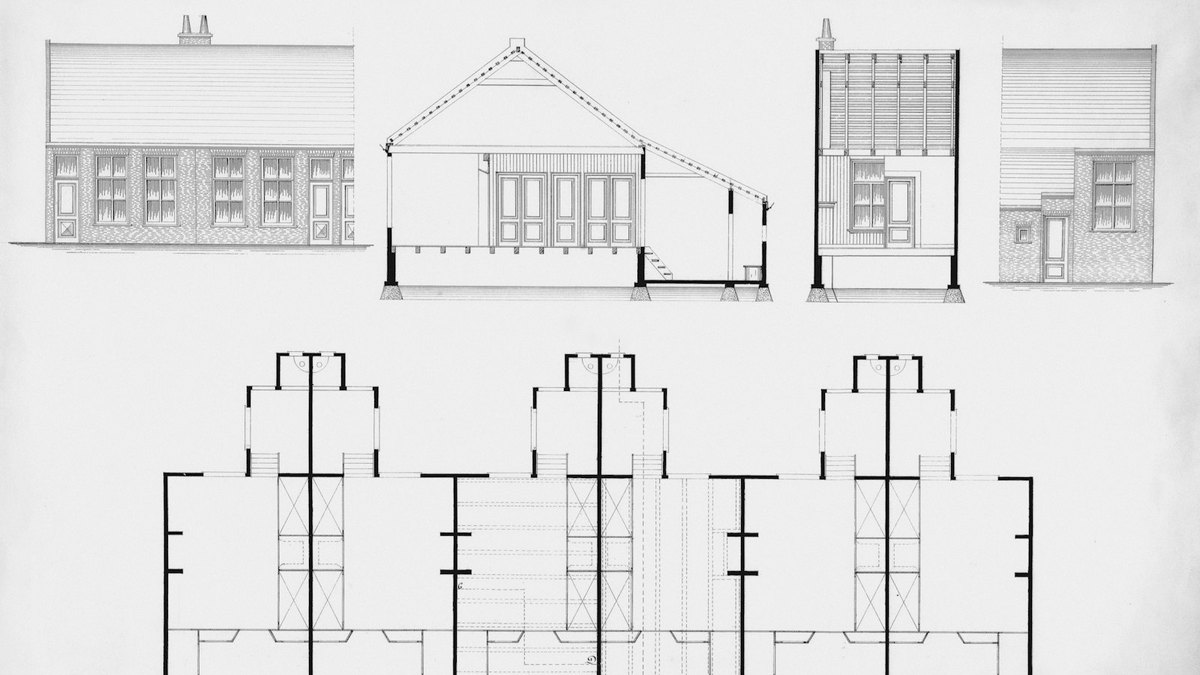
The most expensive mistakes in construction happen before a shovel hits the ground. A structural detail that conflicts with a mechanical specification. A tolerance that works in the drawing but not in the field. A scope gap buried in a package of drawings that nobody reviewed carefully enough because there were two hundred other packages to get through before bid day.
These errors are the subject of LightTable’s bet, and the company announced on May 27, 2026 that it has raised a $22 million Series A led by Innovation Endeavors to press that bet further.
LightTable has built an AI platform that reviews construction drawings — not to manage them, but to read them the way an experienced preconstruction engineer would, and to surface the conflicts, omissions, and constructability problems before they become field problems that cost ten times as much to fix.
The Problem With Drawing Reviews
Every construction project that goes into the ground has been drawn and specified by a design team. Before a general contractor builds from those drawings, someone has to check them. The check is called a constructability review, and its thoroughness varies wildly.
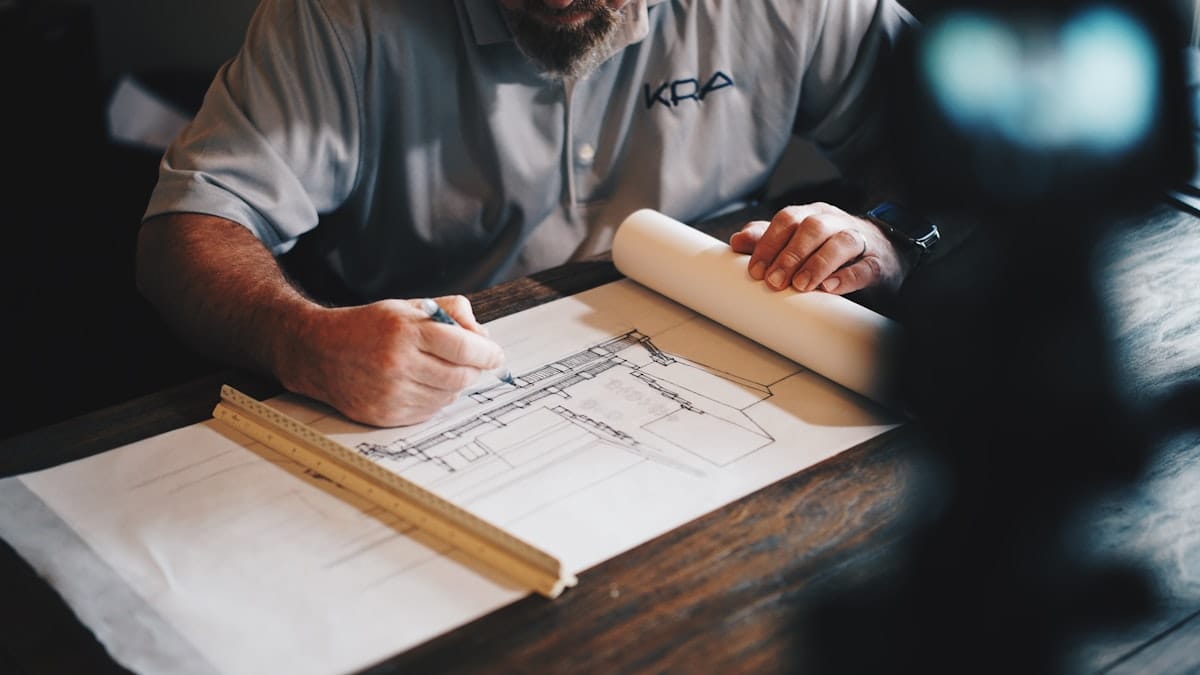
At a large general contractor with a seasoned preconstruction team, a constructability review might involve a senior project manager spending three to six weeks cross-referencing architectural, structural, mechanical, and electrical drawings, looking for conflicts and gaps. At a mid-size contractor under bid deadline pressure, it might be a junior estimator spending two days doing the same.
Either way, it is a manual process performed by humans working at human speed through documents that can run to thousands of pages across dozens of trade packages. The error rate is not zero. A study by the Construction Industry Institute estimated that design errors and omissions account for between 12% and 15% of total project costs on typical commercial projects — a figure that the global construction industry, operating at roughly $11 trillion annually, cannot afford to ignore.
LightTable’s claim is that its AI can review the same drawings faster, with more consistent coverage across trade packages, and surface issues that human reviewers miss — not because the reviewers are incompetent, but because the volume of information is too large for any individual to hold in their head simultaneously.
What LightTable Has Done So Far
CEO Paul Zeckser founded LightTable with a background in construction technology and a thesis about where the most leverage sits in the preconstruction process. The company has been quiet about its early development, but the Series A announcement came with a set of operational data points.
By the time of the raise, LightTable had reviewed over 20 million square feet of construction projects. The platform spans more than 35 construction scopes — meaning it can read and cross-reference drawings across the major trade packages that make up a typical commercial project, rather than being limited to a single discipline.
That breadth matters. The most damaging errors in construction drawings are frequently not within a single trade but between trades: a duct that runs through a structural beam, a pipe chase that conflicts with a column, a fire suppression head that has no coordination with the reflected ceiling plan above it. Catching those issues requires a system that reads the architectural and structural and mechanical drawings simultaneously and understands how they relate to each other.
Innovation Endeavors, the venture fund founded by Eric Schmidt, led the round. The firm has a history of backing companies that apply machine intelligence to industries with high information complexity and high cost of error — a description that fits preconstruction precisely.
The Business Case for Preconstruction AI
The market logic for LightTable is anchored in a simple observation: the cost of finding a problem on a drawing is a fraction of the cost of finding the same problem in the field.
An engineer who identifies a structural-mechanical conflict during drawing review might take two hours to document the issue and route it back to the design team for correction. The same conflict found after the steel is erected requires the contractor to document the problem, file an RFI, wait for the architect and engineer to respond, coordinate a redesign, obtain revised drawings, potentially remove and reinstall work, and absorb a delay that ripples through the schedule. The field version of the same problem might cost fifty to one hundred times more than the review-phase version.
That ratio makes preconstruction review a high-value target for automation. The work is well-defined — compare these drawings, find conflicts, flag them — even if the execution is technically demanding. The output is a list of issues with locations and severity assessments that a human can evaluate and route appropriately. And the consequence of catching the issue is disproportionately large relative to the cost of the review.
LightTable is not the only company working in this space. Incumbent platforms including Autodesk Construction Cloud offer coordination and clash detection tools — particularly for 3D BIM models — but the market LightTable is targeting is largely the 2D drawing review that still defines preconstruction at most contractors who are not working in fully model-based workflows. That is most of the market.
Where the $22 Million Goes
Innovation Endeavors-led rounds at the Series A stage typically fund the transition from early product-market fit to scaled go-to-market — expanding the sales organisation, broadening the platform’s coverage, and building the data infrastructure that makes the AI more accurate as it reviews more projects.
For LightTable, that last point is particularly important. Constructability review is a domain where experience compounds over time. An AI that has reviewed a thousand data center projects has seen configurations and conflict types that a system trained on general commercial buildings has not. As LightTable reviews more projects, its models get better at the specific problems that show up in specific project types — a competitive advantage that becomes more durable the more projects the platform touches.
Zeckser’s pitch is straightforward: the construction industry loses enormous sums to problems that were present in the drawings before any work began and that nobody caught in time. LightTable exists to catch them. With $22 million in new capital behind the effort, the company has the runway to prove that pitch at scale.