Structured AI has raised a $4.2 million seed round to build something the construction industry has spent decades trying to fix with checklists and overtime: a reliable way to catch mistakes in technical drawings before they reach the field. The round brings total funding to about $5 million and was led by FCVC, with Y Combinator, 20VC, Cherry Ventures, Zero Prime Ventures, Transpose Platform and Sequoia Scout all participating, according to Engineering News-Record.
It is a small round by the standards of a sector where nine-figure raises have become routine. It is also pointed at one of the largest pools of waste in the entire built environment.
The Problem Hiding in Plain Sight
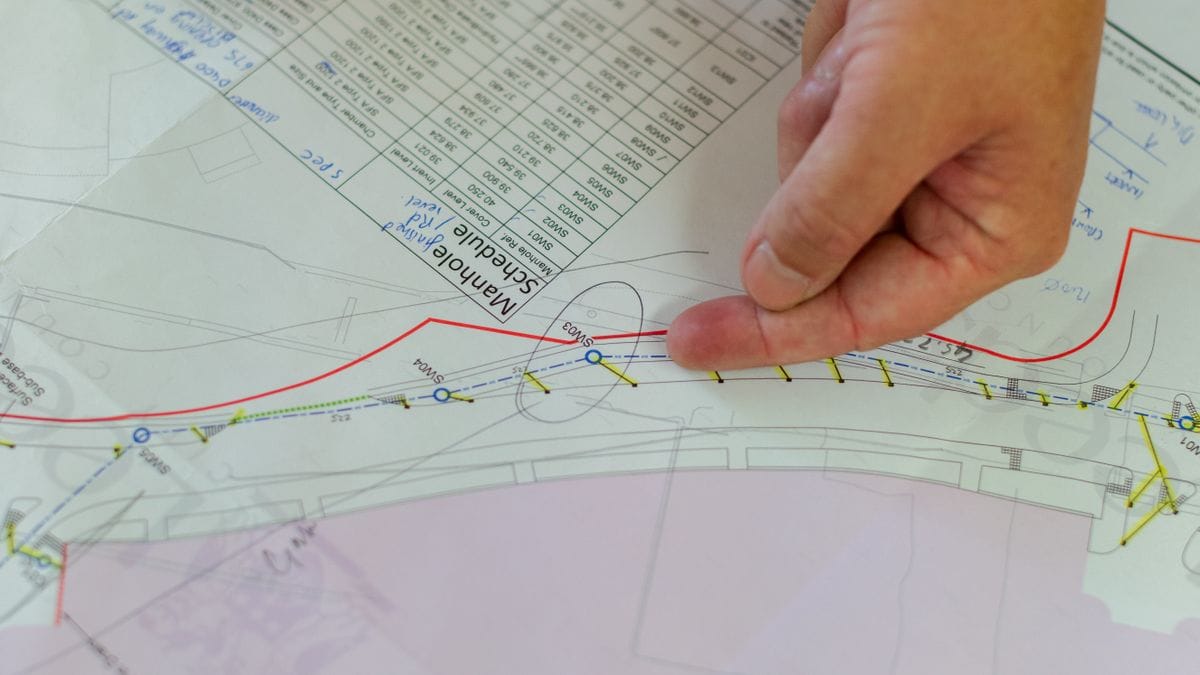
Construction runs on documents — drawings, specifications, submittals — and the errors that matter most are the ones baked into those documents before anyone breaks ground. A clash between the structural and mechanical drawings, a code requirement missed on a detail, an inconsistency between two sheets that should agree: each is cheap to fix on a screen and ruinously expensive to fix in concrete. They surface as RFIs, change orders and rework, the trio of cost overruns that quietly consumes project budgets on jobs of every size.
The conventional defense is human review: senior engineers and QA/QC managers reading drawings line by line, cross-referencing standards from memory and experience. It is slow, it does not scale, and it depends on the scarcest resource in the industry — the attention of people who have seen enough projects to know what to look for. Structured AI’s bet is that this is exactly the kind of pattern-heavy, knowledge-intensive review that AI agents can now do at machine speed and machine consistency.
What the Agents Do
Structured AI describes itself as building “the AI workforce for construction design engineering,” starting with agents that perform quality control on technical documents and drawings. The agents learn the relevant standards, apply the correct building codes, and review drawings automatically — flagging clashes, inconsistencies and omissions, and reducing the costly RFIs and change orders that flow from them. The company also uses optical-recognition and computer-vision models to compare completed fieldwork against the construction documents, extending the same checking logic from the drawing into the as-built.
The framing — an “AI workforce” rather than a single feature — is deliberate, and it places Structured AI in good company. It echoes the agent-centric strategies emerging across the sector: Trunk Tools’ Cortex and its claim of 97% door-detection precision, Document Crunch’s Project Assist turning contracts into action, and LightTable’s preconstruction review of drawings for constructability errors. Structured AI is attacking a neighbouring slice of the same surface: not the contract, not the cost, but the technical correctness of the drawings themselves.
The Founders and the Wedge
The company was founded in 2025, has roots at Oxford, and went through Y Combinator. Raymond Zhao is co-founder and CEO, building alongside co-founders including Issy Greenslade and Brandon Abreu Smith. The early-stage, YC-backed profile fits the pattern this publication has tracked across the W26 construction cohort: small teams attacking a single painful workflow with AI, betting that depth on one problem beats breadth across many.
Quality control is a shrewd wedge precisely because it is unglamorous. It does not promise to redesign the building or automate the job site. It promises to catch the mistake on sheet A-401 that would otherwise become a $50,000 field problem — a value proposition a skeptical project executive can understand in a sentence and verify on a real project. The risk in that positioning is the same one every drawing-review AI faces: trust. A false negative that lets a real error through, or a flood of false positives that buries reviewers in noise, erodes confidence fast, and quality professionals are rightly conservative about handing judgment to a model. Structured AI will live or die on whether its agents catch what matters without crying wolf.
The Bigger Pattern
The round is a useful marker of where construction AI is maturing. The headline money in 2026 has gone to robots and to broad platforms, but underneath it a quieter category is forming: agents aimed at the specific, document-heavy, error-prone tasks that engineers and reviewers actually spend their days on. It is the same instinct behind ONESTRUCTION’s bet on cleaning up construction’s unstructured data and Neuron Factory’s knowledge graph — the recognition that AI in construction is only as good as the documents and standards it can reliably reason over.
Structured AI’s $4.2 million will not move the industry’s needle on its own. But the problem it has chosen — the silent, compounding cost of getting the drawings wrong — is one of the most defensible markets in the business, because every contractor and engineer already knows precisely how much it costs them. The question now is execution: whether a 2025-founded startup can earn the trust of the people whose job it is to be skeptical.