Planted has raised $31.8 million to expand its fleet of construction robots and field its next-generation machine, the company announced on 15 September from Oakland, California. Piva Capital and RA Capital Management Planetary Health co-led, with Breakthrough Energy Ventures, Gigascale Capital, Google and Khosla Ventures participating.
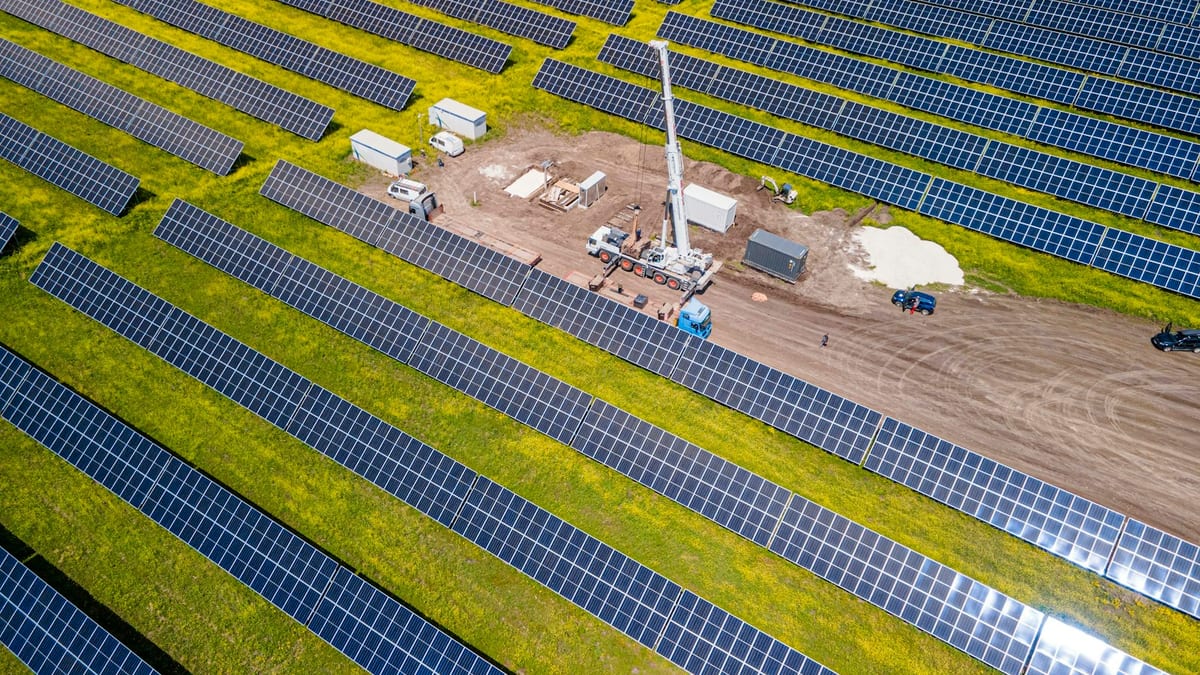
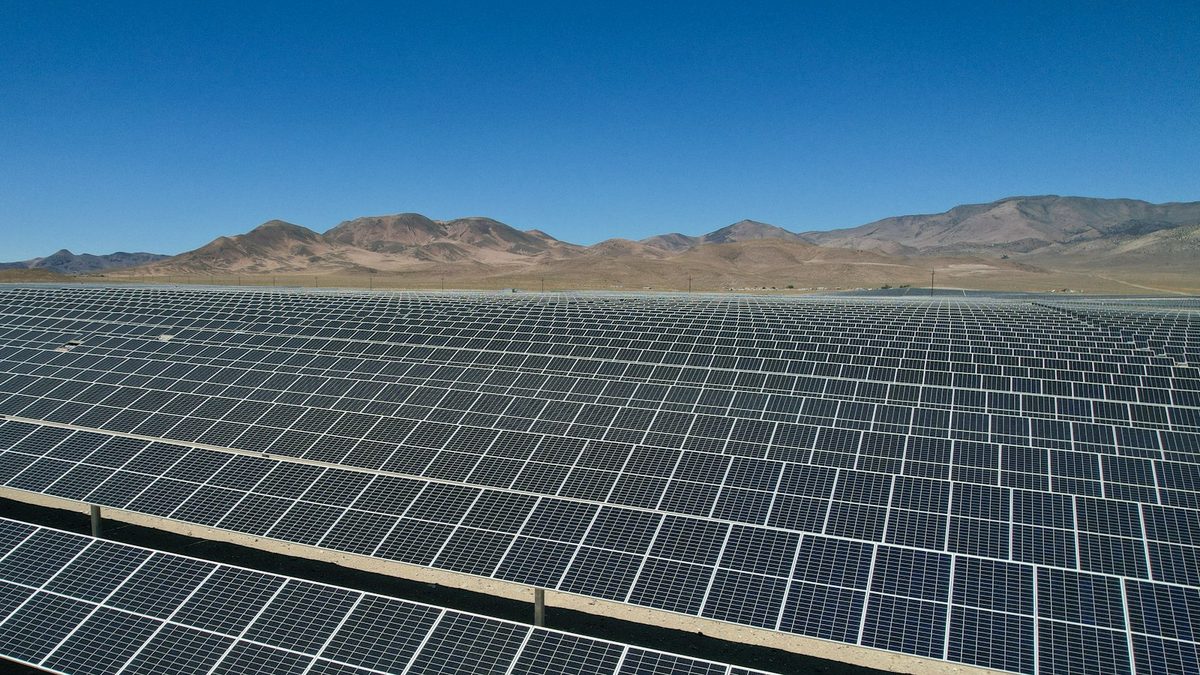
The company builds solar power plants — the two projects named in the release are an 11 MW community-solar site and a 28 MW behind-the-meter installation — and the thing it is selling is not the array. It is the speed of the build. Per Planted’s own description, the product is a single system combining planning software, high-density terrain-following solar arrays, storage and field robots — an attempt to replace bespoke site-by-site project delivery with something closer to a production line.
The Thesis, in the CEO’s Words
Chief executive Eric Brown framed the problem as a rate problem rather than a technology one:
“Globally, solar needs to be deployed about five times faster than it is today to hit the scale experts project we’ll need by 2050, and the gap is growing as the industry confronts constraints involving supply chains, land, interconnection, and skilled labor. The way to close that gap is to turn the construction of a power plant into a manufacturing problem: building robots and deployment systems, not just projects. We have robots in the field proving the model works today. This round is how we scale it.”
That last distinction — robots and deployment systems, not just projects — is the whole company. A developer’s asset is a pipeline of sites. Planted’s stated asset is the machinery that builds them, which is a different business with different returns and a different failure mode.
Gigascale Capital founding partner Mike Schroepfer made the same argument from the investor side: “When industries go from bespoke to manufactured, they unlock orders of magnitude more scale at a fraction of the cost. Solar construction is still building custom projects, site by site. Planted’s model is the engine this industry needs, and it’s already proven in the field.”
What the Company Says It Has Built
The figures below are Planted’s, as given in its announcement.
Its most recent build, a 28 MW behind-the-meter project serving a neocloud data center, went from first call to power in ten months, with field construction completed in under three. The company completed Bowes Solar, an 11 MW project in Illinois for Cultivate Power, and says it will next build Aligned Climate Capital’s Armoracia project on 16 acres, 10 fewer than the original design required.
On trajectory: after deploying more than 10 MW in 2025, Planted says it is on track for 100 MW in 2026, against a project pipeline of more than 20 GW. The company says its existing fleet is fully committed through 2027.
The new capital funds the fleet expansion and the launch of Sage, described as the next-generation robot entering the field in late 2026, which the company says more than doubles field productivity compared with its current machines. Planted also states its arrays can be built on slopes of up to 27% without grading.
That last number is the one an infrastructure reader should linger on. Grading is earthwork, and earthwork is the line item that turns a marginal parcel into an uneconomic one. A system that tolerates 27% slope is not primarily a robotics claim; it is a claim about which land becomes buildable, which is upstream of everything else.
Why This Is a Construction Story
Analysis. It would be easy to file this under energy and move on. The reason it belongs here is the bottleneck Piva’s Ricardo Angel, Managing Partner, names in his own quote: “Electricity demand is skyrocketing today, while new power generation often takes many years to come online. By combining intelligent planning and project development software, high-density racking, and autonomous field robotics, Planted dramatically reduces the land, steel, and labor bottlenecks slowing projects down. The company has developed a much faster and more capital-efficient way to deliver power when industrial energy buyers like data centers need it most.”
Land, steel and labour are construction constraints, not generation constraints. The interconnection queue gets most of the attention in energy coverage, but the part of the delay that a private company can actually compress is the part where crews put steel in the ground — and that is the part Planted has pointed its robots at.
It also lands in the middle of the demand story this newsroom has been tracking all year. OpenSpace has now documented 1,000 data-center projects, and Buildots raised $130M last week on a customer list weighted toward exactly that buildout. Planted’s most recent named project serves a data center too. The capital chasing construction AI is increasingly chasing the same underlying event.
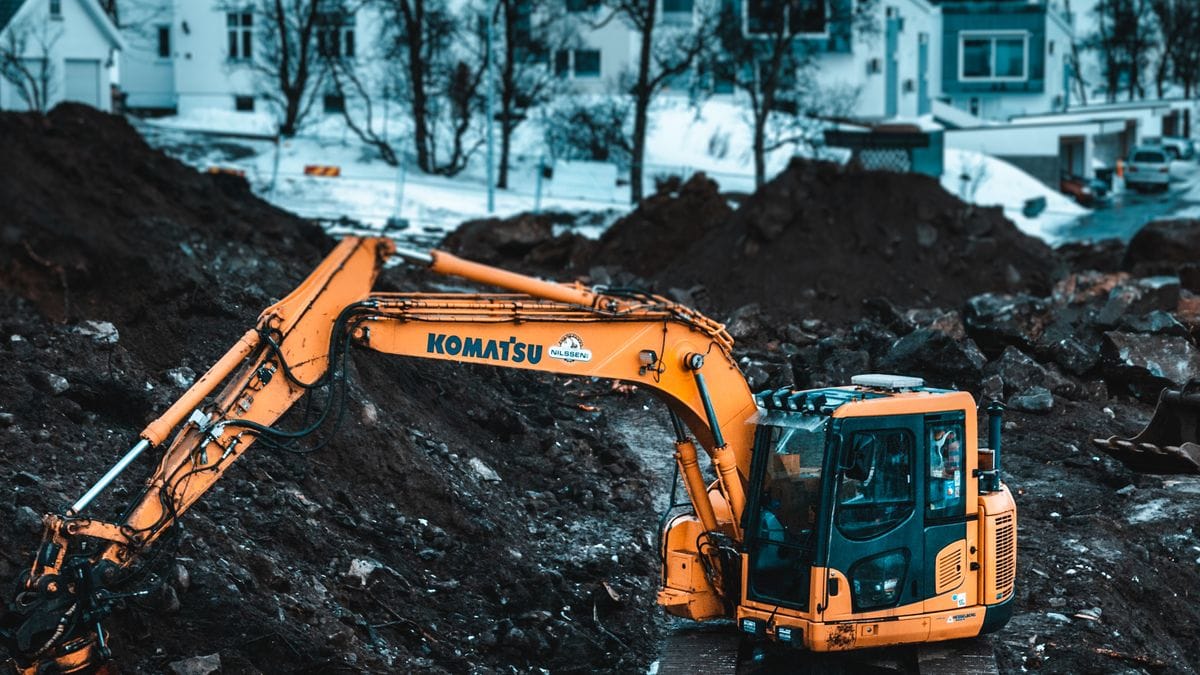
The robotics framing is also more conservative than it sounds. Planted’s machines work on a repetitive, largely obstacle-free site installing identical components in rows — which is one of the more tractable environments in outdoor construction. (Not a flat one: the company’s own claim is that it builds on slopes up to 27% without grading. Repetitive is not the same as level.) Compare Bedrock Robotics putting autonomous excavators on live earthmoving sites, where the machine has to cope with an unstructured site and people moving through it. Solar racking is the easier half of the problem, and choosing the easier half first is a reasonable strategy, not a criticism.
The Honest Caveats
Every operational figure above is the company’s own. The MW deployed, the ten-month timeline, the sub-three-month field construction, the 20 GW pipeline, the 27% slope tolerance and Sage’s productivity gain all come from Planted’s announcement. We have not independently verified any of them, and no customer has published a matching account.
A pipeline is not a backlog. “More than 20 GW” describes projects Planted has identified, not projects it has contracted. The release does not break the figure down and we did not find a breakdown elsewhere.
We are not reporting a round letter. The announcement text we read does not attach one to the $31.8 million, and the coverage we checked, including POWER Engineering, describes it simply as a funding round. Planted’s own newsroom post sits at a URL containing “series-b,” which is suggestive but is not a statement in the release, so we have left the round unnamed rather than infer one.
On prior funding: Mercom Capital Group reports that “in July 2025, the company raised a $12 million funding round led by Piva Capital, with participation from Breakthrough Energy Ventures, Khosla Ventures, and Team Builder Ventures” — which would make Piva, Breakthrough and Khosla returning backers rather than new ones. We did not find a company-stated cumulative total, and we are not going to arrive at one by addition.
“Fully committed through 2027” is a capacity statement we cannot size. Without knowing the fleet’s absolute throughput, being fully committed is compatible with a very large book or a modest one.
Google’s participation is participation. It is named as an investor in the round and nothing more; the release does not describe a commercial agreement, and we should not let a recognisable name imply one.
What to Watch
Whether Sage ships on time and whether the productivity claim survives contact with a real site. A next-generation machine that “more than doubles field productivity” is the entire economic case for the fleet model — it is what turns a robot fleet into a cost curve rather than a capital expense.
Late 2026 is a short runway. If Sage is in the field on schedule and the 100 MW year lands, Planted will have a second data point on a curve, which is the minimum needed to argue that solar construction really is becoming a manufacturing problem. If it slips, the company is a well-funded EPC with unusually good software.