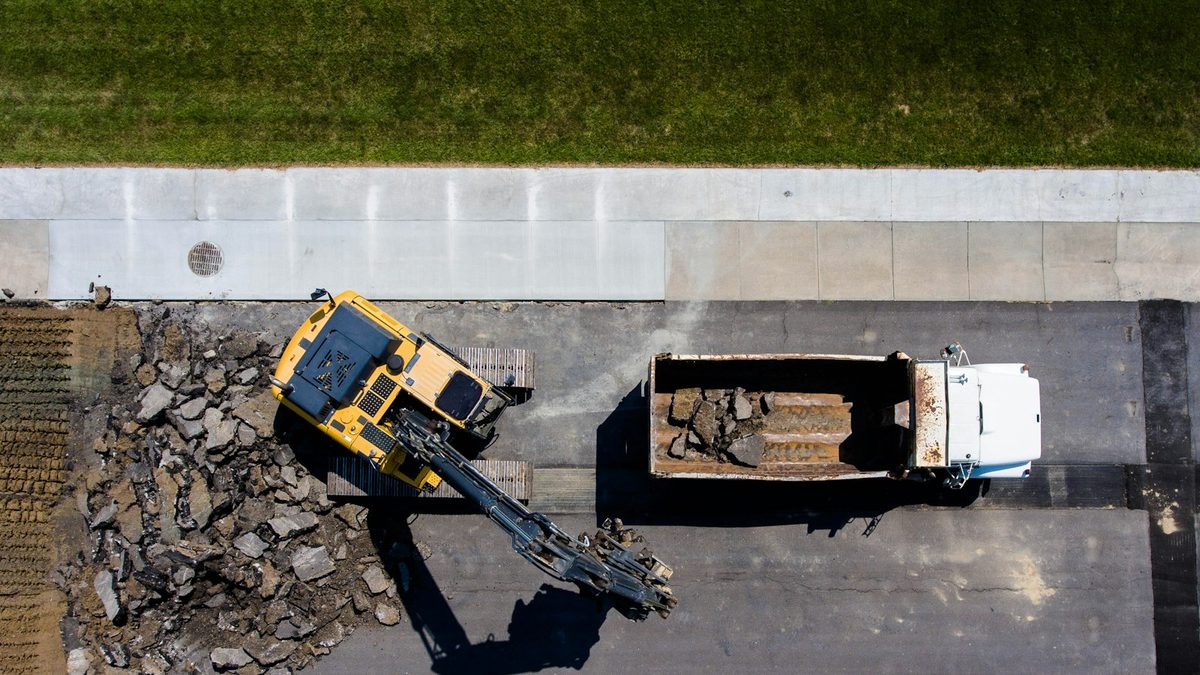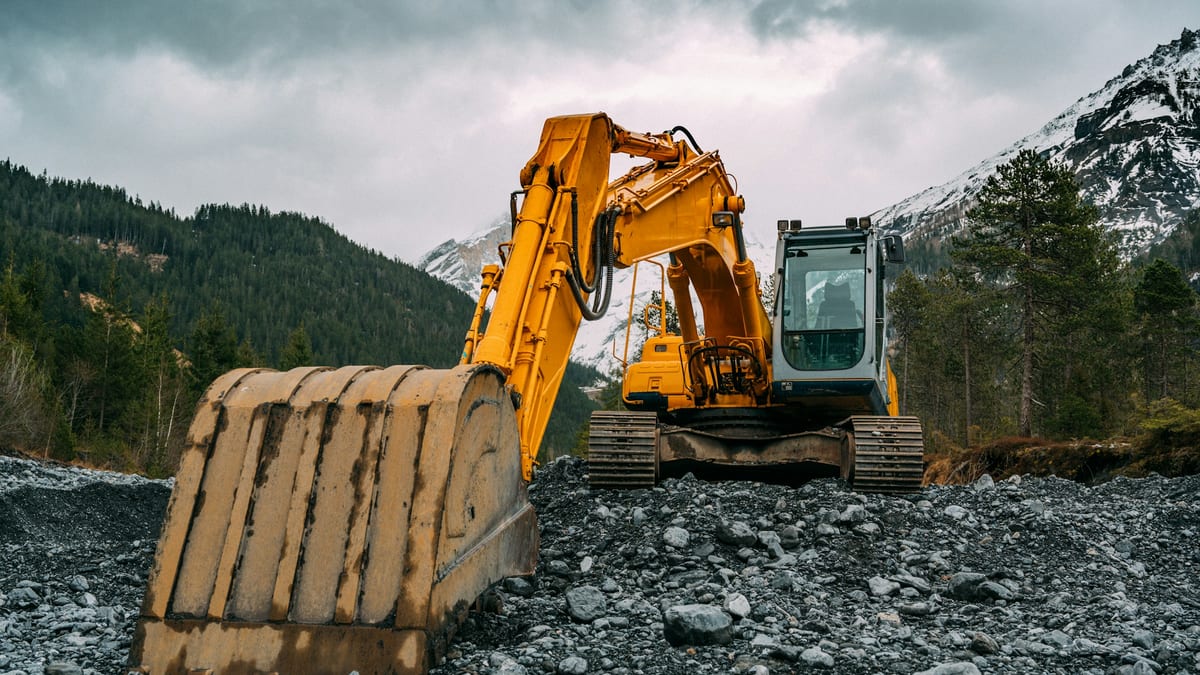
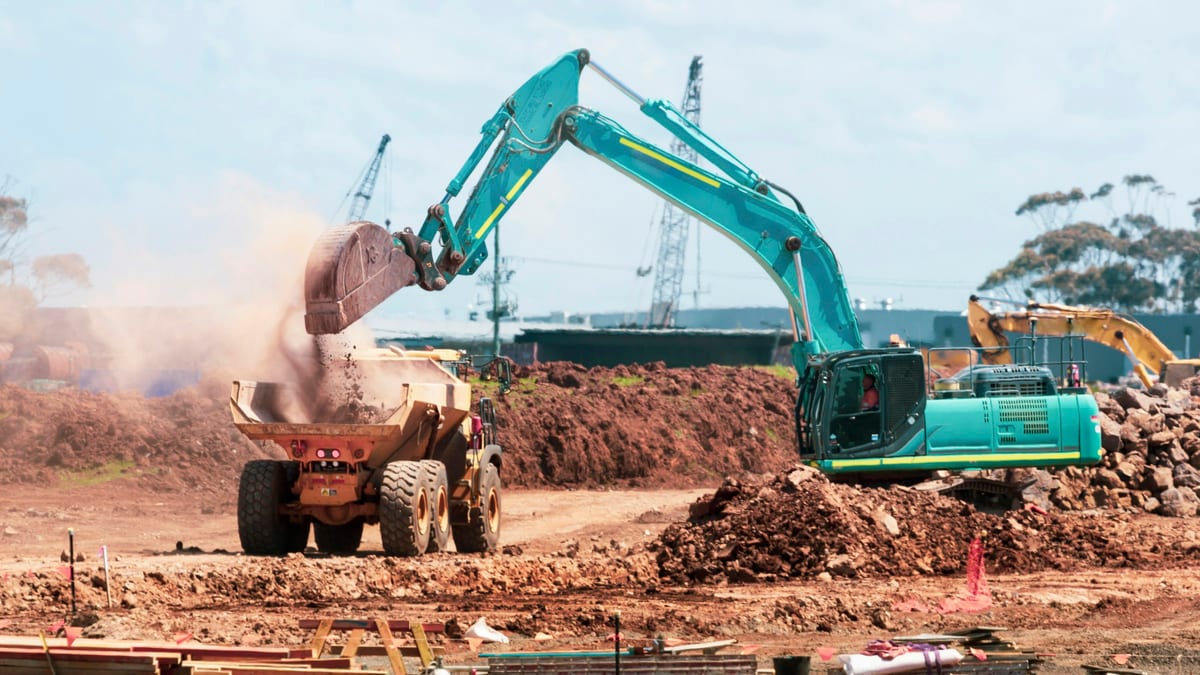
Bedrock Robotics announced on 17 August, in a press release carried on the GlobeNewswire wire, that excavators fitted with its system are operating fully autonomously on live customer sites — the machine performing work on its own, on real commercial jobs, rather than under supervised demonstration.
Three customers are named, with projects attached:
- Sundt Construction — a water treatment facility in Nevada
- Zachry Construction Corporation — a 1.2 million cubic yard civil sitework project
- Champion Site Prep — a multi-million cubic yard earthwork site in Texas
Named customers with named projects are the part that matters. Autonomy demos are cheap and the sector produces them constantly; a general contractor putting its corporate name against “this ran without an operator on our job” carries a liability exposure that a press release normally does not.
Cade Rowley, CEO of Sundt, said the partnership “is helping us tackle some of the challenges that matter most in construction: making schedules and costs more predictable, getting more consistent use out of our equipment, and allowing our skilled crews to focus on the work where their experience matters most.” That is a carefully constructed sentence — utilisation and predictability, not headcount — and it is probably the most honest framing available to a contractor right now.
What Changed Since Last Year
Bedrock has been running excavators on Sundt work since at least November 2025, when The Robot Report described autonomous machines loading human-driven articulated trucks on a 130-acre site preparation job, more than 65,000 cubic yards moved. What is new in August is the removal of the human backstop. Per Construction Dive, the system has completed roughly a year of testing under human supervision before this step.
The product, Bedrock Operator, is a retrofit: sensors and compute added to excavators a contractor already owns, with what the company describes as same-day installation and a 360-degree field of view that halts the machine automatically when it detects a person or an object. “Our sensor suite and machine learning models are designed with safety in mind,” CEO Boris Sofman told Construction Dive. “If the system detects any faults, it pauses work and comes to a stop.”
Excavators are a deliberate wedge. They take about five years to master and make up roughly a quarter of a contractor’s fleet, per the same Construction Dive report — which is to say they are simultaneously the hardest machine to staff and one of the most common. Sofman’s stated ambition is broader: “Excavators are only the starting point.”
Bedrock says it has raised $350 million to date, backed by CapitalG, Valor Atreides AI Fund and NVIDIA Ventures among others, including the $270 million Series B it closed in February.
The Adoption Number Everyone Will Quote
The announcement landed in the same week as Gravis Robotics’ $200 million Series A from SoftBank, and both were folded into a wider story about robots arriving on jobsites. The statistic doing most of the work in that story deserves a second look.
BuiltWorlds reported on 6 August that 79% of the general and specialty contractors it surveyed used jobsite robotics to some degree in 2026, against 29% in 2025. Piloting rose from 12% to 32%. Contractors cited accuracy (75%) more often than reduced manual effort (63%) or safety (56%). FieldAI was the most highly rated vendor in the survey, Boston Dynamics the most adopted, Dusty Robotics the most piloted.
A jump from 29% to 79% in twelve months is not an adoption curve. It is either a definitional change, a change in who answered the survey, or both. BuiltWorlds’ public announcement of the findings does not disclose the sample size or the respondent mix, and “used jobsite robotics to some degree” is elastic enough to include a single layout robot on one floor of one project. The pilot figure — 12% to 32% — is a more modest, more believable, and probably more useful number, because piloting is a discrete act someone has to authorise and pay for.
None of that makes the direction wrong. It makes the magnitude unreliable, and the magnitude is what will end up in every vendor deck for the next year.
The Question the Announcement Leaves Open
Bedrock has not disclosed how many machines are running unattended, for how many hours, or what proportion of the work on those three projects is autonomous versus conventional. “Fully autonomously on live customer sites” is a real and meaningful claim about capability. It is not a claim about share.
That distinction is where autonomy programmes usually stall. Moving 1.2 million cubic yards is a schedule, not a demonstration, and the interesting figure is what fraction of it a machine completes without anyone touching it — including the hours nobody puts in a press release, when the ground is wet, the survey is wrong, or a subcontractor parks a pickup where the plan says there is dirt.
The second open question is the one Sundt’s quote quietly sidesteps. Consistent equipment use and predictable schedules are the benefits a contractor can say out loud. If autonomous excavation works at scale, the economics that follow are about crew size, and no general contractor is going to be the first to say so in a quote.
What to Watch
Whether a fourth and fifth contractor sign up publicly. Three named customers, at least two of whom have worked with Bedrock for the better part of a year, is a strong pilot cohort. It is not yet a market.
Whether anyone publishes production rates. Cubic yards per hour, autonomous versus manned, on the same job, would settle more than any survey. Contractors have that data. Nobody has released it.
Whether the retrofit approach converges. Bedrock and Gravis are both bolting autonomy onto existing iron, and Atoms’s acquisition of Pronto applied the same logic to mining haulage. If OEM machine-control divisions respond by opening their own platforms, the retrofit window narrows considerably.