While the construction robotics world has spent the past year watching companies like Bedrock raise $270 million to build new autonomous machines, a quieter argument has been closing in from the quarry. On April 6, Atoms — Travis Kalanick’s physical AI company, which operated in stealth for roughly eight years before going public in March 2026 — announced the acquisition of Pronto, an autonomous haulage systems company founded in 2018. The deal anchors Atoms’ new mining division, sits alongside Atoms Food and Atoms Transport, and brings into Kalanick’s portfolio a company that has already done what most construction autonomy startups are still promising: run autonomous vehicles commercially, at scale, in the dirt.
Acquisition terms were not disclosed.
What Pronto Actually Does
Pronto builds autonomous haulage systems for mining and quarry operations. Its approach has two distinguishing features. First, it is vision-first — the system processes camera imagery as the primary sensing modality, rather than betting the architecture on LiDAR alone. Second, it is OEM-agnostic, meaning Pronto retrofits existing trucks rather than requiring a mine operator to purchase an entirely new fleet. Deployable in weeks rather than years, according to the company, the system can run across mixed equipment from different manufacturers on the same site.
Before becoming part of Atoms, Pronto had already expanded its sensor stack through an earlier acquisition of SafeAI, which added LiDAR and radar capabilities to Pronto’s camera-first stack. The result is a company that entered the Atoms deal with both a retrofit architecture and a multi-sensor platform — a combination that matters if you are trying to run autonomous vehicles on haul roads that were not designed with robotics in mind.
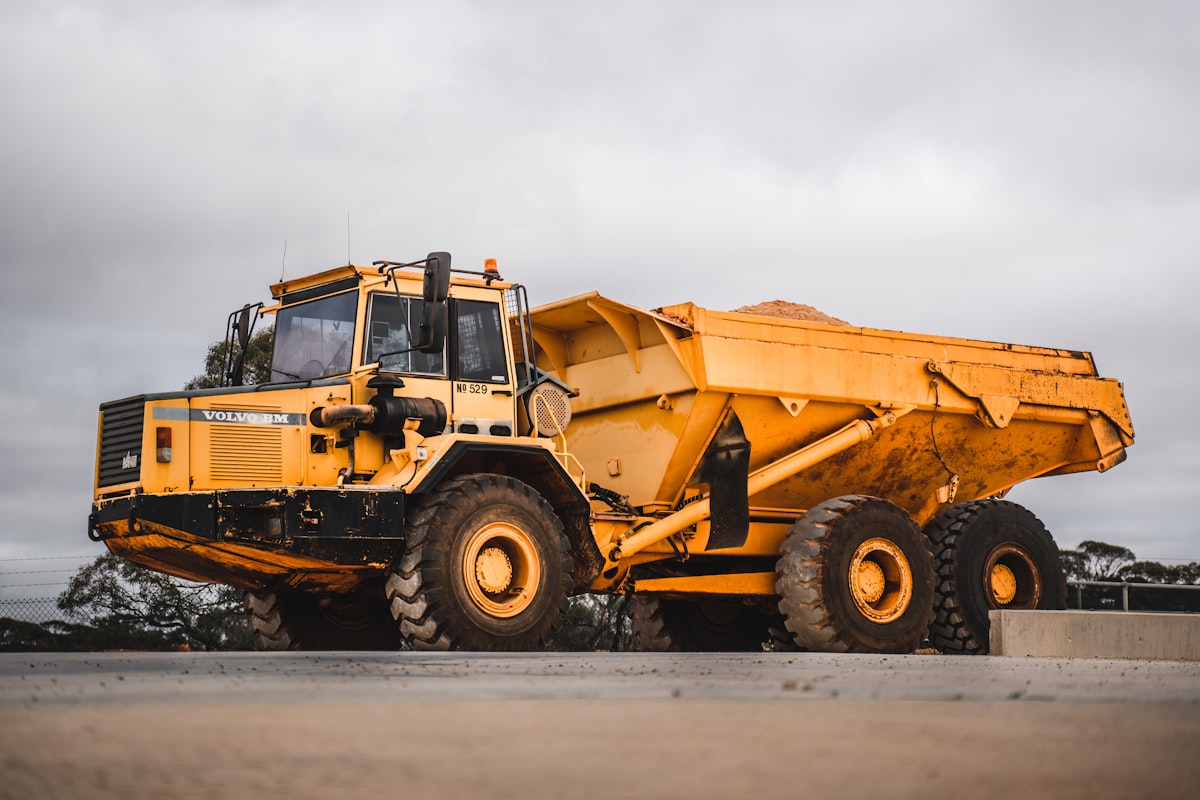
The numbers Pronto and Atoms cite in primary materials are notable. International Mining reports Heidelberg Materials — the global aggregates and cement company — has deployed Pronto across 100-plus trucks at a dozen global operations, with more than 2 million tons hauled at its Lake Bridgeport, Texas quarry in under eight months in a mixed-fleet environment. Pronto also powers “Komatsu Smart Quarry Autonomous” through a named partnership with Komatsu North America. These are company-stated figures, not audited results. But Heidelberg Materials and Komatsu are not names attached to vaporware, and haul tonnage is a concrete, verifiable metric in a way that “pilots in progress” is not.
Anthony Levandowski — Pronto’s founder and CEO, a former Google engineer with a widely reported legal history including a 2020 federal trade secret conviction and a 2021 presidential pardon — remains with the company through the Atoms acquisition.
The Retrofit Thesis
The dominant model in construction robotics right now is new iron. Bedrock Robotics is building an autonomy kit for excavators and dozers, but its pitch is framed around selling the full stack to contractors adopting new capability. Gravis Robotics, which won the Contractors’ Choice award at CONEXPO-CON/AGG 2026, retrofits existing excavators — but its commercial footprint is still early, its deployments proving the concept rather than demonstrating fleet-scale operations.
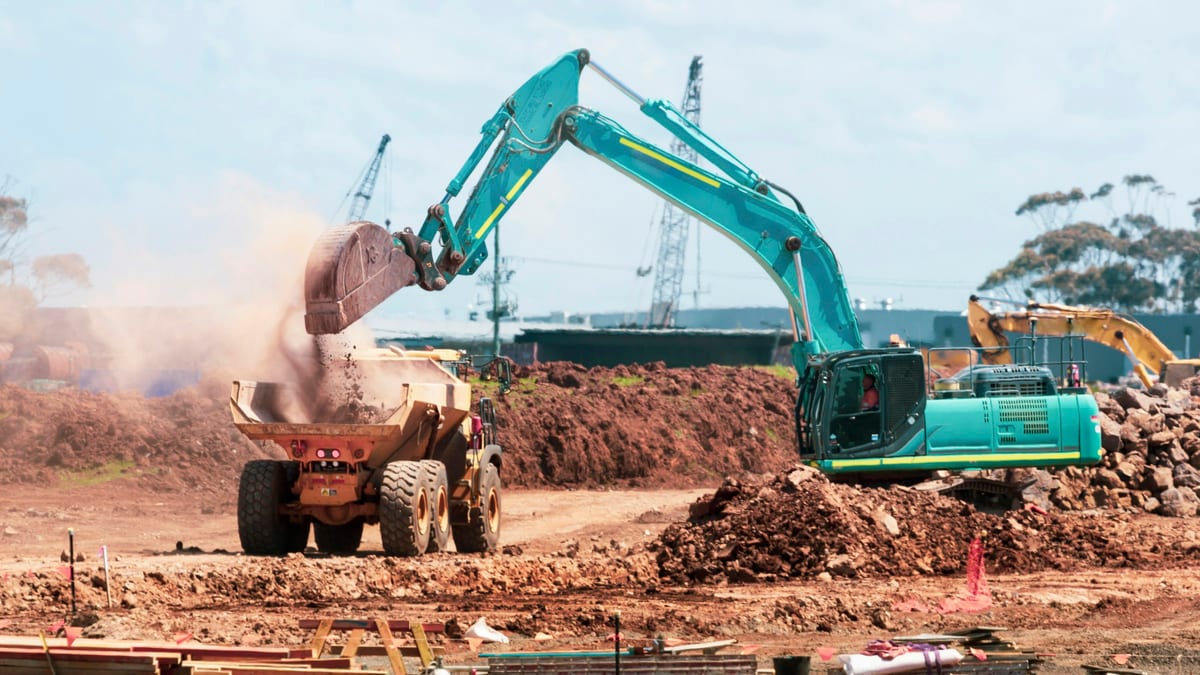
Pronto’s mining deployments represent something those companies have not yet achieved: autonomous vehicles running commercially at scale on existing equipment in a demanding industrial environment, with a named customer operating more than a hundred units across multiple continents.
That distinction matters because it changes the economic argument. Kalanick framed the Atoms thesis this way: “Mining is the ultimate case study” for deploying “specialised, gainfully employed robots” that address safety and labor challenges. The language is deliberate. “Gainfully employed robots” is not a phrase about replacing workers wholesale — it is a phrase about machines doing specific, repetitive, dangerous work that is hard to staff and getting harder. Haul truck driving in a quarry is exactly that work: a closed loop, a fixed route, shift after shift, in conditions that accelerate fatigue and erode attention. The retrofit model lets operators put autonomous systems on trucks they already own, already know how to maintain, and already have parts for — without a new capital expenditure line that requires a board approval and a three-year payback analysis.
The acquisition also signals something about Kalanick’s reading of where value accrues. Kalanick was already Pronto’s largest investor before the deal. That prior relationship suggests this was not a financial buyer looking for a portfolio company. It was an investor who had watched the business develop from the inside and decided the retrofit autonomy architecture was worth building a division around.
Why Mining, Why Now
Mining haul roads are, in the autonomy business, the easiest dirt problem. They are bounded environments — operators can establish a defined operational design domain, the routes do not change daily, and the number of edge cases is smaller than on an open job site where a subcontractor can park a concrete truck anywhere they like. That is why autonomous haulage in mining has commercial deployments when autonomous earthmoving on construction sites does not. The physics are the same; the problem complexity is not.
Kalanick is not claiming Pronto solves construction. He is making a more careful argument: that mining proves the model. “Mining is the ultimate case study” is not a destination statement — it is the first line of an analogy. If vision-first retrofit autonomy works on haul roads at Heidelberg Materials’ quarry in Texas, the question is which adjacent environment has enough structure to be the next case study. Quarry haul roads and certain construction logistics loops — materials movement between a staging area and a paving train, for instance — are closer to each other than quarry haul roads and a full commercial building site. The wedge is narrower than it sounds.
The mining acquisition also gives Atoms a revenue base and a repeatable deployment model before the company attempts the harder, messier, more variable environment of conventional construction. That is a more disciplined sequencing than much of the robotics sector, which has a habit of announcing that the job site is next while still trying to finish the warehouse.
What to Watch
The retrofit-versus-new-machine debate in construction autonomy does not have a settled answer yet. Bedrock’s $270 million Series B reflects investor conviction that there is a business in selling new-iron autonomy to the construction market. Atoms’ acquisition of Pronto reflects a different conviction: that the fastest path to autonomous machines on real sites is through the equipment already sitting in the yard.
Both theses will get tested in the next two to three years. The tests to watch for Atoms specifically are: whether Pronto’s mining deployment model — OEM-agnostic, vision-first, weeks-not-years — actually transfers to construction-adjacent environments outside the quarry; whether the Komatsu partnership expands or remains confined to the Smart Quarry product; and whether Kalanick’s vision of a multi-division physical AI company (food, transport, mining) produces genuine cross-division technology leverage or turns out to be a conglomerate in startup clothing.
The Heidelberg Materials numbers are real, the Komatsu partnership is real, and the retrofit model has now proven itself at commercial scale in at least one industrial environment. What it has not yet proven is that the gap between haul road and job site is bridgeable with the same architecture. That is the next question. Atoms will need a case study to answer it.
Atoms announced the Pronto acquisition on April 6, 2026. Primary sources for this article include pronto.ai/atoms/ and International Mining.