Most construction AI coverage, including ours, is written from the vendor’s side of the table. So a Construction Dive Q&A published August 5 with Colin Stoner, CIO of Novo Construction, is worth reading closely: it is a contractor describing what a tool actually changed about his teams’ work.
The tool is Diffs, from Buildcheck, which compares drawing packages between revisions and flags what changed. Novo is based in Menlo Park, California.
The Problem Is Older Than Software
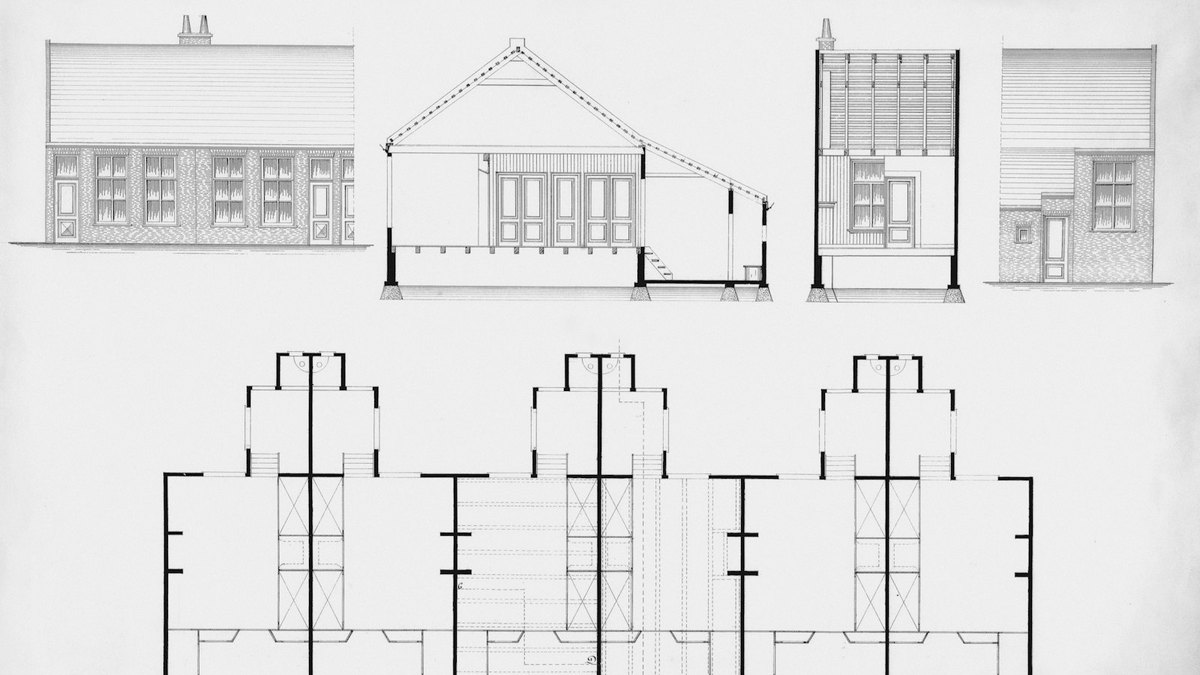
When a design team issues a revised drawing set, someone has to work out what moved. On a large project that means hundreds of pages, and the differences are frequently small, unannounced and expensive — a relocated wall, a changed ceiling height, a fixture that migrated to a different room.
The established method is overlay comparison in a tool like Bluebeam, laying one revision over another and looking for discrepancies. Stoner’s assessment of that workflow is the most quotable thing in the interview: it is “cumbersome and makes you go cross-eyed.”
Anyone who has done it will recognise the description. It is exactly the kind of task where human attention degrades precisely as the stakes rise — page 300 gets less scrutiny than page 3, and the missed item is as likely to be in one as the other.
Where the Value Actually Lands
The detail worth extracting is when the benefit arrives. Stoner: “The biggest get for us is pricing out projects early on…before construction starts. That’s when changes can impact the pricing dramatically.”
This is a more precise claim than the usual rework-avoidance pitch, and it is a better one. The argument is not primarily that catching a change prevents a field error. It is that knowing what changed lets you price the change correctly, at the moment you still have commercial leverage — during preconstruction, before the number is committed.
That reframes drawing comparison from a QA function into a commercial one. Rework avoidance is a cost you cannot easily prove you didn’t incur. Pricing a scope change accurately is a margin you can see on the job.
The Methodology Is the Headline
Stoner’s stated approach is “trust but verify”: teams review what the AI flags rather than accepting it, and dismiss the irrelevant hits.
This is the most useful thing in the piece, because it describes a workable division of labour rather than a replacement. The AI performs recall — finding candidate changes across hundreds of pages, which is the part humans do badly at volume. The human performs judgment — deciding which changes matter, which is the part the AI cannot be trusted with. False positives are cheap under this arrangement, because dismissing a flag takes seconds. A missed change is expensive.
It also implies a deployment reality that vendors rarely say out loud: the tool is not accurate enough to act on unreviewed, and the workflow is designed around that. That is a healthier basis for adoption than a claimed accuracy percentage.
Stoner also notes the tool reduces the learning curve for team members reviewing flagged changes — which is its own quiet argument. A junior engineer given 300 pages and told to find the differences learns slowly. One given 40 flagged candidates to adjudicate is doing a more tractable version of the same job.
Who Buildcheck Is
Buildcheck raised $5.9 million in seed funding in December 2025, led by Uncork Capital with Peterson Ventures, Xfund and angels from OpenAI, Opendoor, CBRE and Zillow. Founders Alexander Michalatos, Andrei Molchynsky and Alex Gureev met at Stanford.
The broader platform analyses 2D construction documents across architectural, structural, civil, mechanical, electrical and plumbing disciplines to identify errors, omissions and coordination conflicts before field work begins. The company says it serves more than 50 paying customers, including AvalonBay Communities and Novo Construction, and claims 10 to 35 times return on investment.
Joe Kirchofer, AvalonBay’s senior vice president for Northern California, offers the developer-side version of the same argument: “Every missed issue in a drawing becomes a surprise expense on-site.”
The Caveats
No time savings were quantified. Stoner describes the approach as “simplif[ying] that approach a lot” but gives no hours, no percentage and no before-and-after. That is a notable absence in an interview about efficiency, and it is why this piece is about method rather than magnitude.
The 10–35x ROI figure is the vendor’s, unaudited and dependent on assumptions about what a caught error would otherwise have cost — a counterfactual nobody can measure precisely.
One contractor is not evidence. Novo is a named customer speaking on the record, which is worth more than an anonymous testimonial, but it is a single firm’s experience.
What to Watch
Whether “trust but verify” survives contact with success. The pattern in tool adoption is that reviewing every flag erodes as confidence grows — teams start skimming, then spot-checking, then accepting. The discipline Stoner describes is the correct one for a tool at this accuracy level. The interesting question is what happens on the first project where a real change was flagged, dismissed as noise, and showed up in the field anyway.