Maximo Robotics says its US-made systems have now completed more than 300,000 construction tasks under performance-based robotics-as-a-service contracts, and has released Max 4.0. The announcement is datelined Arlington, Virginia, 29 October, and went out over PR Newswire; Robotics & Automation News carried it on 30 October, The release itself, that coverage of it and the company’s own site are the sources for what follows; the dateline, the wire and the subheading quoted below come from the release as syndicated, which is the form of it this article could reach. Every figure below is the company’s, reported as such.
The headline number is a count of completed work, which is a slightly unusual thing for a robotics company to lead with. It is unusual because of how Maximo sells: on the company’s account, customers pay per task completed. Not per robot, not per month, not per deployment — per unit of work delivered. That single sentence reframes everything else in the release, because it means the task count is not a vanity metric. It is approximately the revenue line.
What the Robots Actually Do
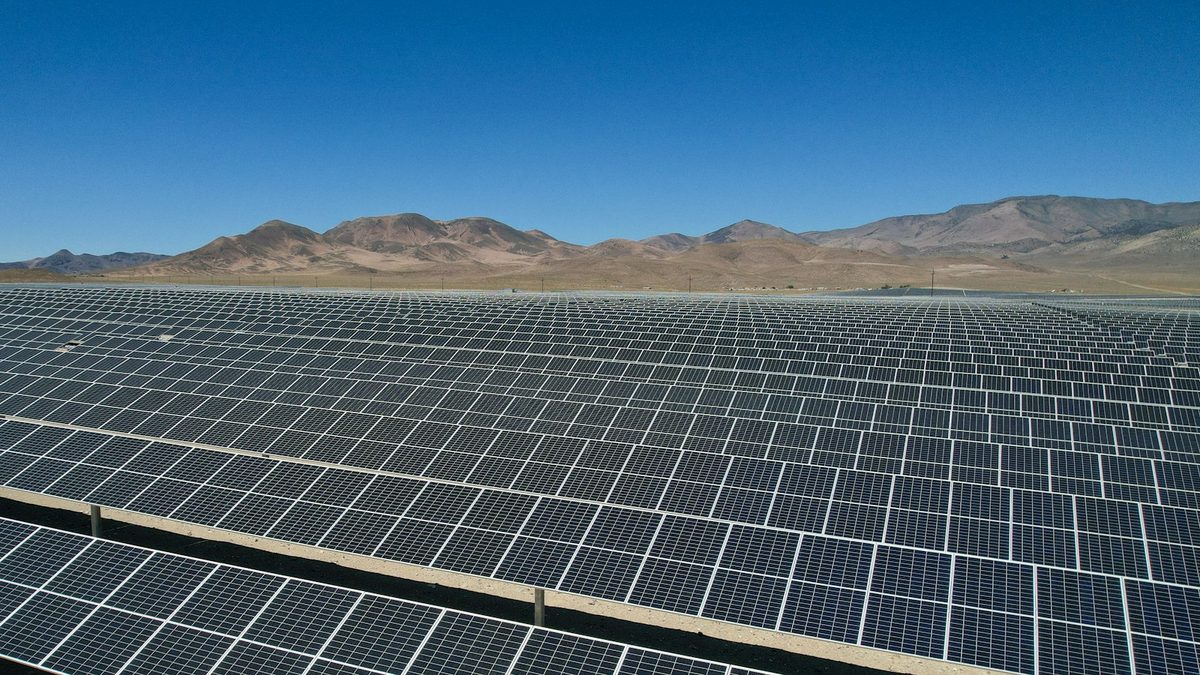
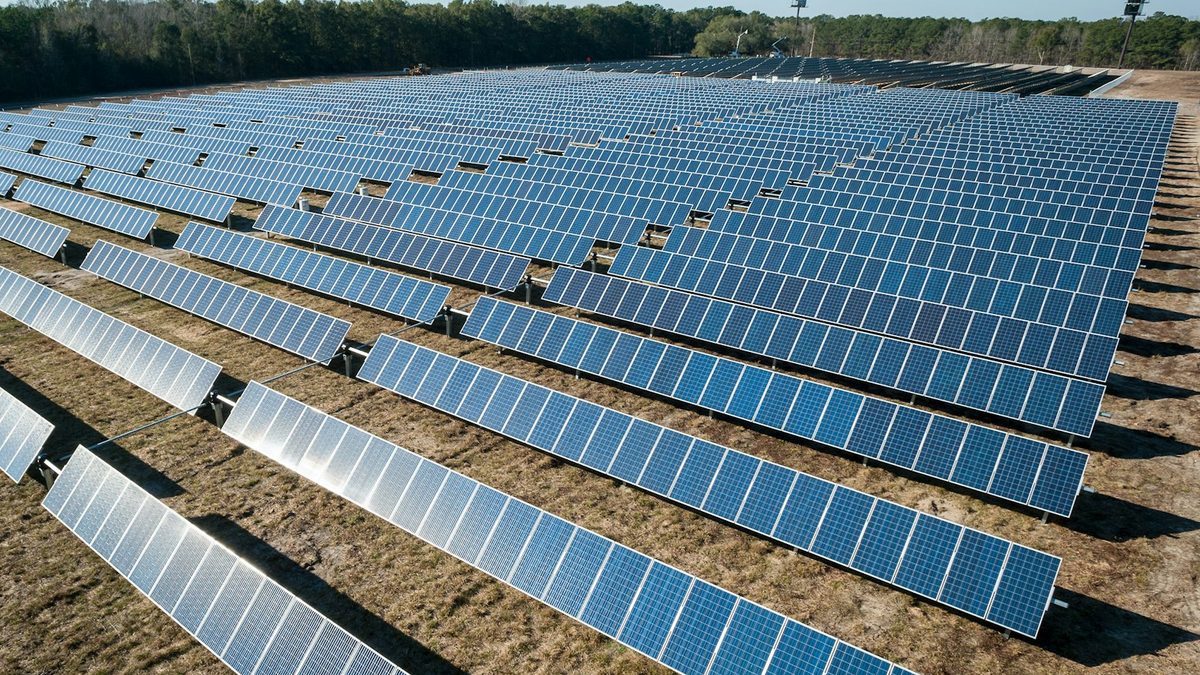
The work, today, is narrow and heavy. Per the company’s site, Max handles autonomous pick and place of heavy solar modules, with contract options extending to module attachment and field logistics. The release describes millimetre-precision placement of utility-scale solar modules. The company says it plans to extend the platform into adjacent tasks — pick and place, feeding and attaching, site logistics and cleanup — and, per its site, into other construction and critical-infrastructure work beyond solar.
Max 4.0 is presented in three named parts, which is worth recording because the split tells you how the company thinks about its own product:
- Cortex — the vision and planning models for construction tasks and mobility.
- Form — the family of fit-for-purpose robotics and tooling built for demanding construction environments, including multi-shift operation, with the Cortex models integrated.
- IQ — a service performance management platform that runs a continuous training loop back into Cortex, and provides fleet analytics and operational feedback.
IQ is the one that follows from the business model. If you are paid per completed task, then measuring completed tasks across a fleet is not reporting; it is billing, and the feedback loop that makes the next task cheaper to complete is margin. A company selling robots by the unit does not especially need that layer. A company selling throughput cannot operate without it.
On productivity, the release says crews working with Max 4.0 systems deliver 2.5 times their manual installation rates per person per shift hour. That is the company’s measurement, and the release does not describe the method, the baseline crew, or the site conditions it was taken under. It is reported here as a company claim rather than a finding.
Where It Is Deployed, and for Whom
Current projects span six large EPC contractors and multiple project owners, with sites in California, Illinois, Kansas, Louisiana, New York, Texas and Washington.
One of the six EPCs is named, and only one: Primoris Services Corporation’s Renewables business, which the release says played an active role in advancing Maximo’s use in utility-scale solar construction, integrating the technology into field operations. Matt Tetrault, president of that business, is quoted on the premise — that the future of solar construction depends on bringing together the experience of the company’s people and new technology. Chris Shelton, CEO of Maximo Robotics, is quoted calling utility-scale solar “a great starting point for our physical-AI solutions.”
The other five EPCs and the project owners are not named, and this article does not name them either. A contractor count a company publishes and a contractor list it does not are different objects. A construction robotics summit running on 11 November is built around precisely that gap — whether a robot can be got onto a live site, rather than whether it works in a demo, which is the standing reason to treat an unnamed contractor count as a count and nothing more.
On forward demand, the release’s own subheading cites demand for an additional 3 million construction tasks in 2027, and the body reports a 10x late-stage pipeline for that year. The company’s site separately states a scope of 1.5 GW of solar installation through 2027. All three are the company’s own forward figures, describing the book from different angles, and are reported here as such.
The Commercial Model Is Not New Here, Which Is the Interesting Part
It would be easy to write the pay-per-task structure up as a first. It is not one, and this archive says so. When Human Friendly Robotics put tiling robots on a contract with Flooring Concepts, the contractor’s own explanation of why he signed was that he could “just pay per square foot of install instead of purchasing the equipment.” Same structure, different unit, smaller trade. Xpanner sells its automated pile driver with the machine attached, as a subscription — one step back from per-task, and in the same solar-construction market.
So the pattern is established, and the observation worth making is about which market it keeps appearing in. Utility-scale solar is unusually hospitable to being paid by the unit, because the work genuinely is unitised: a solar field is hundreds of thousands of near-identical placements against a fixed drawing. A per-task contract needs a task that can be counted without an argument, and most construction work cannot be. That is a constraint on how far this model travels, and it is a sharper read of Maximo’s expansion plans than the task count is. Pick-and-place, feeding and attaching, site logistics and cleanup are all plausibly countable. Finish trades are not.
It also explains the company the pattern keeps: Planted raised $31.8 million on the premise that solar construction should be treated as a manufacturing problem, and ARENA in Australia funded two robot factories rather than two robot pilots, one of them a panel-placing line. On the evidence of this archive, utility-scale solar is where construction robotics is commercialising fastest, and repetition is why.
The Labour Framing, and What ABC Actually Says
The release cites an Associated Builders and Contractors study projecting a US construction labour shortfall of more than 450,000 jobs by 2027.
That citation holds up, and readers deserve the number rather than the gesture. ABC’s own published workforce analysis, which the association maintains on its workforce shortage page, projects roughly 456,000 new workers needed in 2027 — up from about 349,000 for 2026, a rise ABC attributes to forecast recovery in construction spending. Two further lines on that page are worth having. ABC’s chief economist, Anirban Basu, is quoted saying that “a majority of new worker demand in 2026 will be attributable to retirement” — a point ABC makes about 2026, not about the 2027 figure, and the reason the number is a labour-supply story rather than simply a demand story. And on the forecast itself, Basu’s caveat runs the other way from the usual one: “The industry will need even more workers than the model predicts should current spending projections prove overly conservative.” ABC does not break the 2027 figure down by trade or seniority on that page, and this article does not either.
Whether robots address that gap is a separate question from whether the gap exists, and this publication has no basis to assert either direction. The relevant observation is narrower: a company paid per completed task has an incentive structure aligned with scarcity of labour in a way a company selling capital equipment does not, because it is selling the output the missing workers would have produced.
Background: the AES Relationship
Maximo is the construction robotics company incubated by The AES Corporation, as Robotics 24/7 described it in March. That article, dated 29 March 2026, reports the company’s announcement of 100 megawatts of utility-scale solar installed at AES’s Bellefield complex in California, with four version-3.0 units operating in parallel after the project began with a single robot, and quotes Shelton — then described as president — alongside NVIDIA’s Marc Spieler and Amazon’s Kara Hurst. It also flagged the then-upcoming 4.0 release as building on what was achieved at Bellefield, which is the release now in hand.
AES maintains its own page on Maximo, describing it as an AI-enabled solar installation robot run by two-person crews — one driving the system, one operating the machine and checking each row — and deployed on AES projects. That page describes an earlier stage of the programme than the October release does and its figures are not carried over here.
One housekeeping note for anyone following the links: the company’s own site is at maxrobotics.ai,
which is where this article links. The similarly named maximorobotics.com served, when checked for this
article, a holding page that redirects to a lander rather than any Maximo Robotics content, so it is not
linked here.
What to Watch
Three things, in order of how soon they will be answerable.
The task count is the company’s own, as a count of this kind normally is at this stage. When revenue is a function of a number a company publishes, external verification of it — by a customer’s project controls, an EPC’s own systems, or an auditor — tends to arrive as the contracts get larger. That is a maturation step to watch for rather than a doubt about the figure.
The five unnamed EPCs are the real test of whether this is a programme or a product. Primoris is named and quoted; the other five are a count. Bedrock’s $600 million round was interesting in this archive less for the money than for the eight additional named contractors that came with it, because names are the thing a construction robotics company can least easily manufacture.
And the expansion list is where the per-task model meets its limit. Module attachment and field logistics count cleanly. The further Maximo moves from a field of identical panels, the harder it becomes to agree what a task was — and the commercial model that makes this company legible is the one that has to be renegotiated first.