
A category usually consolidates after it scales. AI drawing review has started doing it the other way round.
On 31 August 2026, Buildcheck announced that Plangrep “is joining Buildcheck.” The announcement carries no financial terms, no named executives and no quotes, and the wording avoids the usual vocabulary — it does not say acquisition, and this newsroom is not going to say it either. What is on the record is that one company’s team and technology are moving into another’s.
The interesting part is not the deal. It is which half of the problem got bought.
Two Different Layers
Buildcheck sells the application. Per its December 2025 funding announcement, its platform uses computer vision to analyse construction drawings across disciplines, detecting errors, omissions and coordination conflicts before they reach the job site. That release named AvalonBay Communities and Novo Construction among more than 50 paying customers.
Plangrep was working a layer down. Buildcheck describes the Plangrep team as having “been developing systems for reading plans, extracting structured data from complex drawing sets, and preparing it for LLMs to interpret construction documents with greater accuracy and context.”
Read those two descriptions next to each other and the logic is visible. One company finds problems in drawings. The other makes drawings legible to a model in the first place. The second is a prerequisite for the first.
Everyone demos the reasoning. Almost nobody demos the parsing, which is where the failures actually live.
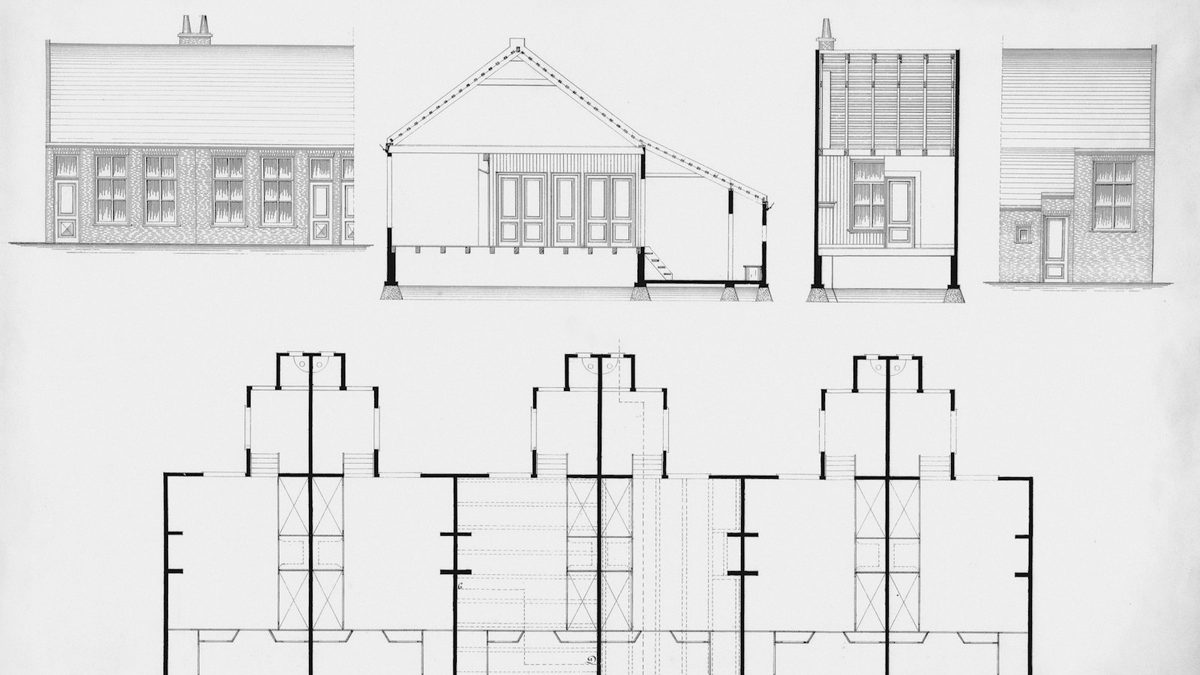
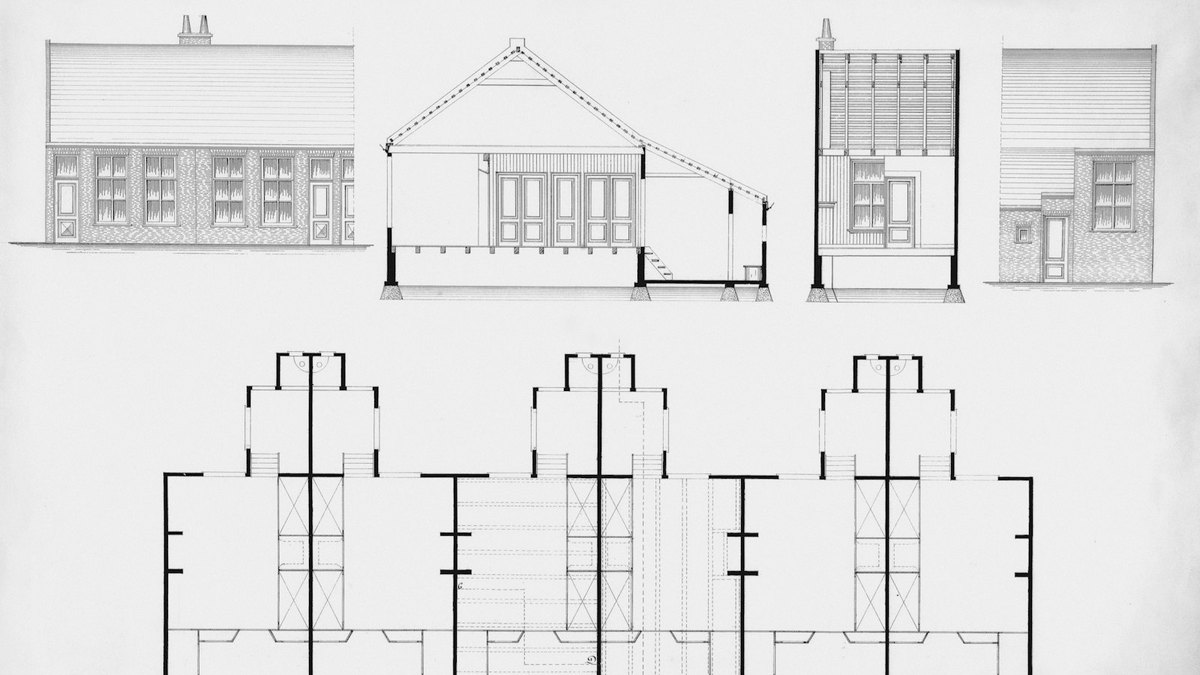
This is the part of construction AI that gets least attention and causes most trouble. A drawing set is not a document in any sense a language model finds convenient. It is a large collection of scanned or exported sheets carrying information in geometry, in line weight, in symbol conventions that vary by discipline and by firm, in text that may be vector or may be pixels, and in cross-references between sheets that a human reads by flipping pages. Getting from that to a structured representation a model can reason over reliably is the unglamorous, expensive, deeply annoying half of the work.
Buying a team that has been grinding on exactly that is a statement about where the bottleneck sits. It is analysis rather than reporting to say so — Buildcheck has not published a rationale — but it is the reading the two product descriptions most directly support.
Nine Months Is Early
Buildcheck raised $5.9 million in a seed round announced on 9 December 2025, led by Uncork Capital with Peterson Ventures and Xfund participating, alongside angels from OpenAI, Opendoor, CBRE and Zillow. It was founded by Alexander Michalatos, its chief executive, with Andrei Molchynsky and Alex Gureev, who leads AI development.
Absorbing another company roughly nine months after a seed round is unusual. Without disclosed terms, the honest range of interpretations is wide: this could be a substantial transaction or it could be a small team joining, which at this stage is the more common shape. What it is not is a company with a large balance sheet rolling up a market.
The Category Is Genuinely Crowded
The reason any of this is notable is that the space Buildcheck and Plangrep occupy has filled up quickly, and this newsroom has spent much of the year documenting it.
LightTable raised $22 million for AI review of drawings for design errors, omissions and constructability problems. Primepoint raised $10 million working on construction drawings. Torus came out of stealth with AI agents for engineering documents. Nomic is running drawing review against firm standards at Arcadis, and has since disclosed a strategic round in which Aurecon and Arcadis are both investors and commercial partners. And Buildcheck’s own product is already in real use — Novo Construction’s CIO described replacing Bluebeam overlays with Buildcheck’s Diffs to catch changes between drawing revisions.
The incumbents have been buying into the same problem for a year. Nemetschek’s September 2025 acquisition of Firmus AI brought in a startup analysing 2D drawings for scope gaps, inconsistencies and design changes — the same sentence, more or less, that describes Buildcheck.
The week this deal surfaced, the ConTech Roundup newsletter also reported that Groundbook AI had come out of stealth in California with an AI plan reviewer that checks PDF drawing sets against checklists, reports and building codes, and described Plangrep as a Minneapolis startup. Those details come from a trade newsletter rather than a company announcement and should be held a little more loosely than the rest of this piece.
What Consolidation This Early Suggests
When a category consolidates before its companies have scaled, the usual explanations are that the underlying capability is harder than it looked, or that differentiation at the application layer is thinner than the pitch decks imply, or both.
Both look plausible here. A dozen companies promising to read drawings and flag conflicts are, at the demo layer, difficult to tell apart — the difference between them lives in recall on messy real sets, in false-positive rates that determine whether anyone keeps using the thing after week three, and in how much of a drawing set the system can actually parse before a human has to intervene. Those are parsing problems more than reasoning problems.
If that is right, the teams who solve ingestion end up mattering more than the teams who write the review logic on top of it, and buying the ingestion team early is a rational move rather than a defensive one.
It is one deal with no disclosed terms, and it would be overreach to build a thesis on it. But it is a different shape of consolidation from the one this category has seen so far. When Nemetschek bought Firmus, an incumbent was buying capability it did not have. Here, two venture-stage companies in the same category have combined — and the direction they combined, application layer absorbing infrastructure layer, is the detail worth remembering when the next one happens.