
Most serious attempts to put robots on a construction site have taken one of two shapes. Either you retrofit a machine that already exists — the approach Bedrock and Gravis have taken with excavators — or you design a purpose-built robot for one task, as Monumental has with bricklaying. Both work. Both share a cost structure: the intelligence you build is welded to the body you built it for.
A company called ZINOVA launched on 14 September proposing a third shape, and it is worth taking seriously even though almost nothing about the business is yet public. Its pitch is that the reusable asset in construction robotics is not the robot and not the task — it is the ability to pick up and operate the tools the industry already owns.
The company calls this Tool Intelligence, and describes it, in the phrase it chose for its launch announcement, as “the execution layer for physical AI.”
What was actually demonstrated
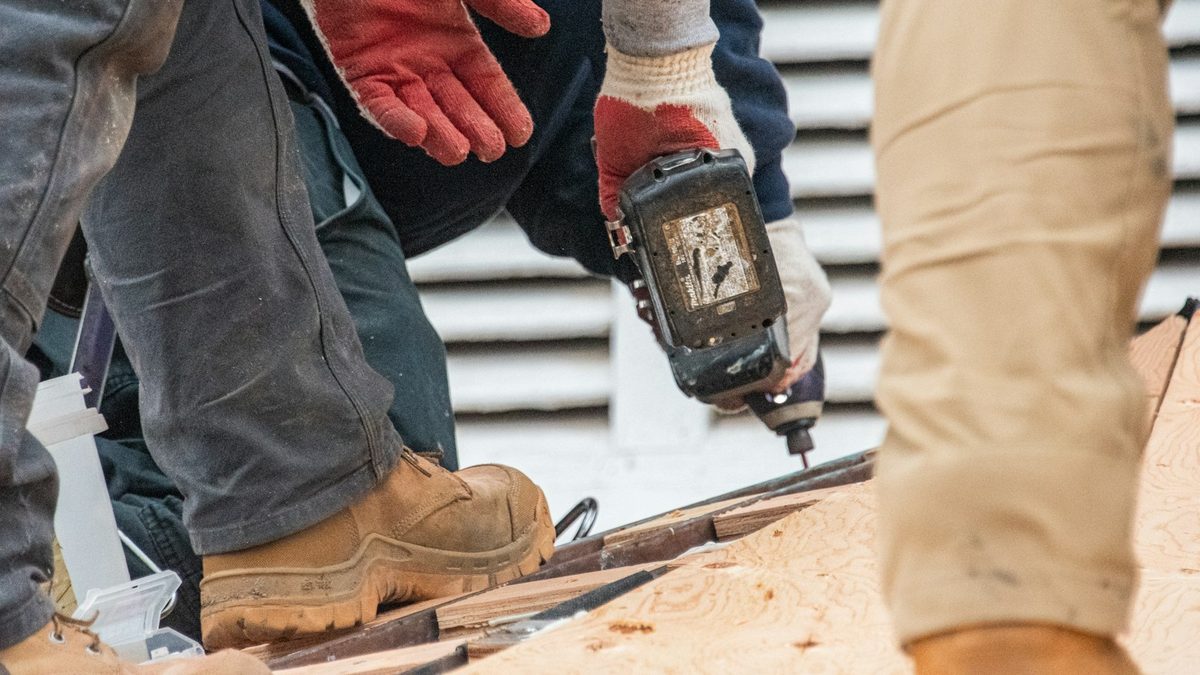
The specificity of the demo is the most useful thing in the announcement. Per the release, ZINOVA “is showcasing multiple experimental robotic systems using existing construction tools to complete portions of a steel-reinforced concrete tilt-up panel segment, a structural element commonly used in data-center and industrial construction.”
Note the three qualifiers doing work in that sentence: experimental, portions of, and segment. This is a research demonstration of partial work on a piece of a panel, not a production system pouring tilt-up walls on a live job. The release does not claim otherwise, and neither should anyone reading it.
But the choice of tilt-up is not arbitrary. Tilt-up panels are a repeated, heavily reinforced, geometrically constrained element that shows up in the building types absorbing enormous amounts of construction capital right now — data centres and industrial sheds. If you are picking a first physical task where repetition is high, tolerance is forgiving, and demand is enormous, that is a defensible place to start.
The thesis: intelligence that survives the robot
Ziyou Xu, named in the release as ZINOVA’s founder, puts the argument in terms of tools rather than machines:
Almost everything humans have built, from homes and factories to infrastructure and spacecraft, was made possible through the skilled use of tools. Our goal is to give physical AI that same capability, allowing the form of the robot to change while the intelligence to use tools remains.
That last clause is the whole strategy. CEO Ryan Cox states the commercial version of it plainly:
The opportunity is much larger than building a different robot for every individual task. ZINOVA is focused on developing intelligence that enables robotic systems to use the tools industries already rely on, independent of any single robotic form, allowing us to test more configurations, learn faster and support many kinds of physical work.
If that works, it changes the unit economics of the field. Construction’s tool ecosystem is vast, standardised around human hands, and already paid for. A robot that can operate a rotary hammer, a rebar tier and a screed by understanding tools generally does not need a bespoke end effector, a bespoke control stack and a bespoke sales motion for each one. That is the claim. Whether it holds is an empirical question nobody can answer from a launch announcement.
Three research tracks
ZINOVA describes its core research across three named strands, which Construction Digital reported on 17 September:
- Grasp — General Tool Grasp, enabling robots to recognise and manipulate the broad range of tools built for human hands.
- Feel — the Tool–Embodiment Interaction Sensing Interface, or TEISI, capturing force, torque, vibration and resistance data from the tool as it works.
- Form — The Third Form, experimental robotic embodiments designed around the requirements of the work rather than around human anatomy.
The second one is the interesting engineering problem. A human using a grinder knows from vibration and resistance when the wheel is binding, when the cut has gone through, and when something has gone wrong — information a camera feed does not carry. Instrumenting that channel is a prerequisite for a robot doing tool work unsupervised, and it is the kind of sensing layer that is hard to bolt on later.
The third is a hedge against the humanoid assumption. Embodiments designed, as Construction Digital puts it, “around the work itself rather than human anatomy” are a quiet argument that the legged-humanoid form factor currently absorbing enormous robotics capital may not be the right body for a jobsite, even if the tools were designed for the species that walks on two legs.
Who is behind it, and what the release does not say
Per the release, ZINOVA is led by CEO Ryan Cox and founder Ziyou Xu, and “brings together researchers, professors and industry veterans with experience spanning Carnegie Mellon University, the University of Pennsylvania, Columbia University, MIT, Tsinghua University.”
It operates, the release says, “as a distinct research and development company while collaborating with organizations that contribute complementary robotics, engineering and construction expertise,” naming as initial demonstration partners robotic platforms from LimX Dynamics and KUKA, and construction-industry experience from RIC Robotics. LimX Dynamics is the Shenzhen company that describes itself as “a robotics company advancing Physical AI with general-purpose robots,” building the Oli and Luna humanoids and the TRON modular platform. KUKA is the Augsburg industrial-robot manufacturer that calls itself “one of the world’s leading suppliers of intelligent, robot-based automation solutions.” RIC Robotics builds large-scale 3D concrete printing robots.
That is a deliberately mixed set — a humanoid developer, a traditional industrial-arm maker and a construction-robotics operator — which is consistent with a company claiming its intelligence layer is independent of robot form.
One of the three is not arm’s length, and the release does not say so. Construction Digital reports that RIC Robotics was “Founded by ZINOVA’s Ziyou Xu and commercially led by Ryan Cox,” and that ZINOVA “operates as an independent research entity while maintaining a relationship with RIC Robotics, a company also linked to ZINOVA’s Founder and CEO.” So the construction-industry experience in that partner list comes from a company sharing ZINOVA’s founder and its chief executive. LimX Dynamics and KUKA are the two unaffiliated platforms named, and they are supplying robot hardware rather than vouching for the results.
What the announcement does not contain is as notable. It discloses no funding, names no investors, and names no construction customers or pilot sites. We could not locate a company website we were able to verify as ZINOVA’s own; at least two domains built on the name resolve to unrelated businesses — one an art gallery, one a product-engineering firm — and we have not linked to any of them rather than risk pointing readers at the wrong company. There is no stated timeline for commercial deployment, and no quantified measure of how much of the panel was completed or how much of the work was autonomous.
Why this is worth watching anyway
A launch with no funding figure and no named customer is the kind of item that earns scepticism by default, and our read of this market is that the distance between a demonstration and a second jobsite is where most construction robotics stories end. The reason to file this one rather than discard it is the shape of the argument.
The industry’s labour constraint is not a shortage of machines. It is a shortage of people who can competently operate tools in variable conditions, and the Suffolk–MIT white paper published two days after ZINOVA’s launch puts the US skilled-worker gap at 456,000 additional workers needed in 2027, citing Associated Builders and Contractors. Every robotics company in this market is ultimately selling against that number. Most are selling one task at a time.
ZINOVA is arguing that the task-by-task approach is the thing that makes construction robotics expensive, and that the general capability worth funding is tool use itself. That is a research bet, presented as a research bet, with a demo attached. The next signal that would matter is a funded round, a named contractor, or a full panel — not a wider demo reel.