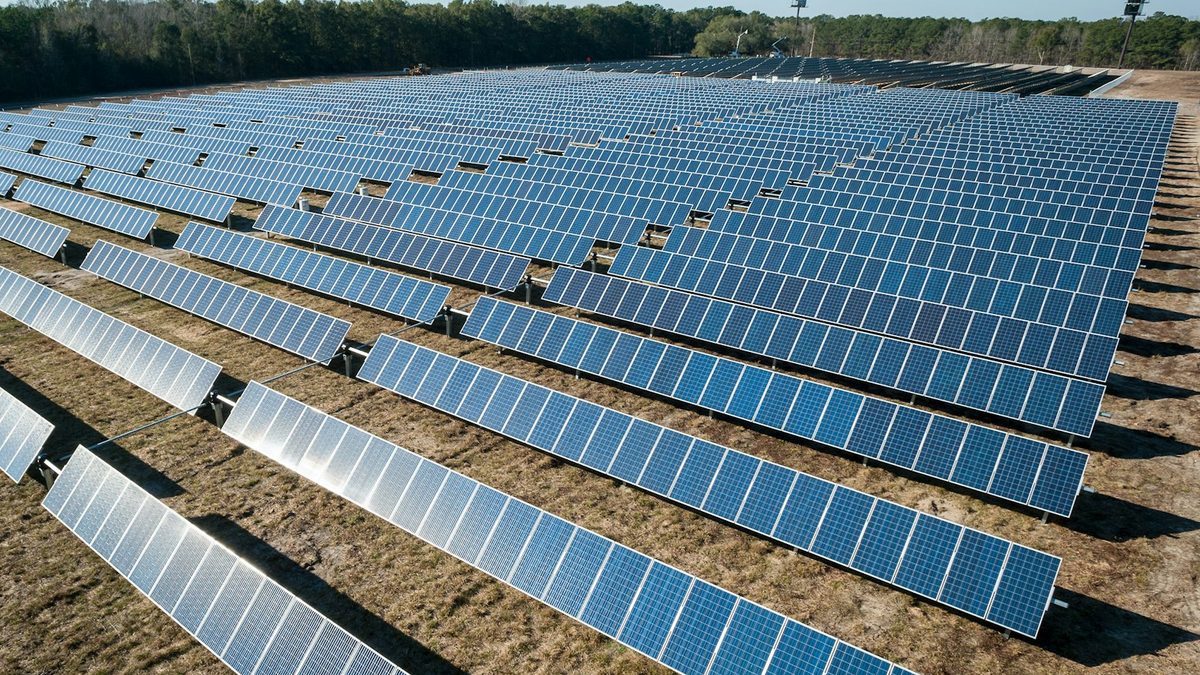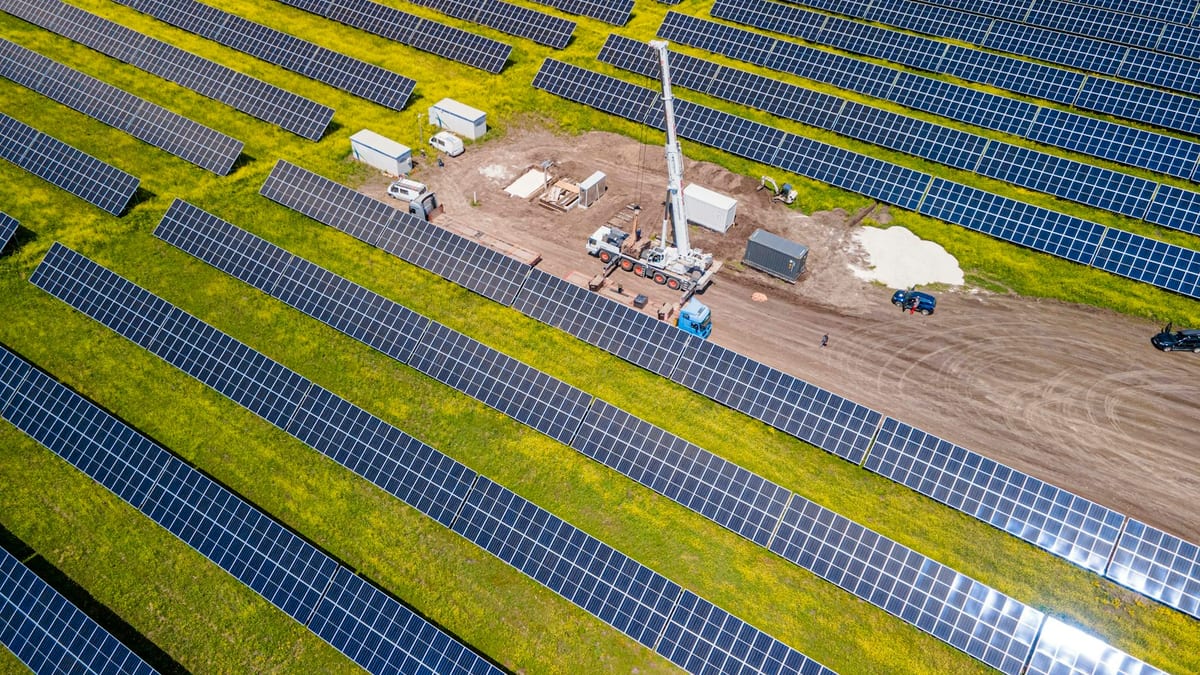
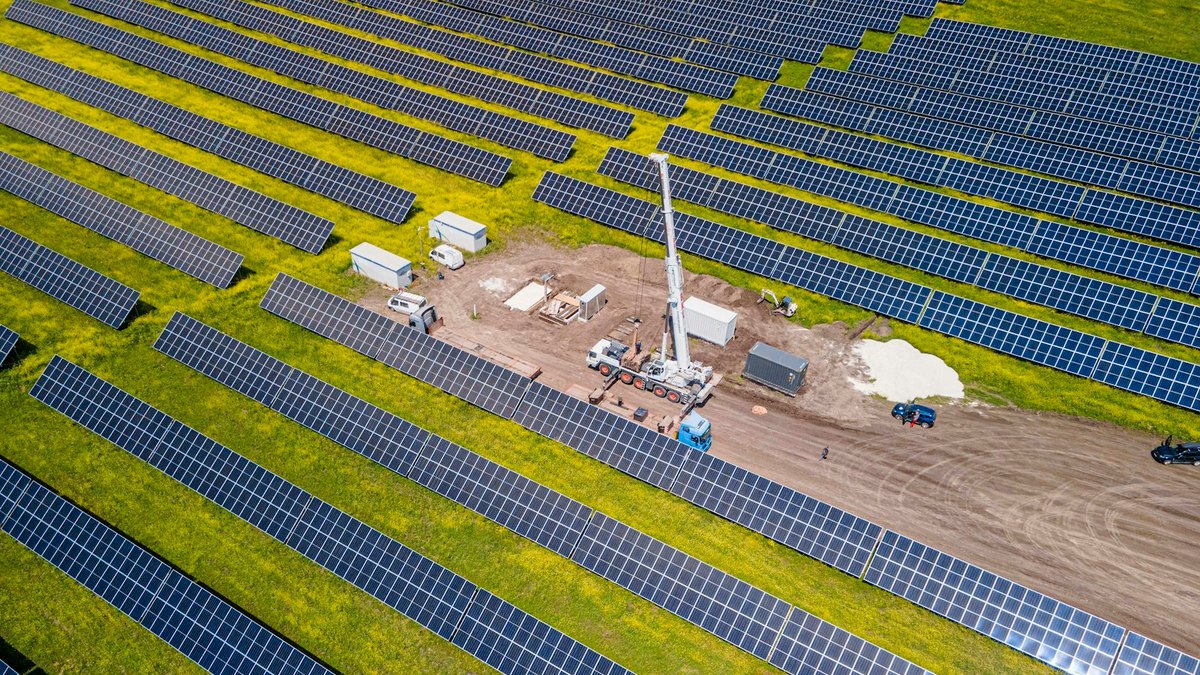
Gritt announced a partnership with MasTec on 10 November, in a release carrying a South San Francisco dateline that went out over BusinessWire. The scope, in the company’s own words: deploy Gritt’s AI-powered systems “across MasTec Renewables projects,” with plans “to explore applications in additional infrastructure sectors.” The work will expand “through a pipeline of projects, initially focused on MasTec’s growing utility-scale solar portfolio across multiple states.”
The release discloses no financial terms, no number of projects, no megawatt figure and no timeline. The sentence that carries the weight is a different one, and it is about the past rather than the future: “The partnership follows successful field deployments and MasTec Renewables’ extensive evaluation of Gritt’s systems through the installation of megawatts of solar panels on active job sites.”
Why the Evaluation Is the News
In July this publication covered Gritt’s $26m Series A and closed it with a specific test. The company’s traction figures at that point were company-stated and relayed through TechCrunch; the contracted pipeline rested on Gritt’s word plus one anonymous corroborating customer. “The longer test is a named customer,” we wrote. “Right now the strongest public evidence for Gritt’s productivity claim is Gritt.”
That test has now been partly met, and it is worth being precise about which part. A renewables contractor of real scale has put its name, and a named executive — Rob Turner, Vice President of Construction at MasTec Renewables — to a public statement that it ran these systems on live work and intends to run more of them. Turner’s quote is careful and does not contain a number: “We’ve evaluated Gritt systems on active construction sites, and we see an opportunity to pair our teams’ expertise with technology that supports them in the field.”
In construction robotics the pilot is cheap and the second project is expensive, because the second project means somebody’s schedule now depends on the machine. A contractor saying in public that it evaluated a system through real installation and is moving to a pipeline is a stronger signal than any productivity multiple a vendor publishes, precisely because the contractor is the party carrying the schedule. That signal is what arrived on 10 November. A customer-attributed output figure did not, and this article does not supply one.
What MasTec Renewables Is
MasTec is a Coral Gables, Florida infrastructure contractor. Its own operating-entities page says the company “predominately operate[s] under the MasTec brand umbrella across the country” while also running expertise-based entities acquired over the years, and lists five: MasTec Pipeline Infrastructure, MasTec Communications, MasTec Clean Energy & Infrastructure, MasTec Power Delivery and MasTec Advanced Technologies. The Gritt release’s own boilerplate describes MasTec as operating through four segments — Communications, Power Delivery, Pipeline Infrastructure, and Clean Energy and Infrastructure.
Renewables is one of three operating groups inside that clean-energy segment. MasTec’s own page for Clean Energy & Infrastructure says the business “operates across three core operating groups: Renewables, Industrial & Infrastructure and General Building.” A separate MasTec page on wind construction states that “MasTec Renewables leads the industry in utility-scale wind construction” — MasTec’s claim about itself, reported here as one. For the purposes of this story the relevant fact is narrower and not in dispute: the counterparty is a renewables construction business of real scale inside a public infrastructure contractor, not a pilot team inside an innovation group.
The Retrofit Bet, Revisited
Gritt’s thesis is the one that sets it apart from most of the well-funded construction robotics companies in this publication’s coverage: don’t build the robot. The intelligence is the scarce part, the steel is not, so bolt the system onto equipment crews already have — skid steers, forklifts — and let the capital cost per deployed unit collapse. The release restates it in a single clause: Gritt “deploys it through robotic attachments to common construction equipment.”
The nearest comparison in this publication’s coverage is TerraFirma, which raised $115m to retrofit existing excavators and dozers so they can be run remotely from a command centre. Xpanner has taken the opposite turn within the same commercial model: its X1 Piling R6 now ships with the crawler carrier attached and the whole machine is sold as a subscription. And the capital in the category is concentrated at the other end of the architectural argument — Bedrock raised $600m at a $4.1bn valuation in October to bring autonomy to earthmoving equipment, roughly 23 times Gritt’s Series A.
Gritt’s solar page currently publishes three figures for that bet: “35k+ panels installed,” “18MW+ of solar installed” and “2.8GW of solar construction contracted.” The 2.8GW figure is the same number the company was using in July. The page carries no as-of date for any of the three, and its two customer testimonials are attributed by role rather than by name — a “VP of Construction, leading power EPC” and a “Director, Utility-Scale Solar Contractor.” The page also states that “[t]op 10 solar EPCs use Gritt,” that “EPCs report a 4X productivity boost,” that Gritt “cost 50% less than full manual installation and reduces heavy-load injuries by 80%,” and that deployment takes one to four weeks. Every one of those is the company’s own figure, and this publication reports them as the company’s.
The First Named Partner, and the Comparison That Now Exists
MasTec is the second construction firm named in a press release on Gritt’s own newsroom. The first was Burns & McDonnell, on 25 August, in a release the company still publishes and which describes a strategic partnership “focused on evaluating and deploying AI-powered robotics technology on utility-scale solar projects.” That one produced something the November release does not: a specific project. Burns & McDonnell’s own project page for Gibson City Solar — a 1,700-acre, 346 MWdc facility in McLean and Ford counties, Illinois, built for Earthrise Energy with Burns & McDonnell as EPC partner — says the site “served as a testing ground for next-generation construction automation” and that the project deployed “AI software from Gritt to install a portion of the solar modules on-site.”
The honest reading of that sentence is that it confirms deployment and quantifies nothing. “A portion” is not a module count. It is still a named megaproject on a customer’s own website, which is a materially better class of evidence than an anonymous reference.
It also now sits next to a competing data point. Renewable Energy World reported in September on the alternative architecture — AES’s Maximo, a purpose-built solar installation robot rather than an attachment. Per that article, Maximo “eclipsed a major milestone, installing more than 100 MW of utility-scale solar capacity at Bellefield” this spring, and the project “scaled from using a single robot to a coordinated fleet of four Maximo units operating in parallel.” The article attributes to AES a version 3.0 performance rate that “consistently exceeded installing one module per minute,” and crews “finishing as many as 24 modules per shift hour per person.” Those last two are AES’s figures about AES’s machine, and the two systems are not doing identical work on identical sites, so this is not a benchmark. Nor are the two sides evenly sourced: AES’s numbers are AES’s own, and on Gritt’s side the only output figures are Gritt’s own self-published ones, with the customer-confirmed material limited to the fact of deployment. What the pair gives a reader is a sense of the two architectures now running in public — build the robot, or rent the body and sell the brain. Construction robotics took $1.6bn this year with roughly 83% of it going to three companies, and Gritt is not one of the three. If the retrofit thesis is right, it should not need to be.
Both releases are also explicit about scope limits, which is now the settled convention across this publication’s coverage rather than a distinguishing feature. The November release says Gritt’s AI “learns physical tasks, including picking and placing, assembly and material transport, while craft employees guide and validate the work” — a human in the loop stated as mechanism, not as reassurance. The August release has Burns & McDonnell construction project manager Jami Stone saying “[t]here will always be a human element to robotics.” Gritt’s solar page lists what it is expanding into next — “purlin assembly, component transport, and oversight & verification” — which is a roadmap that tells you what the product does not do yet.
What to Watch
Three things would move this from a strong signal to a result.
The first is a megawatt figure or a project count attached to the MasTec pipeline. “Multiple states” and “a pipeline of projects” are the shape of a commercial relationship, not its size.
The second is whether the second vertical arrives. Gritt’s site lists data centre and large infrastructure as “Coming Soon,” and the MasTec release says the companies plan to explore additional infrastructure sectors. Utility-scale solar is about as repetitive as large-scale construction gets — the same panel, the same torque, flat ground, no trades stacked on top of each other. It is the closest thing outdoor construction has to a factory floor, which makes it an excellent first market and a poor proof of the second. The step into a data centre hall is a step into congestion and sequencing, which is where jobsite robotics has historically broken.
The third is the figure Gritt has published and which no customer confirms in its own voice in any of the documents checked for this article: the 4X productivity multiple. MasTec has now said it evaluated the systems and liked what it saw. The sentence that would end the argument is MasTec saying what it measured.