Exclaim Robotics, a Zurich company building autonomous robots for data centre maintenance, has come out of stealth with USD 4.95 million in pre-seed funding co-led by Founderful and Playfair. The round was reported on 5 August and is quoted in some coverage as €4.29 million, the same money in the other currency.
The company’s own description of what it is building is refreshingly narrow: “optics, cabling, and drive replacement on live 800V racks.”
The Wedge Is Voltage, Not Wages
The obvious pitch for a data centre robot is the one every construction robotics company makes — there are not enough technicians and there is too much building. Exclaim’s framing is more specific, and better.
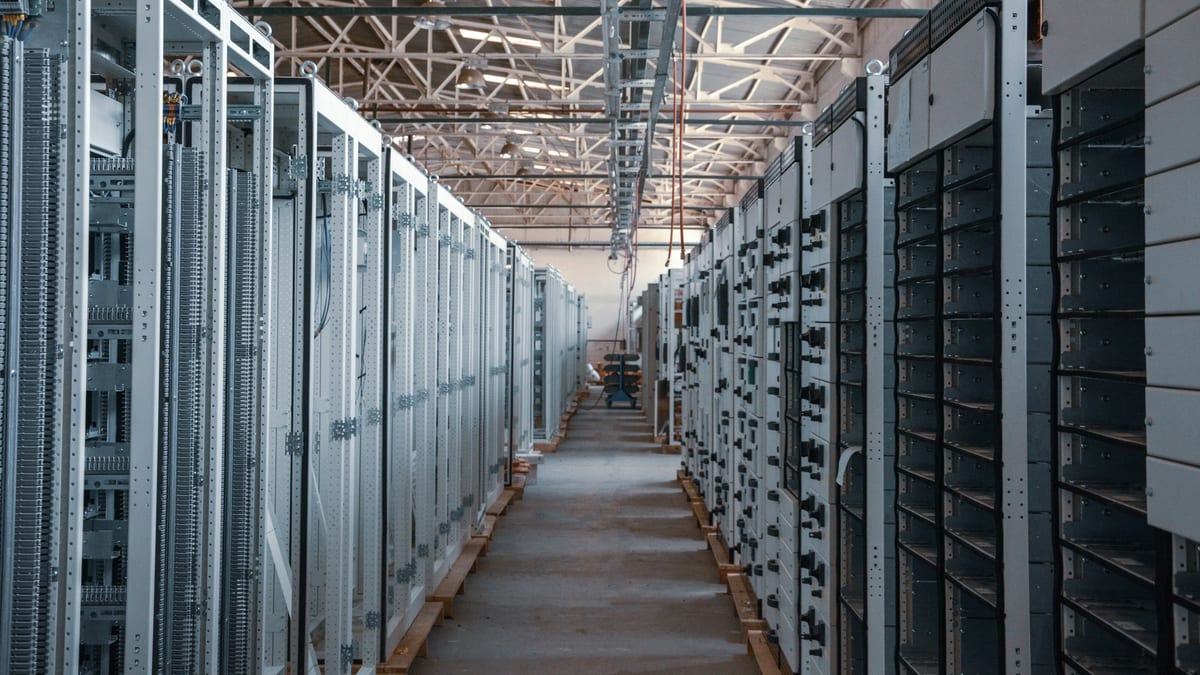
As AI infrastructure scales, power density has pushed operators toward 800-volt DC distribution. That change makes the electrical environment inside a data hall materially more dangerous for the humans who work in it, with arc flash the named hazard when accessing racks. The task list has not changed much — swap a failed drive, clean or replace an optic, re-seat a cable — but the conditions under which a person performs it have.
That is a genuinely different argument from labour arbitrage. Automating a task because it is expensive puts a robot in competition with a wage. Automating it because the task is becoming hazardous puts the robot in competition with a safety procedure, and safety procedures are where the time actually goes: lockout, permits, second person present, PPE. A machine that can work a rack face nobody is allowed to touch casually is selling around a constraint rather than under a price.
What the Robot Actually Does
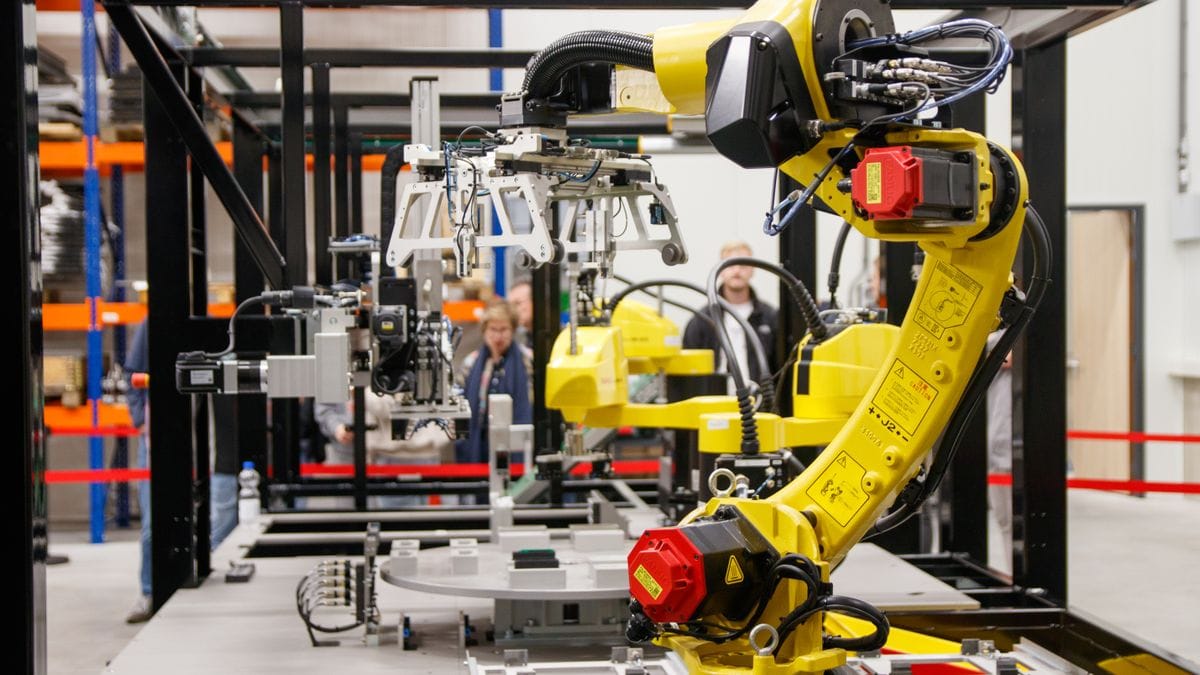
Per startupticker’s account, the robots navigate the data hall autonomously, position themselves at a rack, and work the front face from floor level to the top rail — without modifications to the building. The targeted work is high-volume break-fix: replacing and cleaning optics and SFPs, copper network cabling, drive replacement.
Two engineering choices are worth flagging because they are the ones that decide whether this works.
The first is that the problem is dexterity, not payload. Exclaim is going after fine manipulation of small connectors in tight, dense spaces, which is close to the hardest open problem in commercial robotics and nothing like the heavy-lift automation that dominates construction robotics. It is a reasonable bet only because the environment is unusually cooperative: a data hall is flat, indoor, well-lit, dimensionally standardised and unchanging, which is close to the opposite of a job site.
The second is the fallback. The system is trained in simulation before touching real hardware and hands off to a remote operator when its confidence is low. That is the correct architecture for this class of problem, and also an admission — the economics depend on how often the handoff fires. A robot that escalates one task in fifty is a product. One that escalates one in five is a very expensive way to give a technician a longer arm.
The company has not disclosed pilots or named customers, and its site lists no deployments. At pre-seed that is normal; it also means everything above is a design intent rather than a demonstrated capability.
The Team
Founder and CEO Helen Oleynikova holds a PhD from ETH Zurich and spent roughly 15 years in robotics at Willow Garage, Google, Microsoft, NVIDIA and ETH Zurich, where she co-created nvblox, a 3D mapping and collision-avoidance component now shipped in NVIDIA’s Isaac ROS. Founding engineer Patrick Pfreundschuh also holds an ETH Zurich PhD and was part of the winning team at the DARPA Subterranean Challenge.
That is an unusually strong navigation-and-mapping pedigree for a company whose stated hard problem is manipulation — the SubT Challenge in particular is a canonical test of autonomous operation in unmapped, hazardous spaces. Whether that background transfers to re-seating an optic is the open question, and it is the one investors were pricing.
Founderful is a Swiss firm that leads first rounds; Playfair is a London pre-seed investor working out of a £57 million third fund. Founderful principal Antonia Albert framed the thesis plainly in the announcement: “AI data centres are scaling faster than anyone can staff or safely maintain them.”
Where This Sits
Data centres have become the most reliable demand signal in construction technology, and the tooling has followed the money. August Robotics raised $30 million for autonomous jobsite robots aimed squarely at data centre work. OpenSpace has been tracking capture across more than 1,000 data centre projects. Even the backlash is now a market event.
Exclaim is on the other side of the handover. Almost everything else in this category serves the build; Exclaim serves the twenty years after it, which is a larger cumulative spend and a much stickier customer relationship — and a harder first sale, because the buyer is an operations organisation with an existing vendor bench and a strong institutional preference for not letting anything unproven near live equipment.
What to Watch
The metric that matters is the escalation rate, and no one outside the company can see it yet. The second is whether a hyperscaler or colocation operator will put its name to a pilot; in this sector, the first named reference tends to arrive long after the first deployment, because operators treat their maintenance stack as competitive information.
The third is scope discipline. Exclaim says its longer-term vision is robots servicing “any hazardous, remote, or hard-to-reach infrastructure” — substations, telecom, industrial plant. That is the right total addressable market and the wrong thing to start building. The companies that succeed at this shape of problem are the ones that stay boring for longer than is comfortable.