BRKZ announced $31 million in new capital on 14 September 2026. The Riyadh company runs a procurement platform that sits between contractors and the factories and importers that supply them with cement, steel, wood and the rest of the bulk material bill.
The structure of the money is worth reading before the narrative around it. Of the $31 million, $13 million is Series B equity, co-led by Wa’ed Ventures — which the release describes as a venture capital arm of Aramco — and 500 Global, with participation from BECO Capital and Anb Seed Fund. The other $18 million is growth debt, committed by existing financing partner Stride Ventures under what the release calls BRKZ’s “previously announced $30 million venture debt facility,” earmarked for “working capital and flexible payment terms for customers.”
So 58% of the headline number is not equity at all. That is not a criticism of the round; it is the clearest signal in it.
Why the Debt Is the Larger Half
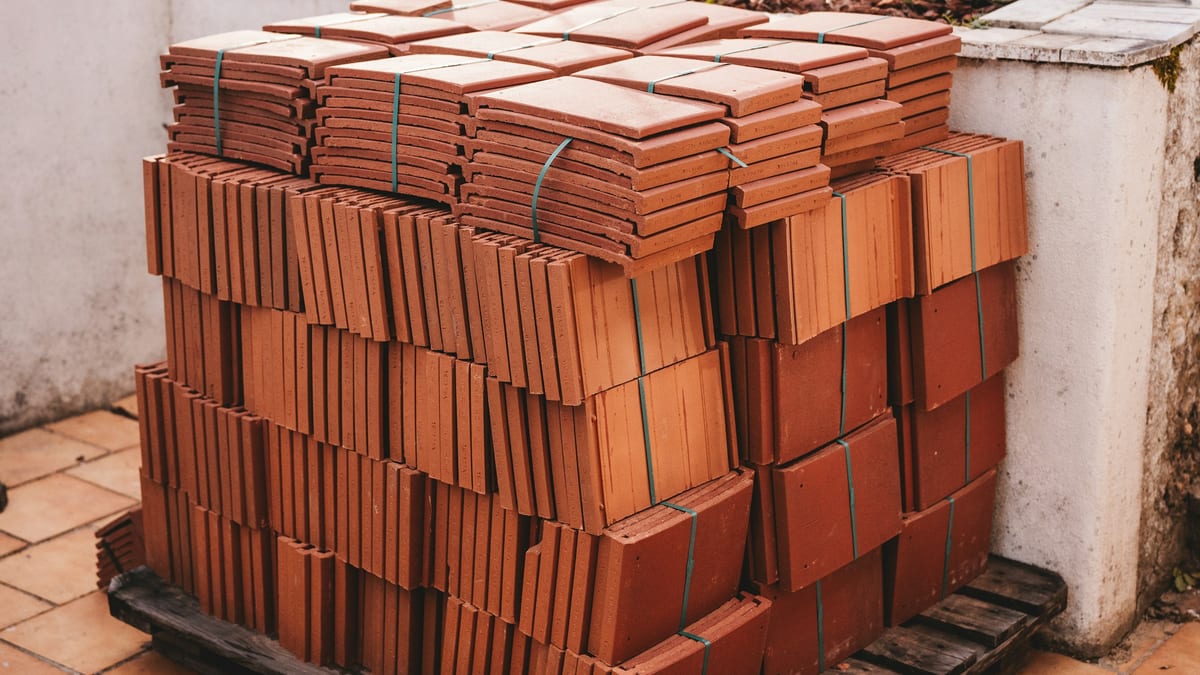
A software company raises equity because its costs are engineers. A materials marketplace raises debt because its costs are pallets of cement it has to pay for before the contractor pays for them.
BRKZ’s platform offers deferred payment terms — the contractor takes delivery now and settles later. The release ties the debt directly to this, saying it supports “working capital and flexible payment terms for customers”; TechCrunch’s earlier reporting described the same feature as buy-now-pay-later financing. Every day of that gap is capital the company has to source from somewhere, and it scales with volume rather than with headcount. Equity is an expensive way to fund a receivable. Debt, priced against a book of invoices, is the correct instrument, and the fact that a lender already inside the business committed a further $18 million under that facility is a more informative datapoint about BRKZ’s collections than any growth multiple in the release.
This newsroom has covered the same structural problem from the other direction. HomeRun raised $12 million for sixty-minute materials delivery, and one of its investors characterised the company as growing “without offering credit” — a claim this newsroom flagged at the time as an investor’s characterisation rather than audited data. BRKZ is financing its customers rather than avoiding it, and the venture debt facility is the cost of that position.
What follows is analysis rather than reporting: the interesting risk in a business of this shape is not whether the AI works. It is what the receivable book does in a downturn, and neither the release nor any coverage this newsroom found discloses default rates, days sales outstanding, or the terms of the Stride facility.
What the AI Actually Is
The release is unusually specific about the model, which makes it checkable in a way many “AI-enabled” announcements are not.
The company says its pricing engine predicts what a material will actually transact at, and puts the accuracy at “84% to 89% of predictions fall within 5% of the final transacted price.” Separately it says that “approximately three-quarters of delivery notes are now processed without manual override” — that is document extraction on the fulfilment side, turning paper proof-of-delivery into structured records without a human retyping it.
Those two claims describe an ordinary and sensible machine-learning product: a price model trained on the company’s own transaction history, and an extraction model pointed at the paperwork that history generates. The release puts the underlying corpus at “approximately 38 million structured data points across 13,000+ product records and 2,100+ supplier profiles.”
The reason the pricing number matters commercially is quoting speed. A contractor who can get a defensible price in minutes rather than days can bid more work. But it matters financially too, and the release does not draw the line for the reader, so this newsroom will label the connection as inference: a business that both quotes a price and finances the purchase needs to know what the material will really cost it, because the margin between the two is where the credit risk is absorbed.
What the Company Reports
These are BRKZ’s own figures, published in its announcement, and are not independently verified here.
The release says BRKZ “now serves more than 1,500 contracting companies and 150 building materials factories,” has sold “more than $133 million (SAR 500 million) in raw, local, and imported building materials,” and has “processed more than $1.37 billion (SAR 5.13 billion) in RFQs through its platform.” On growth, it says: “Revenue is on track to triple in 2026, following 2.5x year-on-year growth in 2025.” It puts lifetime capital at “more than $70 million in total capital since inception across equity and debt.”
Founder and chief executive Ibrahim Manna, a former Careem executive, gave the release its framing: “The past twelve months have reinforced why we built BRKZ. Even amid significant regional and supply-chain disruptions, we achieved record growth because contractors and factories still need reliable access to materials, competitive pricing and dependable fulfillment.”
From the investors, Anas Alghatani, chief executive of Wa’ed Ventures, said the firm’s “continued investment in BRKZ reflects our confidence in the company’s ability to make building materials procurement more efficient, connected and data driven.” Amjad Ahmad, managing partner at 500 Global, put the market case plainly: “Building materials procurement is one of the largest, least digitized categories in the Saudi economy, and BRKZ has methodically built the infrastructure and data needed to solve it at scale.”
Khalid S. Alghamdi, chief executive of Anb Capital, cited the RFQ figure in riyals: “With more than SAR 5 billion of RFQs already processed, BRKZ has demonstrated both execution and scale.”
The Rounds Before This One
BRKZ’s Series A totalled $17 million, as TechCrunch reported in February 2025, assembled in two tranches — an $8 million first close in March 2024 and a $9 million extension announced in February 2025, itself split $8 million equity and $1 million debt. Wa’ed and BECO Capital were in that round too, which makes this Series B an insider-led one on the equity side as well as the debt side.
The release also notes one financing event between the two rounds: “Earlier in 2026, BRKZ also received a strategic investment from SIC, the investment arm of the Saudi Industrial Development Fund (SIDF).” No amount is given for it.
The equity-plus-debt habit, in other words, is not new to this announcement. It has been the company’s financing shape from early on, and the ratio has moved decisively toward debt as volume has grown — which is what you would expect if the working-capital thesis above is right.
What Is Not Known
Neither the release nor the coverage this newsroom reviewed states a valuation for the Series B, pre- or post-money. The release does not give a revenue figure in currency — only growth multiples — and does not break out how much of the $133 million in materials sold was financed on deferred terms versus paid up front. It names no individual contractor or factory customer, though it does say BRKZ “supplies contractors and businesses participating in major developments including The Red Sea Project, Diriyah, Qiddiya, ROSHN and King Salman Park” — projects rather than named buyers. The interest rate, tenor and security on the Stride facility are not disclosed, and nor is how much of the previously announced $30 million facility had been drawn before this $18 million commitment.
The checkable facts are the 14 September 2026 date, the $31 million total, the $13 million equity co-led by Wa’ed Ventures and 500 Global with BECO Capital and Anb Seed Fund participating, and the $18 million growth-debt commitment from Stride Ventures. Everything about scale, accuracy and growth in this piece is the company’s own account of itself, reported as such.