
HomeRun has raised $12 million in a Series A+ led by Nexus Venture Partners, with Sorin Investments, Titan Capital, Sparrow Capital and the Consumer Collective by Atrium participating. Indian Startup News reported the round on August 6.
The Bengaluru company, founded by Pukhraj Grewal, runs a quick-commerce platform delivering construction and interior materials to contractors and homeowners within 60 minutes, using localised dark stores. It follows an earlier $6 million round this year.
The Detail That Matters Isn’t the Hour
Sixty-minute delivery makes the headline. The genuinely unusual claim is buried in an investor comment: Sorin Investments describes the company as growing rapidly “without offering credit and with great unit economics.”
Anyone who has looked at building materials distribution should stop on that sentence. The trade runs on credit. A contractor buys on 30, 60 or 90 day terms from a merchant who knows them, and that credit relationship — not price, not availability — is usually what locks the buyer in. It is also what makes materials distribution a financing business wearing a logistics costume, with the associated bad-debt exposure.
A materials platform growing without extending terms is either serving a segment that pays cash — homeowners, small renovation jobs, urgent same-day gap-fills on larger sites — or it has found that speed can substitute for credit as the reason to buy. The second would be the more valuable discovery. When a crew is standing idle because something ran out, the alternative to a 60-minute delivery is not a cheaper merchant; it is a lost day. Urgency is a margin the incumbent credit relationship does not price.
That said, this is an investor’s characterisation in a funding announcement, not audited data. “Great unit economics” is an assertion, and the absence of credit may equally describe a company that has not yet been forced to compete for contractors’ recurring volume, where terms become unavoidable.
Where the Money Goes
The stated uses are the localised dark store network, logistics optimised for heavy payloads, and catalogue expansion across structural materials, finishing goods and interior supplies. Hyderabad and Pune have been flagged as likely next markets.
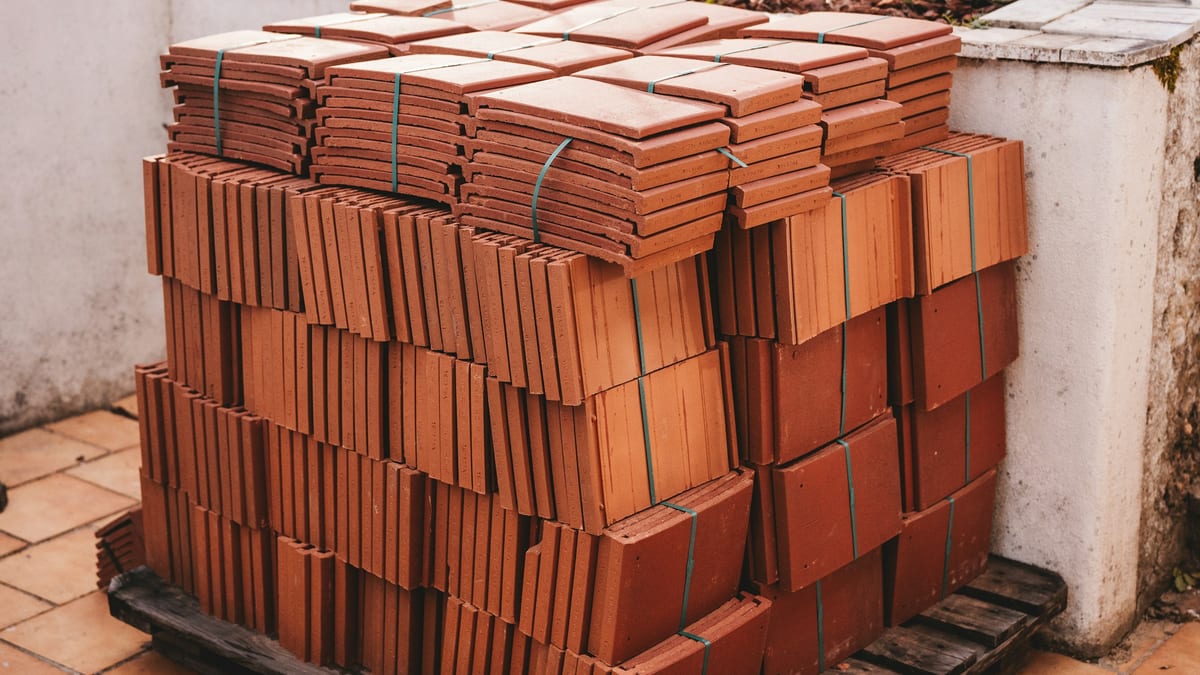
Heavy-payload logistics is the part that separates this from grocery quick commerce, and it is not a small asterisk. Cement, tiles, sand and steel are dense, awkward and destructive to margins. A dark store model that works for a 4kg grocery basket does not obviously survive contact with a pallet of tiles and a third-floor walk-up. Whether HomeRun has genuinely solved that, or is currently serving a lighter-weight slice of the catalogue while calling it construction materials, is the central operational question and is not answered by the announcement.
Does This Travel?
For readers outside India, the honest answer is: not directly, and that is the interesting part.
Indian metros have dense urban construction, fragmented supply, chronic price opacity and a labour model where a crew waiting on materials is a common and expensive failure. Those conditions make an hour-scale delivery promise commercially rational in a way it is not in most of North America, where a contractor’s supply house is a fifteen-minute drive and the account relationship is decades old.
The transferable insight is not the delivery window. It is the observation that materials procurement’s real cost is unplanned interruption rather than headline price — a point that holds in every market, even where the remedy looks different.
The Caveats
We could not verify a founding year. Sources conflict, with at least one implying a 2026 founding that is difficult to reconcile with a Series A+ and a prior $6 million round. We have omitted it rather than publish a date we cannot stand behind.
No absolute metrics were disclosed — no order volume, dark store count, revenue or gross margin. “Growing rapidly” is the entire traction disclosure.
“Series A+” is not a standardised label. It typically denotes an extension or a step between rounds. Total funding to date was not disclosed beyond the earlier $6 million.
What to Watch
Whether HomeRun starts offering credit. If it does, the “great unit economics” claim gets re-tested against bad debt, and the company converts from a logistics business into the financing business its incumbents already are. Holding the line on cash while taking share from credit-extending merchants would be the genuinely novel outcome — and the one worth writing about again.