Zabidou has raised A$3.5 million in seed funding backed by Black Nova, Main Sequence and Antler, following an earlier $1.3 million pre-seed. The Australian company was founded in July 2025 by Cibby Pulikkaseril, and uses lasers and cameras to automate quality assurance on factory production lines — including lines producing steel and concrete for construction.
The round is worth covering for the technology. It is worth reading for the founder’s last company.
The Part Most Funding Stories Would Bury
Pulikkaseril co-founded and served as CTO of Baraja, the solid-state LiDAR company. Baraja raised more than $90 million — including a $45 million Series A in 2019 backed by Sequoia China, Blackbird Ventures and Main Sequence, and a further $40 million in 2021 led by Blackbird — and reached a $300 million valuation in 2021.
Then autonomous vehicle commercialisation timelines stretched, the LiDAR market got crowded, and the company cut 75% of its staff roughly two years later. Forbes Australia reports that some investors had written the value down to zero by 2024.
Main Sequence was on the Baraja cap table. Main Sequence is on the Zabidou cap table.
That is the most informative fact in this round, and it cuts both ways. The charitable reading is that an investor who watched this founder execute through a hard technical problem concluded the failure was market timing rather than capability — which is, in fairness, a defensible diagnosis of what happened to the entire independent LiDAR sector. The sceptical reading is that repeat backing from an investor with a prior loss is not a fully independent signal.
What is not in dispute is that Pulikkaseril is now applying the same core competence — precision laser sensing — to a market where the customer already exists and is already buying.
From Cars That Might Exist to Factories That Do
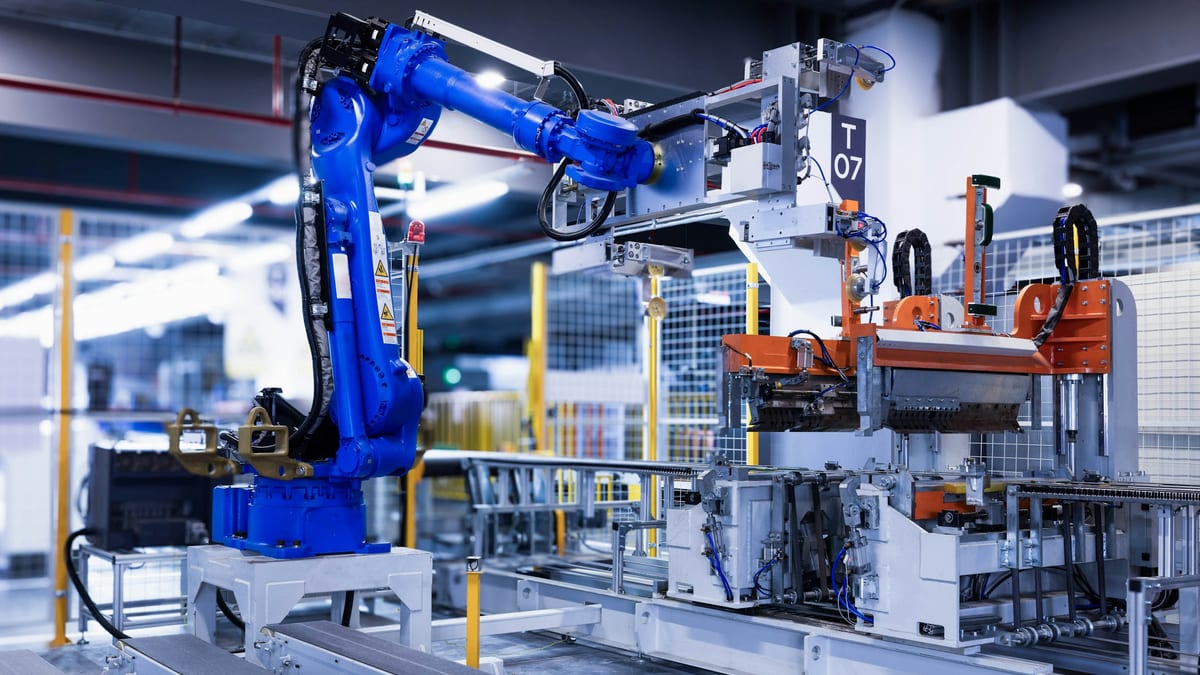
The technology is a multi-modal sensor pod combining laser-based tactile sensing with RGB imaging, running edge AI in real time and in-line rather than as an end-of-line checkpoint.
Main Sequence’s description of the workflow is the clearest articulation: the system ingests engineering drawings, builds a live 3D reconstruction of parts as they move down the line, and flags deviations to the relevant team.
That is a meaningfully different product from a camera that spots defects. Checking against the drawing means the question is not “does this look wrong” but “does this match what was specified” — which is the actual question in prefabricated construction, where a panel that is beautifully made and 8mm off will not fit when it reaches site.
The strategic logic of the pivot is hard to fault. LiDAR for autonomous vehicles required betting on a market that kept receding. Factories making steel and concrete exist now, run now, and do quality control by hand now.
The Construction Angle, Honestly Stated
Zabidou is a manufacturing quality assurance company, not a construction technology company. Its deployments reportedly span six customers across 15 sites, and the sectors named include construction and pet food manufacturing — which tells you the technology is horizontal and the vertical focus is not yet settled.
Main Sequence argues that construction QA alone is a $20 billion-plus market. That is an investor’s estimate in a post announcing an investment, and we have not verified the methodology behind it; treat it as a claim rather than a finding.
The genuine relevance to construction is prefabrication. As more of the build moves into controlled factory environments — panels, modules, precast — quality control moves with it, and the tolerance stack becomes the thing that determines whether modular delivers its promised schedule gains or produces expensive rework at the point of assembly. In-line dimensional verification against the drawing is exactly the control that makes off-site manufacture trustworthy at scale.
The Caveats
Round details are inconsistent across sources. The A$3.5 million figure and the investor names are reported; Main Sequence’s own post does not state the round size or name co-investors. Whether Black Nova, Main Sequence or Antler formally led is not clearly established, so we have not designated a lead.
“Six customers across 15 sites” is a reported figure, not one we could confirm with named customers. No customer has been publicly identified.
A company founded in July 2025 has roughly a year of operating history. The pre-seed-to-seed progression is fast, and fast is not the same as proven.
What to Watch
Whether a named prefabrication customer emerges. Pet food and construction are both real customers of in-line inspection, but they lead to entirely different companies. If Zabidou’s next disclosed deployments are precast or modular manufacturers, the construction thesis is real. If they are food and general manufacturing, this is an industrial vision company that happens to have construction in the deck.