TrueLook announced on 22 September that it has passed 5.5 billion construction images captured, a figure the Winston-Salem, North Carolina company describes as “a milestone 21 years in the making.” Alongside it, the release gives the rest of the shape of the archive: more than 6 million hours of video streamed, across 26,000 projects in 19 countries, accumulating since 2005 at what the company says is millions of new images a day.
Milestone announcements are usually the thinnest genre in this business. This one is worth reading closely, because of a smaller number buried in the middle of it.
The Number That Matters Is 399
Volume is the headline. Duration is the interesting part.
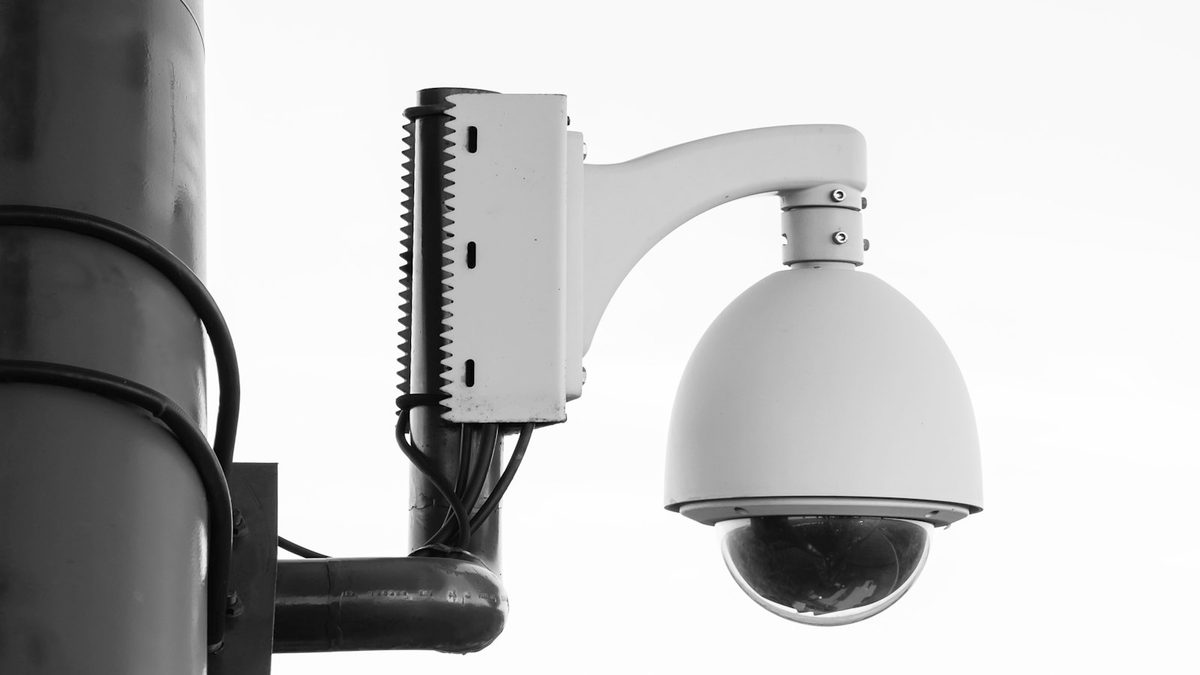
The release says the average TrueLook project spans 399 days, and that some cameras have remained on a single site for more than 5,000 days. That is the difference between an image collection and a record. A fixed camera bolted to a pole for thirteen months does not merely produce a great many frames of a building; it produces the same viewpoint, at the same angle, across every phase of the job — excavation, structure, envelope, fit-out, handover — with lighting, weather and season as the only things moving underneath.
“Reaching 5.5 billion images is an exciting milestone, but the bigger story is what those images represent,” chief executive Roger Yarrow says in the release. “Since 2005, we’ve had a view into thousands of jobsites and watched projects evolve from the ground up. That history gives us an incredible foundation to help construction teams not only see what’s happening, but increasingly understand it.”
The word doing the work there is history. A single photograph of a wall tells you a wall exists. A fixed camera’s year of photographs of the same wall tells you when the wall appeared, how long it took, and what was happening on the days it did not change.
What TrueLook Sells Today
The existing product is unambiguous about being a camera business first. TrueLook’s platform pairs connected jobsite cameras with, in the company’s own description, “live viewing, automated time-lapse, AI-powered analytics, and advanced monitoring capabilities.” Its AI line is branded TrueAI, and the company’s site currently advertises AI-powered motion detection and PPE detection among its features.
That is a narrower set of claims than the archive numbers might suggest, and the company has not stretched them. What the 22 September release does is assert the raw material, then point forward: “In October, TrueLook will unveil a new generation of Jobsite Intelligence capabilities designed to give construction teams greater visibility and insight across their projects.”
It stops there. Read end to end, the announcement does not name a single capability, give a date within October, or mention price. The nearest it comes to a description is that purpose clause — “greater visibility and insight” — and an earlier passage saying jobsite imagery “can help teams find the information that matters faster, identify changes that deserve attention, and stay informed about what’s happening across their projects.” Nor does its text use the vocabulary that would signal model work — the words model, training, dataset and machine learning do not appear anywhere in it. This is a scale claim and a save-the-date, and it should be read as one until the product shows up.
The Capture Footprint Is Still Growing Sideways
The image count is not the only thing TrueLook has been adding to. On 15 September the company announced Universal Connectivity, a capability that lets its cameras run over cellular, Ethernet to an onsite network, built-in WiFi or compatible satellite internet, Starlink included. The release cites customers deploying cameras this way “in the rural outskirts of Anchorage, Alaska, where traditional cellular connectivity can be limited or unavailable.”
That is a less glamorous announcement than an image milestone and arguably a more consequential one. The release frames the problem in the company’s own terms: “As construction expands into more remote, off-grid, and connectivity-challenged environments, getting cameras online can be a persistent hurdle.” The inference we would draw from it is that a camera business’s corpus grows only where its cameras can be switched on, so widening the connectivity options widens the record — plausibly toward energy, transmission, rural infrastructure and remote data centre work, though the release names only the Alaska example.
The Shape of the Competition
Analysis. The construction visual-intelligence market has settled into two broadly different capture models, and TrueLook sits firmly on one side of the split.
Fixed cameras — TrueLook’s approach, and that of Sensera Systems, which raised $27M in February to turn solar-powered site cameras into an AI software layer — watch continuously from a small number of vantage points. They capture time densely and space sparsely. Walk-based capture inverts that: Buildots, which raised $130M this month, mounts a 360-degree camera on a site manager’s helmet and compares the walk against the model and the schedule, while OpenSpace unveiled the next generation of its platform at its Waypoint event on 10 September, including live indoor positioning and a voice-driven field capture mode. Those systems capture space densely and time as often as somebody walks the job.
Neither is a general-purpose replacement for the other, and it would be wrong to read TrueLook’s 5.5 billion as an advantage over a walk-based rival’s rather different corpus — they are records of different things. The fixed-camera bet is that the exterior, the laydown yard, the crane’s reach and the sequence of deliveries are worth knowing continuously, and that thirteen months of unbroken viewpoint is the asset. The walk-based bet is that the answer lives inside the building, where fixed cameras cannot go and progress is measured room by room.
What the October release will reveal is which of those TrueLook thinks it can now monetise beyond security and time-lapse. Until then, the honest summary is that the company has stated the size of its archive, expanded the range of sites it can capture from, and told the market to wait a few weeks. That is a position, not yet a product.
Sources
- TrueLook’s 5.5-billion-image announcement, GlobeNewswire, 22 September 2026. All figures and the Yarrow quotation are drawn from that release. GlobeNewswire blocks automated fetching; the text was read verbatim from its FinancialContent syndication.
- TrueLook’s Universal Connectivity announcement, GlobeNewswire, 15 September 2026, read verbatim from its FinancialContent syndication.
- TrueLook and its TrueAI feature page