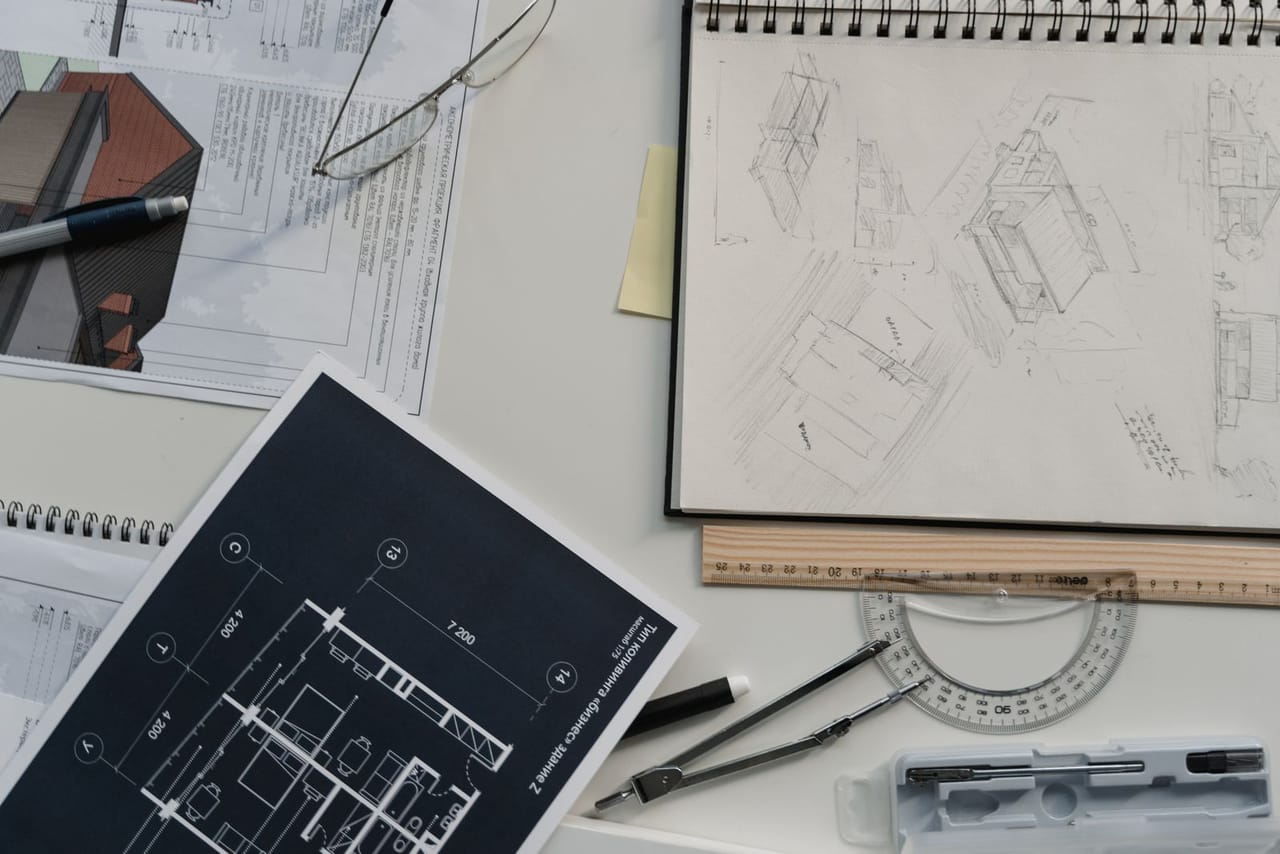

Illoca, an AI-native design startup, has raised $13 million in seed funding to launch what it calls the first intelligent interface for architectural design — a system that lets architects generate and refine 2D and 3D documentation directly from sketches, markups and plain-language instructions.
The round, announced on May 6, was led by Bessemer Venture Partners, with participation from AIX Ventures, Root Ventures and Alt Ventures. The San Ramon, California company is targeting a problem that almost every practicing architect will recognise instantly — and that almost no software has meaningfully solved.
The $720 Billion Problem
Illoca’s framing of the problem is sharp enough to be worth quoting in full. The company says architects spend roughly 60% of their workweek not designing, but instead producing, translating, reformatting and rebuilding work that already exists somewhere else — turning a concept into a plan, a plan into a set, a set into the dozens of coordinated drawings a building permit and a construction crew require. That adds up, by Illoca’s math, to more than 1,300 lost hours per architect per year, and a $720 billion “Production Tax” levied on the profession globally.
Whether or not the precise figure survives scrutiny, the underlying dynamic is real and well known inside the discipline. The creative act of design — deciding how space, light, structure and circulation come together — occupies a shrinking fraction of an architect’s time. The rest is documentation: the painstaking, error-prone labour of expressing a single design intent across drawings that all have to agree with one another. Change a wall in one place and a dozen sheets need updating. The tools that dominate the profession, from Autodesk’s Revit to AutoCAD, are powerful but were built around manual production. They make the documentation possible; they do not make it disappear.
”Tracing Paper” and the Idea of an Intelligent Canvas
Illoca’s product is called Tracing Paper, and the name is a deliberate nod to the analog tool architects have sketched over for a century. The pitch is that it replaces the conventional software toolset with an intelligent canvas: the architect sketches, marks up, or simply describes what they want in natural language, and the system interprets that architectural intent and produces the corresponding design and documentation in real time.
The key word is interpret. This is not a generative-image toy that hallucinates a pretty building. Illoca is positioning Tracing Paper as a tool that understands architectural intent — the difference between a load-bearing wall and a partition, between a corridor and a code-compliant egress path — and renders it into the structured 2D and 3D output a professional can actually build from. The company says it condenses work that takes weeks into days.
“Your professional judgment is unmediated, and your output is multiplied instantly,” said co-founder and chief executive Chin-Yi Cheng.
That sentence is the whole thesis. The promise is not to replace the architect’s judgment but to remove the friction between having a judgment and expressing it in deliverable form.
A Founding Team Built for This
The credibility of an AI-design pitch rests heavily on who is making it, and Illoca’s founders are unusually well-matched to the problem.
Chin-Yi Cheng, the CEO, helped pioneer generative AI for design at Google DeepMind and at the Autodesk AI Lab — meaning he has worked on this exact problem from inside both the world’s leading AI research organisation and the company that owns the incumbent architecture software. That is a rare combination: someone who understands the frontier of generative models and the realities of professional CAD/BIM workflows.
Chiaowei Yu, the COO, led the BIM team at Tesla and previously worked on complex healthcare projects. Tesla’s construction operations are known for compressing timelines and rethinking how buildings get delivered, and healthcare is among the most documentation-intensive, code-constrained building types there is. Between them, the founders cover the generative-AI research, the production-grade BIM discipline, and the lived experience of the documentation grind they are trying to eliminate.
Bessemer’s partner on the deal, Maha Malik, did not hedge in her assessment: “Illoca is building one of the most paradigm-shifting applications of AI in the built world.”
Early Validation From an Unexpected Place
The most telling detail in the announcement is the early partner: Kajima Corporation, one of Japan’s oldest and largest design and construction firms, is already using the product. That matters for two reasons.
First, a 180-year-old general contractor and designer is about the most demanding possible early customer for a tool that claims to produce buildable documentation. Kajima does not adopt experimental design software for fun; it does so because there is a credible operational case. Second, it signals that Illoca’s ambitions are not limited to small architecture studios. The “Production Tax” is heaviest at exactly the kind of large, complex, multi-discipline projects that firms like Kajima run.
The product is in an early-access stage — Illoca is offering new users 1,000 free credits to try it — which puts it short of broad general availability. That is the right posture for a tool whose entire value proposition depends on the output being trustworthy. Generative documentation that is 95% correct is not a time-saver; it is a liability, because the architect has to check every line anyway. Illoca’s challenge over the next year is to prove that Tracing Paper clears the reliability bar that makes the time savings real.
The Bigger Pattern
Illoca is part of a wave of startups attacking specific, high-friction professional workflows in construction with AI rather than chasing a single do-everything platform. The discipline of picking one painful task and doing it reliably runs through the most credible names in the sector — from cost intelligence platforms like PLAN0 to the AI estimating tools whose accuracy claims we examined in detail.
What makes Illoca’s wedge especially interesting is where in the project lifecycle it sits. Estimating, cost intelligence and field tools all operate downstream of the design — they take the drawings as a given and reason about what they cost or how to build them. Illoca is reaching further upstream, into the act of authoring the design itself. If it works, the structured intent captured at the sketch stage is exactly the clean, machine-readable data that every downstream AI tool has been starved of. The biggest prize may not be the hours it saves architects, but the quality of the data it produces for everyone who comes after them.