
Construction cost estimation is, in a narrow but important sense, one of the last major fields in finance that still relies on gut feel.
A real estate developer buying a site in Phoenix needs to know what it will cost to build a 200-unit apartment complex. They hire an estimator or a quantity surveyor. The estimator pulls unit cost figures from their personal experience, adjusts for what they last heard about lumber and labour in Phoenix, and produces a number. That number might be reasonably accurate. It might be 30% wrong. There is almost no way to know which, because there is no Bloomberg terminal that shows you what a two-bedroom-unit fit-out cost in Phoenix in Q2 versus Q1, or how that number compares to Denver or Dallas, or where it is likely to be in 12 months.
PLAN0 is building that terminal. The company, which came out of Y Combinator’s Spring 2026 batch, describes its mission as “the Bloomberg of construction” — a phrase that lands differently when the founders have the credentials to mean it literally.
The Founding Team
PLAN0 was co-founded by Arash Barati, Shervin Barati, and Dimitris Pagonakis — a team whose collective résumé reads less like a startup pitch and more like a developer’s dream hire list.
Arash, the CEO, spent twelve years in real estate private equity, development, and lending, managing over $7 billion in projects. He holds an MSc from Columbia and served as an adjunct professor there. He has sat in the exact seat of the person PLAN0 is trying to serve: the executive who needs to know what a building will cost before committing capital.
Shervin, the CTO, spent eight years as an engineering manager at Apple, where he led development of hearing health features for AirPods — a product that required training machine learning models on highly specific audio signals with demanding accuracy requirements. The domain shift from consumer audio hardware to construction drawings is less dramatic than it sounds: both involve training AI to extract precise, structured information from noisy inputs.
Dimitris led data and analytics at Point72 and Citadel — two of the most quantitatively rigorous hedge funds in the world — and holds an MIT degree. His background in building financial data pipelines at firms that depend on data quality for their existence is directly applicable to the problem of aggregating and cleaning heterogeneous construction cost data.
The combination is unusual. Most construction AI companies are started by either software engineers who learned about construction or construction professionals who learned to code. PLAN0 has both, plus a financial data infrastructure builder.
The Problem They Are Solving
The construction cost problem has two distinct layers, and PLAN0 is attacking both.
The first layer is plan analysis. When a developer or investor has an architectural drawing set, turning those drawings into a cost estimate requires someone to measure quantities, apply unit costs, and produce a structured budget. This work is time-consuming, expensive, and inconsistently done. A sophisticated developer might spend $50,000 on a third-party cost consultant to produce a hard cost estimate for a major project. A smaller developer guesses, or pays a GC for a non-binding budget that bakes in a healthy contingency.
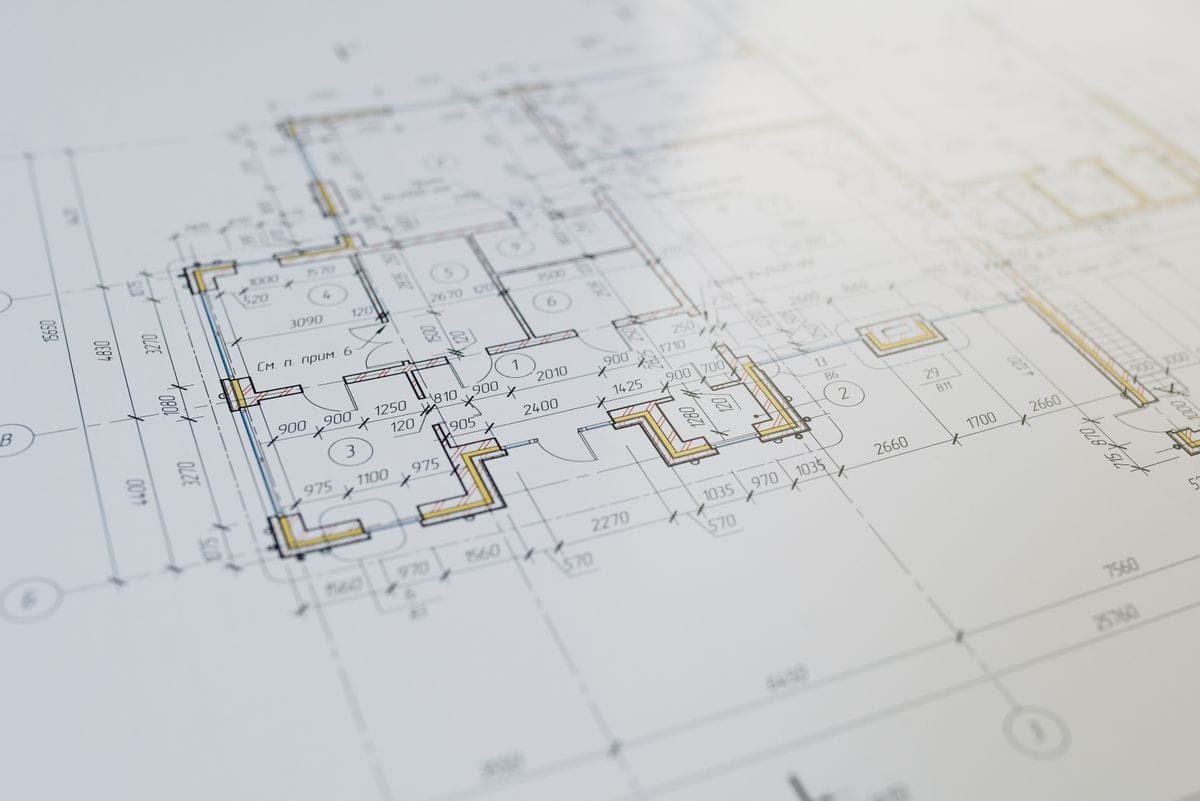
PLAN0’s computer vision models analyse architectural drawings directly, extracting the quantities — floor areas, unit counts, room types, structural elements — and feeding them into a cost model that produces a detailed estimate. The company claims this process takes minutes rather than weeks. With $20 billion in projects already running through the platform, the model has been exposed to enough real-world variation to handle the diversity of drawing styles, project types, and geographies that a production system requires.
The second layer is market data. A quantity estimate is only as good as the unit costs you apply to it. And unit costs in construction vary dramatically — by geography, by trade, by season, by economic conditions, by the backlog of the contractors in a specific market. Today, most of those inputs come from manual research, industry surveys with three-month lags, or the estimator’s personal experience.
PLAN0 aggregates historical and real-time project data across major geographies and builds ML-driven analytics that decompose costs into market-observable components. The headline capability is forward pricing: the company says its models can predict trade-level pricing up to 24 months ahead. For a developer deciding whether to buy a site today for a project that will go out to bid in 18 months, that forward curve is precisely the information they need and cannot currently obtain.
Why This Matters More Now Than Ever
The construction industry is entering a period of significant cost volatility. Labour shortages, supply chain disruptions that have never fully resolved, tariff dynamics affecting materials costs, and the AI infrastructure boom driving unprecedented demand for large-scale construction — all of these factors make the cost prediction problem harder than it has been in a generation.
For real estate developers, this volatility is existential. A project that underwrites at a certain cost basis becomes unviable if costs move 15% in the wrong direction between site acquisition and construction start. Institutional investors pricing real estate transactions need defensible hard cost assumptions; getting those assumptions wrong leads to write-downs. GCs quoting lump-sum contracts carry the full risk of that same volatility.
PLAN0’s forward pricing capability is not just a feature — it is a risk management tool. A developer who knows that roofing costs in Austin are expected to be 12% higher in Q2 2027 than they are today can build that into their proforma, re-price the deal, or choose a different market. A developer who cannot get that information is flying blind.
The Bloomberg Analogy and Its Limits
The Bloomberg comparison is apt in one important respect and worth interrogating in another.
Where it is apt: Bloomberg’s value is not primarily in the calculation tools it provides — it is in the data. The terminal is worth paying $25,000 per year for because it aggregates real-time financial data that is otherwise inaccessible. PLAN0’s moat is similarly data-driven. Every project that runs through the platform adds to the cost database. More data improves the pricing models. Better pricing models attract more users. The flywheel compounds in a way that is structurally similar to Bloomberg’s early data accumulation.
Where the comparison has limits: financial markets have standardised instruments, clearing prices, and regulatory disclosure requirements that make data aggregation tractable. Construction costs are hyperlocal, highly heterogeneous, and rarely disclosed. Building the dataset is harder. It requires either proprietary data partnerships with major GCs and developers, or inference from public data (permits, valuations, comparable project disclosures) combined with the data generated by platform use. PLAN0 has not disclosed how it is building its data infrastructure, which is itself a signal that the dataset is the competitive moat.
Early Traction and What Comes Next
$20 billion in projects through the platform is a meaningful number for a company that launched from YC in 2026. It implies either a small number of very large institutional users or a larger number of mid-size developers running their project pipelines through the tool for early-stage budget analysis.
The agentic capabilities PLAN0 is developing — AI-driven cost optimisation that can suggest design modifications to reduce cost while maintaining programme — push the product from intelligence into advisory. That is a natural extension: if you can predict what something will cost, the next question is always how to make it cost less.
For the construction industry, which has operated for decades without reliable cost intelligence, PLAN0’s ambition is not incremental. The question is whether the dataset can be built at the scale and resolution required to make the forward pricing predictions genuinely reliable. The team has the credentials to answer that question rigorously. The $20 billion in project volume suggests they are already generating the evidence.