Torch Systems, a Lafayette, California company selling continuous sensing for outdoor infrastructure, announced $11.5 million in funding on 6 October. The structure is $9.5 million of equity from Khosla Ventures, Abstract, Construct Capital and Starship Ventures, plus $2 million of venture debt from First Citizens Innovation Banking (formerly Silicon Valley Bank), according to Pulse 2.0 and Unite.AI, both of which reported the announcement the same day. Construct Capital, in its own note on the investment, describes itself as having co-led alongside the other three equity investors.
Torch’s own announcement text could not be retrieved directly for this report; the figures and quotes below are taken from outlets that reproduced it and from Torch’s own site.
The hardware constraint is the product
The reason to care about Torch is not the AI claim, which is now table stakes in the monitoring category. It is the installation constraint the hardware removes.
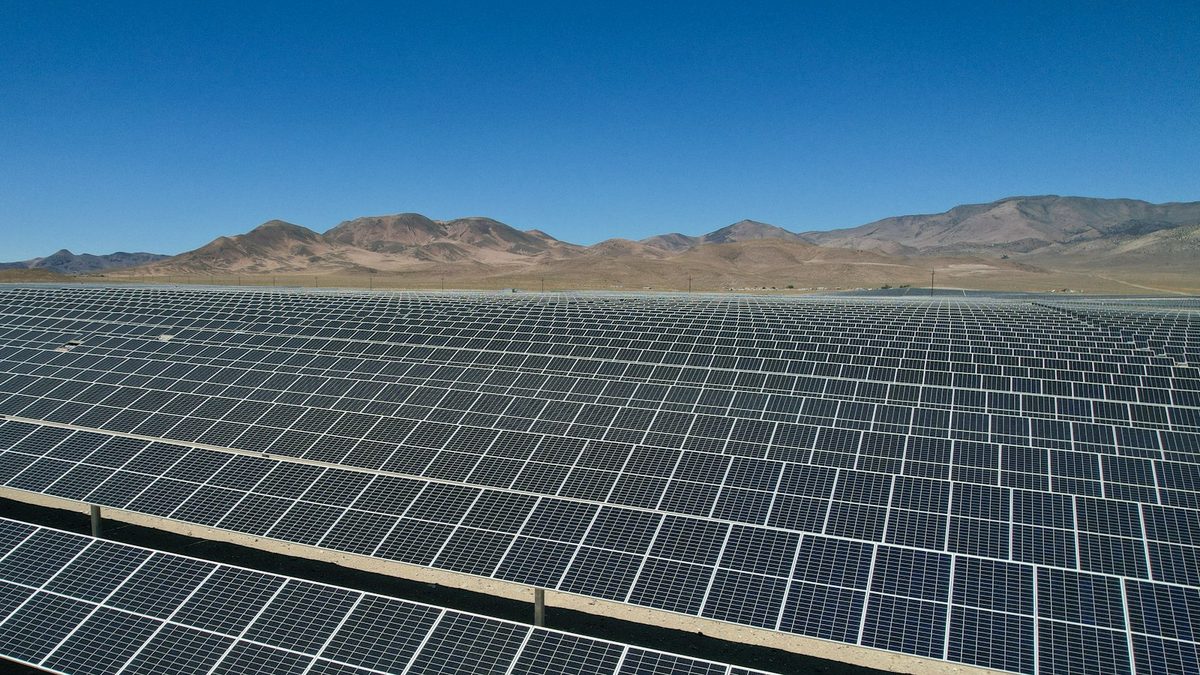
TerraNode, the company’s sensing device, is self-contained and solar-powered. It carries optical and thermal cameras alongside acoustic, gas, air-quality and environmental sensors, runs inference on the device, and connects wirelessly. Because it needs no external power and no wired network, it can be mounted in minutes at sites where a conduit run and a network drop would cost considerably more than the sensor itself — transmission corridors, remote solar arrays, substation yards.
Anyone who has priced instrumentation into a civil or energy package knows that the sensor is rarely the expensive part. The trenching, the conduit, the panel work and the commissioning are. A device that arrives as a single mounted box moves outdoor monitoring from a capital project into something closer to a consumable, and that is a change in who can specify it and when.
The software layer, the Torch Intelligence Platform, learns what normal looks like at each individual site, flags deviations from it, correlates events across multiple TerraNodes, and routes alerts by site and alert type with role-based event management, per Unite.AI and Torch’s own site. The named use cases are fire detection, overheating equipment, security and access events, vegetation encroachment and environmental change.
What is actually deployed
Torch began as a wildfire-detection product. Co-founder and chief executive Vasya Tremsin started developing the technology in 2018 after Northern California’s wildfire seasons, per Unite.AI; Construct Capital says he began while still a high-school student.
On scale, the figures come from different places and describe slightly different things, so they are given here as published. The launch coverage says hundreds of TerraNodes are deployed across California, Oregon, New Mexico, Virginia, Pennsylvania and Rhode Island. Torch’s own site states 300-plus TerraNodes in the field and 80-plus sites protected. The company says its devices have detected fires at an early stage in California, New Mexico and Oregon, along with equipment faults and security events.
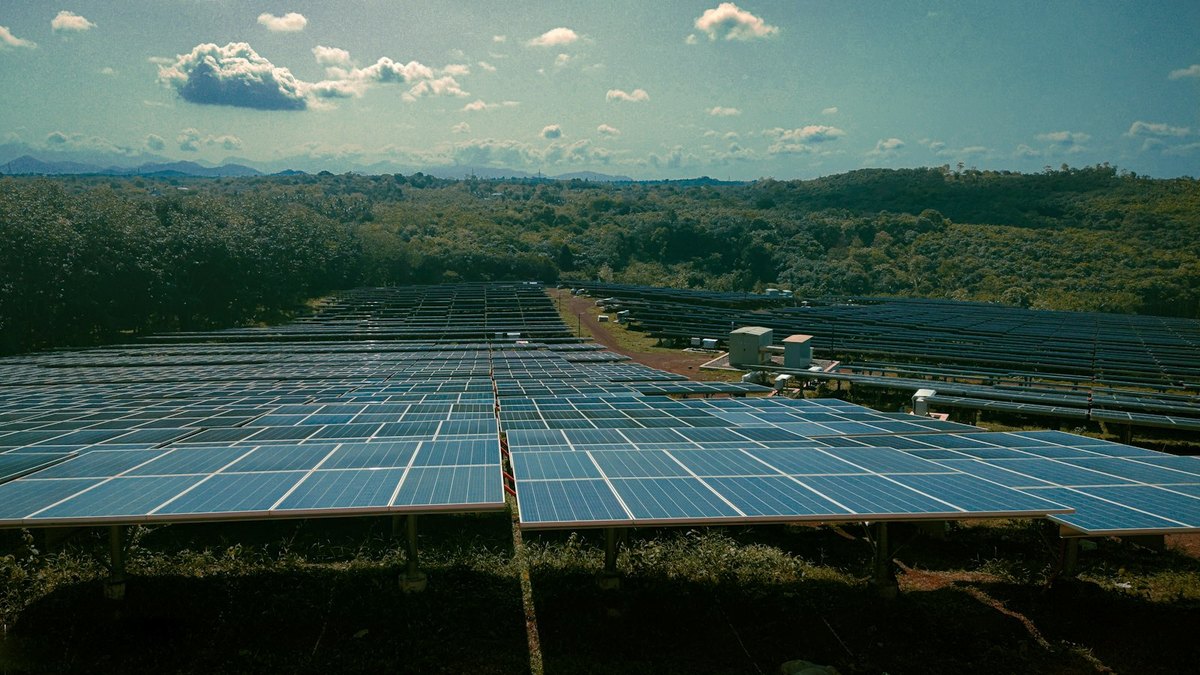
The customer that matters for credibility is named and on the record. Dominion Energy uses Torch at solar sites to monitor fire risk, panel misalignment, overheating and vegetation growth. Chris Nee, Dominion Energy’s manager of renewables, is quoted saying Torch “gives us another way to identify a range of issues such as fire risks and vegetation anomalies.” That is a utility putting its name to a deployment, which is the standard this newsroom requires before reporting a customer at all.
Tremsin’s framing of the thesis, as reported: “critical outdoor infrastructure should be able to tell you what’s happening before a small problem becomes a major event.” Vinod Khosla is quoted more bluntly on the gap — “Operators managing remote sites have no way to see what’s actually happening on the ground.”
The money goes to scaling TerraNode manufacturing and deployment, growing go-to-market and field operations, and continued development of the platform.
Why a construction publication is writing this up
Analysis. Torch is not a jobsite product, and it would be a stretch to present it as one. Its buyers are utilities, renewable-energy operators, municipalities and industrial asset owners, and the work it does happens after handover.
It belongs here for two reasons.
The first is that several of the asset classes drawing heavy construction investment right now — solar generation, transmission, substations, data-centre campuses — are precisely the ones that are large, distributed, unstaffed and outdoors. This newsroom has written about the grid constraint that the AI buildout is imposing and about the building trades’ position in that buildout. Monitoring is the operational tail of the same spend, and it increasingly arrives as an owner’s requirement rather than an operator’s afterthought.
The second is a point about sequencing that contractors learn expensively. Mounting provisions, sightlines and access for monitoring hardware cost very little to design in and a great deal to retrofit. If a solar or substation owner intends to instrument a site, the cheapest moment to accommodate it is while the racking drawings are still open. A device that needs no power and no network reduces that retrofit penalty considerably, but it does not eliminate the mounting and sightline problem.
There is also a pattern worth naming. Torch’s commercial logic is the same one behind Trendspek’s condition records and, from the other direction, Xpanner’s automation-as-a-subscription: the durable asset is not the sensor or the machine but the accumulating record of what normal looked like at a specific place over time. Torch’s platform explicitly learns a per-site baseline. Every month a node stays up, that baseline gets harder for a competitor to replicate, because it cannot be bought — only outlasted.
The open question is unit economics at the scale the company is now targeting. Torch says it intends to go from hundreds of devices to thousands. Hardware businesses with recurring software revenue are attractive when the fleet is large and unremarkable when it is small, and $9.5 million of equity is a sum that funds the attempt rather than settling the question.