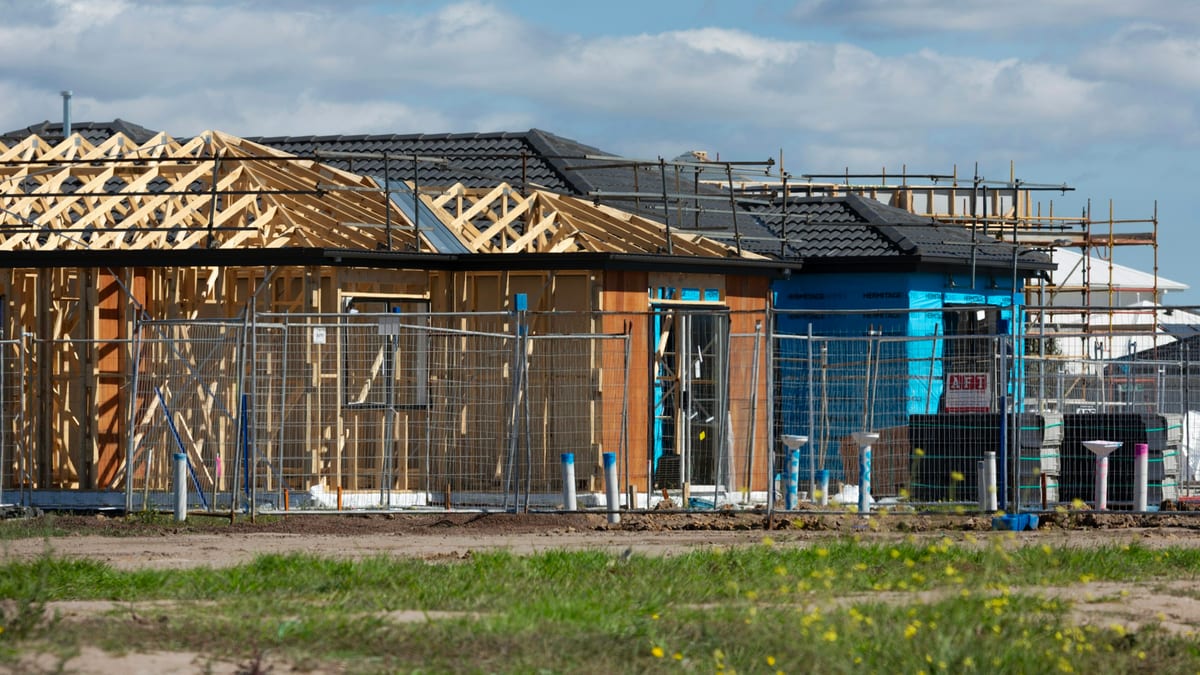
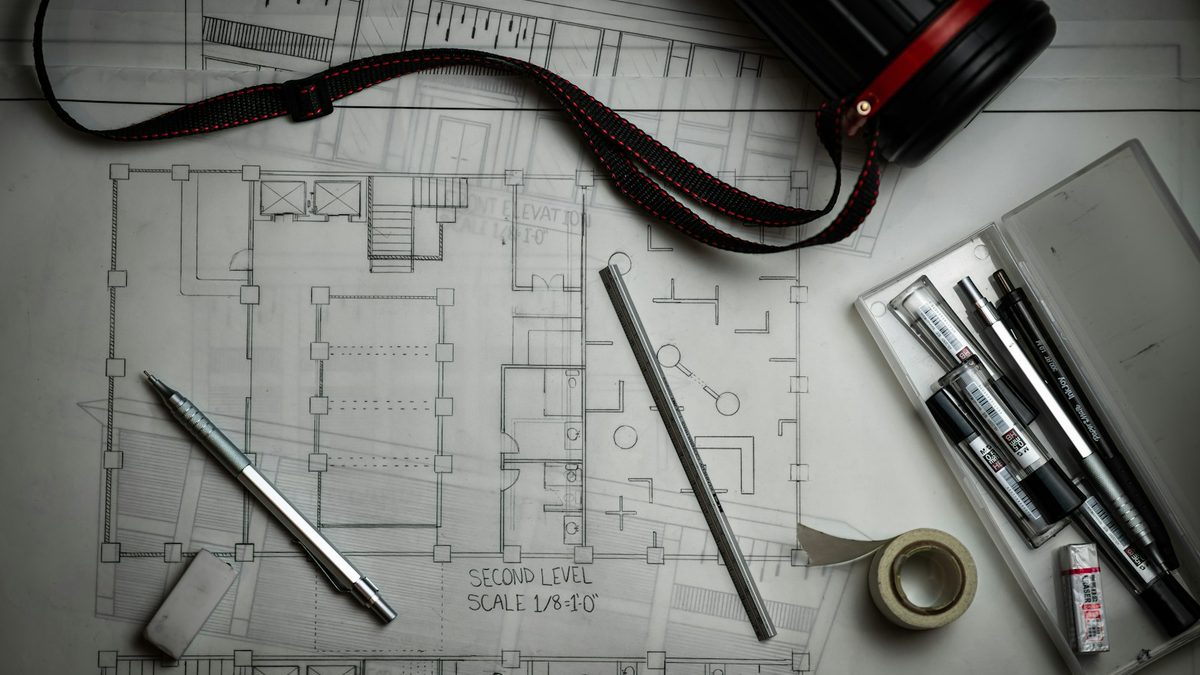
Dream emerged from stealth on 29 October with $17 million in seed funding. The money is ordinary for the category. What the company says it does with it is not: Dream is not selling a design tool to architects. On its own account it acts as the architect of record — the party legally answerable for a set of construction documents — and delivers the drawings itself.
What Was Announced
Dream Technologies, Inc., based in San Francisco, says the round “included investment from Andreessen Horowitz (a16z), SV Angel, XYZ, and Zigg Capital among others.” The release itself does not name a lead investor; TechCrunch reported on the same day that a16z led the round, and The Next Web’s write-up lists the same four investors. Neither the release nor any coverage of the round this publication could find gives a valuation.
The traction figures come from the release. Dream says it “has served as architect of record on 10 construction projects across California and Texas, with one project — a single-family home in Austin — completed from start to finish,” and that it “has supported $20 million in project developments to date.” No client is named in the release, on the company’s site, or in the launch coverage this publication read.
The product claim is that the models produce construction documents rather than images. Dream’s technology page says the models “treat a building as one coordinated system, from the site to the systems inside its walls, and produce designs that can be permitted and built,” and that the deliverable is “a drawing set you can hand to a general contractor and build.” The company says the models were trained on “more than 100 million square feet of real, permitted, constructed US buildings,” and describes an in-house representation it calls Dream Schema as “an AI-native representation of buildings, developed hand-in-hand with our models,” on top of which that data foundation sits.
Two pieces of vocabulary are presented by the company as its own, and should be read as such. Dream calls the model class built world models and the capability structural cognition, which the FAQ on its homepage defines as “the ability to reason about how a structure is constructed, including how its physical elements and complex systems fit together in space: the beams, the ductwork, the wiring, the HVAC and electrical systems, and more.” The same homepage FAQ states flatly that “Dream introduced the category.” That is a claim about priority, made by the company that stands to benefit from it, and it is reported here as its claim rather than as a finding of this publication.
Dream’s release also describes its training set as “the largest known dataset of real, permitted buildings.” Again, that is the company’s characterisation, and the release does not say what it was compared against. It is reported here with attribution and not as a verified ranking.
The Founders
The company was founded by Andy Elder and Arjun Mathur, who, per Dream’s company page, met as freshmen at Stanford and each spent roughly a decade at Palantir. Elder’s page entry says he spent “more than a decade at Palantir, most recently as Global Head of Product Design,” leading “a global design organization with an engineering team of more than 800 people,” and that he holds a B.S. in Computer Science from Stanford with a focus on human-computer interaction. Mathur’s entry says he “started as a forward deployed engineer and rose to Senior Vice President and head of the company’s Global Commercial business, where he built its manufacturing and supply chain practice and closed more than $1 billion in business,” and that he “founded and built Skywise, Palantir’s partnership with Airbus, which is now used by more than 160 airlines and suppliers.”
TechCrunch adds that the pair started the company in early 2025 and that neither has a direct architecture background. a16z’s Kimberly Tan, quoted in the release as an Investing Partner at the firm, told TechCrunch that a16z first invested more than a year ago, when the model was still an idea.
Elder’s line in the release is the cleanest statement of why a general-purpose model will not do:
“A hallucination in an LLM is a typo. A hallucination in a building is a structural fault, with potentially catastrophic consequences. We built Dream to be exact — down to how a duct routes through a wall — because precision at that level is what actually shortens timelines and takes cost out of a project.”
The Licence Is a Person
Here is the detail that makes the business model work, and it is on Dream’s own company page rather than in the release.
“Architect of record” is not a positioning phrase. In the United States it is a licensure question: construction documents submitted for permit generally have to carry the seal of an architect licensed in that jurisdiction — exemptions exist and vary by state and building type — and the firm or individual holding that seal is answerable for the design. A model cannot hold a licence.
Dream’s company page lists Jackson Lindsay as Head of Architecture, describes him as “a licensed architect in California and Texas,” and says he “guides the spatial intelligence behind the company’s models and leads their deployment on real-world projects.” Before Dream, per the same page, he “served as project manager on projects ranging from a 3,600-square-foot net-zero custom residence to a 45-bed student housing development,” and he holds a master’s degree from the Yale School of Architecture.
California and Texas are precisely the two states in which Dream says it is architect of record. The FAQ on the same company page answers the question directly — “Is Dream an architecture firm or a software company? Dream is both” — and it answers the licensure question directly too: “Does Dream have licensed architects on the team? Yes. Jackson Lindsay, Dream’s Head of Architecture, is a licensed architect in California and Texas.” And the two-state footprint is the practical boundary of “both” at launch. That is this publication’s reading rather than a statement from the company, but the arithmetic of it is not complicated: the geography of an architect-of-record business expands at the pace of licensure, not at the pace of inference.
The rest of the senior team, per the same page, is drawn from outside AEC: Derya Gol Gungor as Head of AI Research, previously more than eight years at Siemens Healthineers leading computer-vision work on ultrasound systems, with a PhD from Ohio State; and Lars Johansen as Founding Lead Engineer, previously more than a decade at Okta as a Principal Software Engineer.
Why This Shape Keeps Appearing
Dream is the third company this newsroom has covered since late August that has chosen to carry the professional liability itself rather than sell software to the people who hold it. In date order: Reframe on 31 August, Solvera on 15 October, Dream on 29 October.
Reframe Systems, which raised $40 million on 31 August for robotic homebuilding microfactories, describes itself on its own site as handling “everything from permits to occupancy — as the architect of record and general contractor.” Solvera raised $6.3 million in Oslo to be the engineering firm rather than sell it software, signing as the engineering firm of record on Norwegian MEP work and billing for the outcome instead of licences or hours. The Norwegian statutory object is different from a US architect’s seal — there, responsibility attaches to a firm that declares ansvarsrett — but the structural choice is the same in all three: accept the position the regulation creates, then automate inside it.
The comparison that follows is this publication’s own. Dream is the narrowest of the three. Reframe takes design, permitting, fabrication and site work; Solvera takes a discipline, MEP, end to end. Dream takes the drawing set and stops there — no fabrication, no construction, no general contracting.
Set that against the conventional path, which is well represented in the archive. Endra raised a $50 million Series A led by a16z to automate MEP engineering on the premise that engineering firms remain the customer. Illoca raised $13 million for an AI canvas that turns an architect’s sketch into documentation. Motif shipped a BIM authoring tool priced per AI user rather than per seat. Every one of those leaves the seal, and the liability, where it already was.
The analysis is this publication’s own, and it cuts both ways. Taking the liability is the strongest possible answer to the objection that AI output cannot be trusted on a job site, because it moves the consequence onto the vendor’s balance sheet instead of the customer’s. It is also the slowest possible way to scale: each new state is a licensure problem, each project is a professional engagement rather than a subscription, and the revenue per engagement is capped by what a client will pay an architecture firm, not by what a software company can charge for a seat. Ten projects and $20 million in supported developments is a real commercial signal and a very small one.
The Consumer Product on a Waitlist
Dream also runs a waitlist for a home redesign platform built on the same models. The FAQ on that page says the product is trained on the 100-million-square-foot building dataset plus “Dream’s Style Ontology of 73 design and architectural styles,” and that “early access opens first to people on the waitlist.” The page gives no launch date, no pricing and no demo. It is listed here because it is on the company’s site and because it indicates where the models are meant to go, not because there is anything yet to evaluate.
Mathur’s framing in the release points the same way: “This is a new category of AI that brings spatial reasoning to the built world, and eventually, any 3D design project beyond buildings.”
What to Watch
The claim that will be easiest to check is the one about documents. Dream says its output is a permittable drawing set; permit records are public, and a set bearing an architect’s seal is a document with a name on it. If the ten projects become thirty across more than two states, the business has found a way to add licensure faster than it adds work, which is the hard part. If the headcount of licensed architects grows roughly in step with the project count, Dream will look less like a model company that signs drawings and more like an architecture firm with unusually good software — which would be a perfectly good business, and a different one from the one a16z described buying into.
The other open question is who the clients are. Dream names none in the release or on its site, which is normal for a company a day out of stealth and is also the single thing that would most change the reading of the ten projects. A named developer putting its own name to a Dream-sealed set would say more than any benchmark.