
If 2025 was the year construction fell in love with the idea of artificial intelligence, 2026 is the year it started asking for receipts. The shift is visible everywhere — in the language at industry events, in the questions contractors ask vendors, and, most tellingly, in where capital and acquisitions are flowing. The conversation has moved from “look what this can do” to “show me what it did.”
This is the most important development in construction technology this year, and it is not a product. It is a change in posture.
The End of the Patience
The framing that dominated Digital Construction Week 2026 in London — an event drawing some 8,000 visitors — captured it precisely: AI is moving “from promises to proof points.” After a couple of years of pilots, proofs-of-concept and breathless launches, the industry is demanding tangible return on investment and evidence that the technology addresses its actual, structural problems.
And those problems are severe. By widely cited estimates, the overwhelming majority of construction projects run late or over budget. Productivity in the sector has barely moved in decades while it has surged in manufacturing. Margins are thin, labour is scarce, and waste is endemic. Against that backdrop, the industry’s patience for AI that is impressive in a demo but unproven on a jobsite has run out. The question is no longer whether a model can read a drawing. It is whether reading the drawing saved anyone money.
Julian Geiger, Chief AI Officer at Nemetschek Group, frames AI in deliberately unglamorous terms: as “a partner” that handles repetitive tasks so professionals can focus on creative and strategic work. It is a notable rhetorical retreat from the maximalist promises of a year ago — and a more honest one. The most credible voices in the industry have stopped promising to replace the architect or the estimator and started promising to remove the drudgery around them. Geiger’s own framing — that progress beats perfection, and that the gains come from growing with AI rather than waiting for a flawless system — is the language of an industry that has been burned by overclaiming and is recalibrating toward what actually ships.
Proof Points Have a Tell: They’re Boring
Here is the pattern that emerges once you start grading construction AI on proof rather than promise: the tools that survive the new scrutiny tend to be narrow, integrated, and aimed at unglamorous problems.
Consider what is actually getting deployed and paid for. AI-assisted submittal review and document filing. Drawing-discrepancy detection. Quantity takeoffs on a single trade. Contract-clause risk flagging. Machine guidance that makes an excavator operator more productive today rather than promising to remove them tomorrow. None of these reinvent construction. All of them attach to an existing workflow, produce a measurable time or risk saving, and can be verified on a real project. That is what a proof point looks like — and it is rarely spectacular.
The corollary is visible in the failures. The tools struggling in 2026 are the ones that asked the industry to take the largest leaps of faith: the end-to-end “AI will run your project” platforms, the generative systems whose output is 90% right and therefore 100% in need of checking, the demos that dazzled at a conference and never produced a number a CFO could trust. As we found in our own reality-check on AI estimating accuracy, the gap between a confident demo and a result a contractor will stake a bid on is wide, and the market is now pricing that gap honestly.
Follow the Money
The proof-point turn is not just rhetoric; it is reshaping where capital goes.
In M&A, the year’s defining deals are bets on operational reality, not speculative capability. Autodesk paid $3.6 billion — its largest acquisition ever — for MaintainX, a maintenance-and-operations business with $135 million of recurring revenue and a clear, measurable use case. Trimble bought Document Crunch for contract intelligence that produces concrete risk outputs. These are acquisitions of proven workflows, not moonshots.
In funding, the strategic capital is following the same logic. When Trimble and Suffolk Technologies back a construction knowledge-graph company like Neuron Factory, they are investing in the unglamorous data infrastructure that makes everything else verifiable. When Japan’s ONESTRUCTION raises ¥9.1 billion to turn construction data from “AI-ready” to “AI-powered,” the pitch is foundational, not flashy.
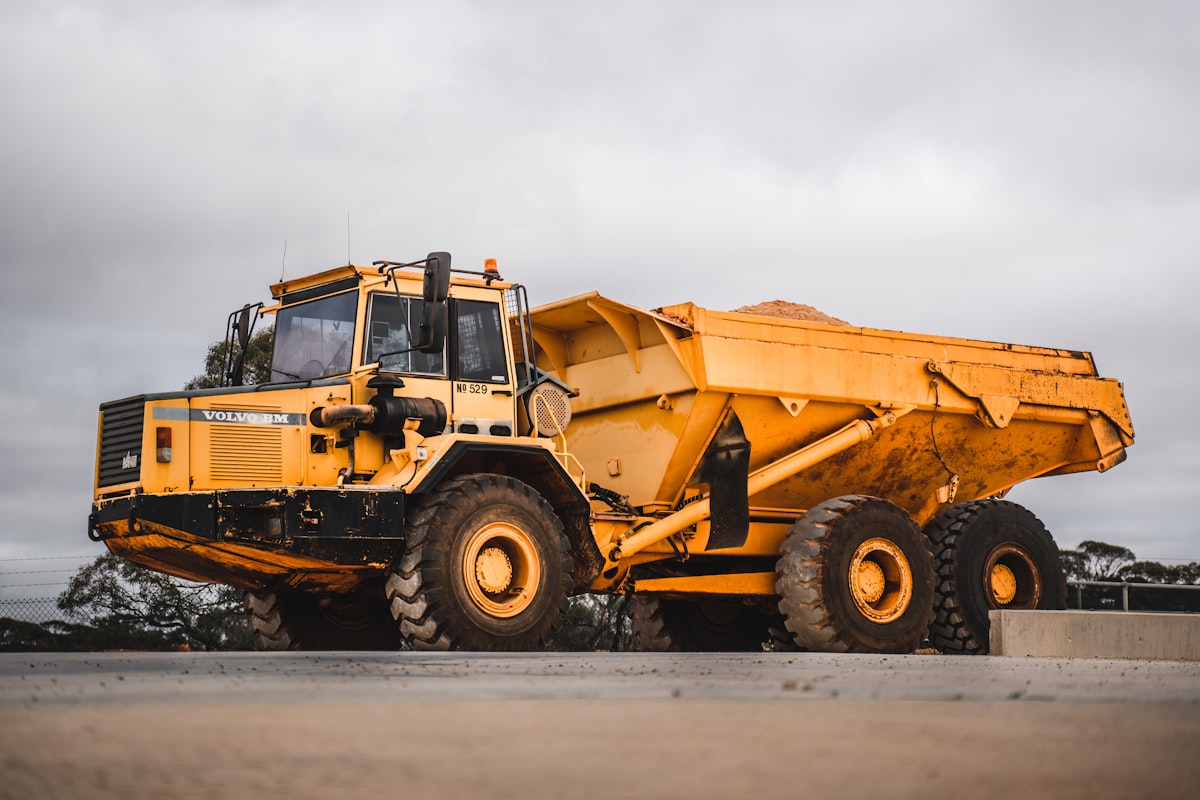
And in robotics — the most capital-intensive corner of the sector — the proof-point standard is the explicit dividing line. The companies attracting serious money are the ones with machines on active jobsites being billed for real work: Bedrock Robotics’ autonomous earthmoving, August Robotics’ drilling robots on data-center projects. Deployed-and-billing has become the metric that separates a fundable robotics company from an impressive video.
The Integration Imperative
There is one more lesson the proof-point era is teaching, and it cuts against a popular fantasy. AI in construction does not work as a standalone oracle. Its effectiveness depends on integration with the established scaffolding of the industry — BIM, digital twins, project information systems, the existing tools and data structures that encode what a project actually is. The Nemetschek framing of AI as a layer on top of industry-specific workflows, rather than a replacement for them, is becoming the consensus because it is the version that produces results.
This is why the data-infrastructure and knowledge-graph plays matter so much, and why the platform giants are spending billions to connect their tools rather than launch a single magic product. An AI is only as good as the data structure it reasons over and the workflow it plugs into. The proof points come from the integration, not the intelligence in isolation.
What This Means
The maturing of construction AI is not a slowdown — it is a sorting. The capital is still flowing, the acquisitions are still landing, and the technology is still advancing fast. What has changed is the filter. The industry has developed an immune response to hype, and it is now testing every claim against a single question: did it move a number that matters — cost, schedule, risk, or safety?
That is healthy. It is also unforgiving. The companies that will define construction AI over the next five years are not the ones with the best demo reel. They are the ones with a customer who can tell you, with a figure, what the tool saved them last quarter. In 2026, that became the only proof that counts.