NavigateAI, a San Francisco startup founded by Opendoor co-founder Eric Wu, came out of stealth on May 26 with $25 million in seed funding and an unapologetically large goal: put an AI copilot in the hands of every worker in the physical trades.
The round was led by investor Elad Gil, with participation from Khosla Ventures and Fifth Wall and strategic checks from homebuilder Lennar, developer Tishman Speyer and electrical contractor Helix Electric. A long list of angels joined, among them Harvey.ai’s Winston Weinberg, Decagon’s Jesse Zhang, DoorDash’s Tony Xu, Instacart’s Apoorva Mehta, Lyft’s Logan Green and Coinbase’s Brian Armstrong.
A copilot that sees what the worker sees
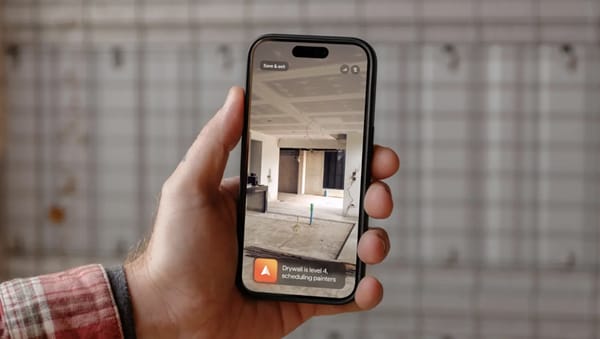
NavigateAI’s software runs in real time on a smartphone camera, offering field workers on-the-spot coaching, automated quality control, project scoping and on-demand answers. Through a partnership with Meta, the assistant also runs hands-free on Meta glasses, where it sees exactly what the worker sees and can guide them through a task without making them stop to stare at a screen.
The founding team is drawn from Opendoor, Stripe, DeepMind, Stanford and Google. Wu, who built and took Opendoor public, is framing the company as a workforce play as much as a software one.
“We have a generational opportunity to upskill millions of workers with AI at the exact moment the country needs to build more and faster,” Wu said.
Launch partners across the built world
NavigateAI is starting with partners that span its target market: Lennar in homebuilding, Roofstock in property management, Tishman Speyer in commercial real estate, and AIM, an electrical trade school, on the training side.
The bet is that the hardest problem in construction is not design software or back-office tooling but the knowledge gap on the job site — and that an always-available assistant, riding along on a phone or a pair of glasses, can close it faster than traditional training ever has. It is a thesis that runs parallel to work being done in infrastructure AI: FYLD’s video-based platform is making the same wager on field workers in energy and civil construction, using captured video rather than live AR guidance.