
Y Combinator has funded more than 5,000 companies since 2005. Among them, quietly and without much fanfare from the technology press, is a remarkable cluster of construction technology businesses — one public company, two acquisitions worth a combined $1.175 billion, and a fourth acquired by one of the world’s most significant industrial tool companies.
The benchmark these companies are measured against is Procore — the most valuable construction software company in the world, with a market capitalisation of roughly $6.4 billion. Procore, however, was not a Y Combinator company: it was founded in 2002 and bootstrapped for years before raising institutional capital. What YC produced instead is the next tier of category-defining construction software, built by founders who took the accelerator route a decade or more after Procore was started.
This is not a story about Y Combinator being uniquely positioned to fund construction tech. It is a story about what construction tech looks like when it works: when founders with the right domain knowledge meet the right investors at the right moment in an industry’s technology adoption curve, and build something that the largest project owners on earth cannot afford to stop using.
Here are the biggest.
1. EquipmentShare — ~$5.5 Billion Market Cap
Status: Public (Nasdaq: EQPT) · YC Batch: W15 · Founded: 2014
EquipmentShare is the most valuable construction technology company to come out of YC, and the most unusual: a business that began as a peer-to-peer equipment rental marketplace and became something considerably more interesting — a vertically integrated equipment rental and construction technology platform that went public on Nasdaq in January 2026.
The IPO was one of the most closely watched construction tech exits in years. EquipmentShare priced 30.5 million Class A shares at $24.50 each on January 23, 2026, raising approximately $747 million in gross proceeds. The stock closed its first trading day at $32.56, implying a market value of roughly $8.18 billion — a strong debut for a company that had been cautious about its IPO timing through several years of rising interest rates and capital market uncertainty.
The post-IPO trajectory has been more turbulent. By April 30, 2026, the stock had declined to imply a market capitalisation of approximately $5.4 to $5.5 billion — a roughly 33 percent decline from its first-day peak, tracking the broader softening in construction activity and equipment rental demand as the post-pandemic infrastructure build cycle moderated. That correction does not diminish the scale of what EquipmentShare has built, but it is context worth having for anyone assessing where the company sits today.
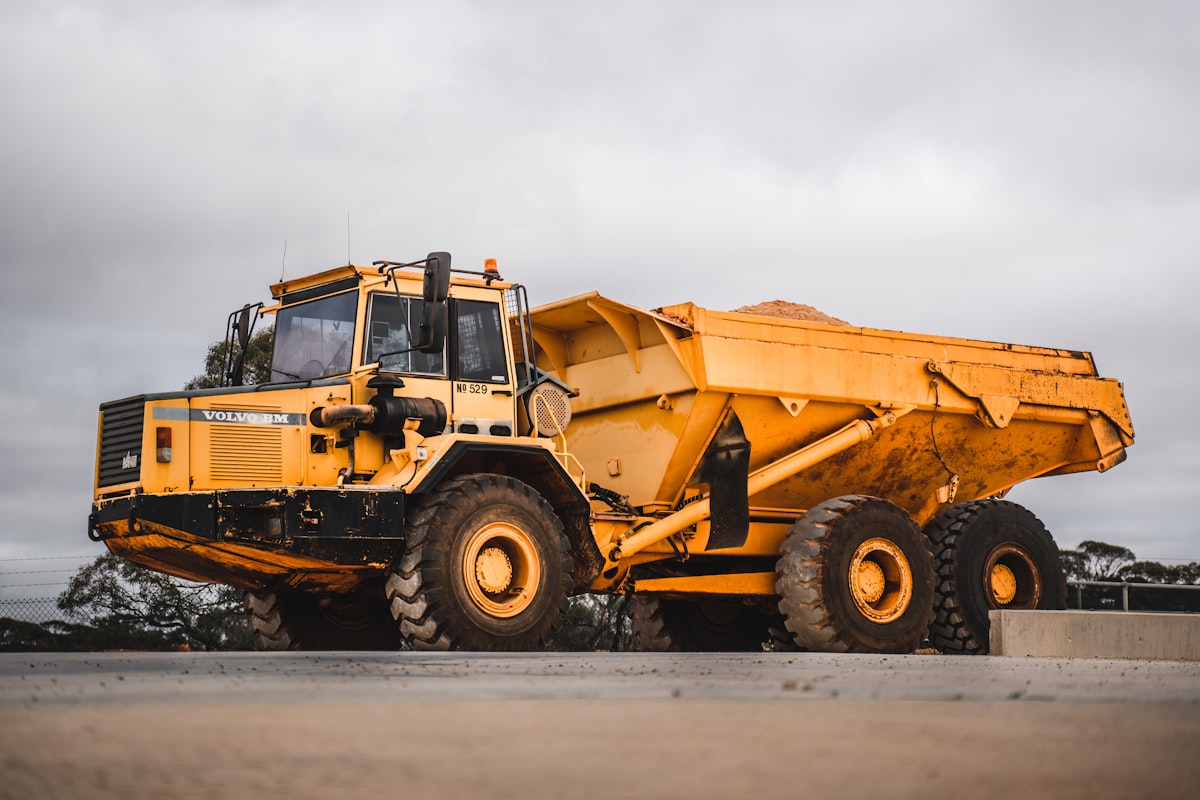
What EquipmentShare has built is difficult to categorise neatly. The company started as a marketplace where construction companies could rent equipment from each other — the “Airbnb for equipment” pitch that got it into YC’s Winter 2015 batch. But the product that went public more than a decade into the company’s life was something far more vertically integrated: EquipmentShare owns a significant fleet of heavy equipment, operates physical branches across the United States, and has built T3 — a proprietary IoT and fleet management platform that embeds telematics, machine health monitoring, and financial products into the equipment rental relationship.
The T3 platform is where the long-term thesis lives. If you can instrument every piece of construction equipment on a job site, and use that data to underwrite equipment financing, optimise utilisation, and feed project management systems, you have the infrastructure layer for construction operations in the same way that a fleet management platform is the infrastructure layer for trucking. That is a considerably larger business than equipment rental, which is why the company spent years building the software before taking the business public.
EquipmentShare was founded in Columbia, Missouri, by brothers Jabbok and Willy Schlacks alongside co-founders Brad Siegler and Jeff Lowe — a notable departure from the coastal founder archetype. The Schlacks brothers came from a farming background, understood equipment utilisation as a lived problem, and built their company in the middle of the country where their customers actually operate.
2. PlanGrid — $875 Million Acquisition
Status: Acquired by Autodesk (December 2018) · YC Batch: W12 · Founded: 2011
PlanGrid was the exit that told the construction tech world what was possible.
When Autodesk announced it would acquire PlanGrid for $875 million net of cash on November 20, 2018 — closing just thirty days later, on December 20 — it was the largest acquisition in construction technology history at the time. It would not hold that record for long, but it established a benchmark for what a pure-play construction software company could be worth, and it sent a signal to every investor and founder paying attention to the sector that exits of genuine scale were achievable.
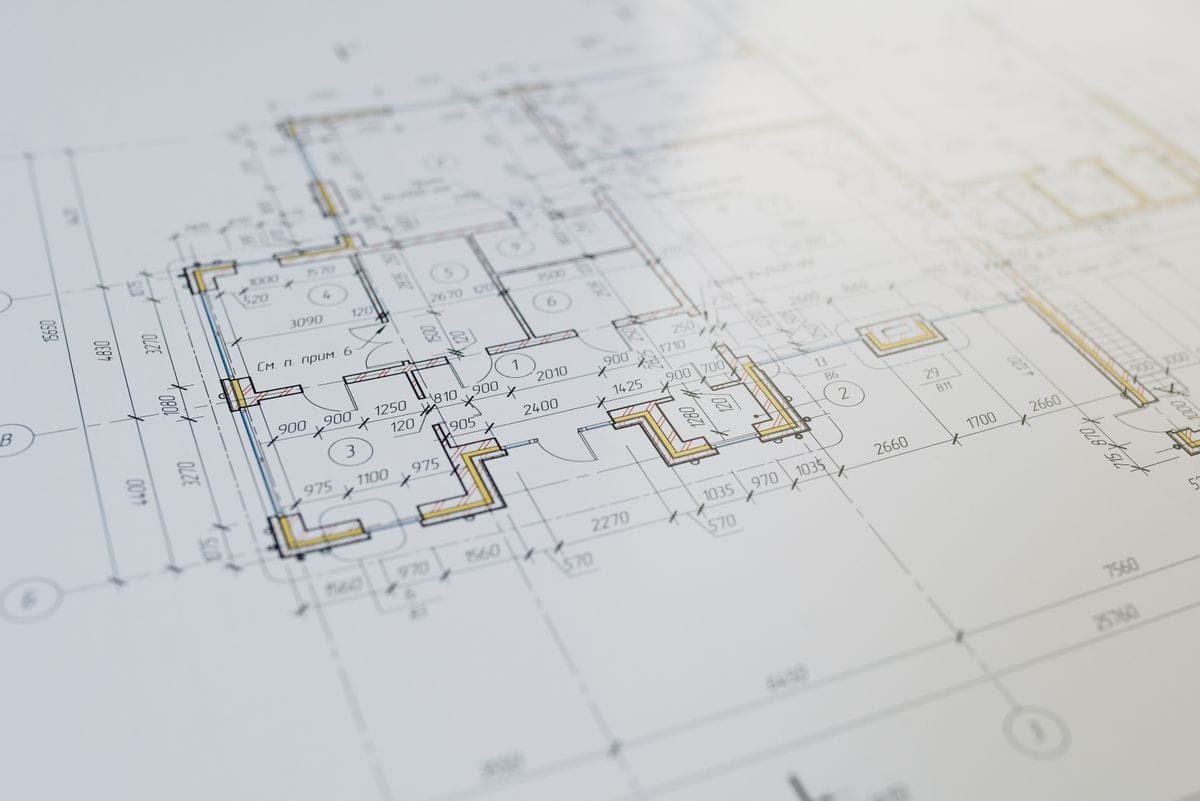
PlanGrid was a YC Winter 2012 company — one of the earlier and more fundamental construction software bets in YC’s portfolio. Tracy Young and Ralph Gootee founded it with a specific, practical thesis: construction workers in the field were still managing projects with paper blueprints, often working from outdated versions of drawings that did not reflect the latest architect’s changes. PlanGrid built a mobile application that put the current set of plans, as-builts, and project documents on a tablet, always updated, always accessible in the field. That is a deceptively simple product description for what turned out to be an extremely defensible workflow tool — once a project team’s workflow is built around digital plans, the thought of going back to paper (or to a competing platform) becomes unthinkable.
PlanGrid raised approximately $69 million from Y Combinator, Sequoia Capital, Founders Fund, 500 Startups, and Northgate Capital before the Autodesk acquisition. The $875 million exit therefore represented a return of roughly 12 to 13 times invested capital at the company level — exceptional by construction software standards.
Inside Autodesk, PlanGrid became the foundation of what is now Autodesk Construction Cloud. The product has been substantially rebuilt and expanded since the acquisition, but the core insight — that field teams need a reliable, always-current set of project documents on mobile devices — remains the centre of gravity of Autodesk’s construction platform strategy.
3. Fieldwire — ~$300 Million Acquisition
Status: Acquired by Hilti (January 2022) · YC Batch: W14 · Founded: 2013
If PlanGrid was the exit that proved scale was possible, Fieldwire was the exit that proved construction tech M&A had become a durable category — not a single event.
Hilti, the Liechtenstein-based manufacturer of professional power tools and fastening systems, acquired Fieldwire in January 2022 for a reported $300 million. The deal was notable not just for its size but for who was buying. Hilti is not a software company. It is an industrial equipment manufacturer with deep relationships with specialty contractors — electricians, mechanical contractors, steel erectors — who use its tools on job sites every day. The decision to spend $300 million on a field management software platform reflected a strategic calculation that the future of Hilti’s relationship with those contractors would run through software as much as through hardware.
Fieldwire was founded by Yves Frinault and Javed Singha (YC W14) to solve a similar problem to PlanGrid but with a different product approach. Where PlanGrid optimised for drawing management across the full project team, Fieldwire focused specifically on the field — task management, punch lists, and quality and safety checklists for the crews actually doing the work. The two products competed for years before PlanGrid’s acquisition by Autodesk; Fieldwire’s ability to maintain relevance and grow despite that competitive pressure demonstrated genuine product-market fit among specialty contractors, who are a different buying centre from the general contractors PlanGrid historically targeted.
The Hilti acquisition gave Fieldwire a distribution channel that no venture-backed startup could have built independently: Hilti’s salesforce visits construction sites globally, maintains long-term relationships with specialty trade contractors, and has the credibility to introduce a software product into relationships built over decades of tool sales.
4. Rhumbix — Acquired by Autodesk
Status: Acquired by Autodesk (2022) · YC Batch: W15 · Founded: 2014
The fourth position on this list is harder to pin down with precision than the first three, and that is worth being honest about. The construction tech companies with YC heritage and confirmed large valuations are EquipmentShare, PlanGrid, and Fieldwire. Below them, the data becomes less certain.
Rhumbix — founded by Zach Scheel and Cole Hershkowitz, YC W15 — was acquired by Autodesk in 2022 in a deal whose financial terms were not publicly disclosed. The company had built workforce management software for the construction field: digital timecards, field production data collection, and labour analytics. The acquisition was a small but strategically coherent one for Autodesk, which was already in the process of building out Autodesk Construction Cloud and needed field workforce data to sit alongside the drawing management, RFI, and submittal workflows it had inherited from PlanGrid.
Rhumbix’s reported valuation at acquisition was in the range of tens of millions of dollars — meaningfully smaller than the other companies on this list. It appears here because it is a genuine YC construction tech exit, because the combination of Rhumbix and PlanGrid inside Autodesk Construction Cloud represents a meaningful piece of how that platform’s field data capabilities were built, and because the pattern — YC-backed founder with construction domain knowledge, purpose-built software for the field, eventual acquisition by a larger platform — is exactly the construction tech playbook that the companies above it on this list established.
Other YC construction companies worth tracking as they scale toward meaningful exits include Document Crunch (acquired by Trimble in 2026), Trunk Tools (most recently raising a $40 million Series B from Insight Partners), and the construction startups from the Winter 2026 batch covered elsewhere on this site. None of those has yet reached the valuation benchmarks set by the companies above. Some of them will.
What the Pattern Shows
There are four things the YC construction tech cohort reveals when you look at it as a portfolio rather than as individual companies.
The biggest wins came from workflow software, not hardware. PlanGrid, Fieldwire, and Rhumbix are all software businesses. EquipmentShare is a hybrid — marketplace, rental fleet, and software — but its highest-multiple valuation driver is the T3 platform, not the equipment sitting in its yards. The hardware bets in construction tech have been difficult: robotics, drones, and autonomous machinery have attracted enormous capital and produced modest exits. The durable value has been captured in the software that manages what humans do on job sites, not in software that replaces them.
The data moat compounds. Every one of the top companies on this list gets harder to displace as usage grows. PlanGrid’s field data, accumulated across thousands of projects, made its assets more valuable to Autodesk than any equivalent newly-built product would have been. EquipmentShare’s T3 telemetry database, now representing years of real-world equipment performance data across tens of thousands of machines, is a defensible asset that no new entrant can shortcut. The same dynamic powers the non-YC incumbent, Procore, whose network effect — every general contractor who mandates it pulls every subcontractor into the ecosystem — is structurally powerful. The construction tech companies that win are the ones that accumulate data as a byproduct of their core workflow value.
Founder-market fit mattered more than vertical expertise. Tracy Young had worked as a civil engineer before founding PlanGrid and understood the blueprint problem from the inside. Willy Schlacks came from a farming background and understood equipment utilisation as a physical, operational problem. Zach Scheel at Rhumbix had construction industry experience before writing a line of code. The YC construction tech cohort is unusually founder-market-matched compared to, say, fintech or consumer apps — and that alignment with the industry’s actual problems, rather than the industry as imagined from the outside, is plausibly a large part of why these companies achieved exits at all.
The construction tech M&A market is maturing. The Autodesk-PlanGrid deal in 2018 was unusual enough to be news. The Hilti-Fieldwire deal in 2022 was less surprising. The Trimble-Document Crunch deal in 2026 was almost routine. The strategic acquirers — Autodesk, Trimble, Procore itself, and increasingly industrial manufacturers like Hilti — now have practiced construction tech M&A teams and established playbooks for integrating acquired products. That maturity is good news for the founders currently building the next cohort: exits above $100 million are no longer exceptional events, and exits above $300 million are achievable by any software company that can establish genuine workflow lock-in with a large enough base of construction buyers.
The question worth asking, given the current crop of YC construction startups — PLAN0, Bidflow, Foreman, and others — is not whether these companies can build useful products. Several clearly have. The question is whether any of them is building the kind of workflow lock-in that compounds into an exit at the scale of what EquipmentShare, PlanGrid, and Fieldwire achieved. That answer will take years. But the pattern is established, and the exits are real.