Procore is very good at what it does. What it does is project management software for large general contractors on large projects — the tier-one and tier-two GCs running commercial, industrial, and heavy civil work with project values in the tens or hundreds of millions. Procore is not designed for a residential remodeler running eight jobs simultaneously from their truck. It is not priced for them. It is not built for how they work.
The gap Procore leaves at the small and mid-size contractor end of the market is not a niche. There are approximately 800,000 construction businesses in the United States. Approximately 95 percent of them have fewer than 20 employees. Most of them run their operations on spreadsheets, text threads, sticky notes, and QuickBooks — not because they are unsophisticated, but because the software built for them has not been good enough to justify changing how they work.
Foreman, a Y Combinator Winter 2026 company, is making a direct bet on that market. The company is building an AI-native all-in-one construction management platform specifically for the contractors who are too small for Procore and too professional to keep running on spreadsheets.
The Founder and Why He Is Doing This
Nolan Rossi is a fourth-generation member of a construction family. He grew up watching his family’s business deal with exactly the operational fragmentation that Foreman is built to solve — the inability to get consistent information about where projects stand, the time lost to administrative work that should be automated, the difficulty of keeping clients informed without manual effort.
He then went and built the technical skill to address it. Rossi triple-majored in Electrical Engineering and Computer Science, Astrophysics, and Business Administration through UC Berkeley’s M.E.T. program — a joint degree with Haas School of Business that is notable for being genuinely difficult to complete in three years. He worked as a software development engineer at Amazon before founding a software consultancy that reached $250,000 in annual revenue.
The combination — domain knowledge from lived experience in a construction family, technical depth from Berkeley and Amazon, and commercial experience from running a consultancy — is the founder profile that construction software has needed and rarely produced. Most construction software is built either by construction people who learn enough code to ship something that addresses their specific pain, or by software people who spend a few months talking to contractors and then build what they understood from those conversations. Rossi has both without the limitations of either.
What Foreman Actually Does
Foreman is attempting to replace the full stack of tools that a small contractor currently cobbles together from different sources: a takeoff tool, a proposal generator, a contract management system, a scheduling tool, a document store, and an invoicing tool that connects to QuickBooks. Currently, these tools are either separate paid subscriptions, Excel, or nothing.
The platform covers:
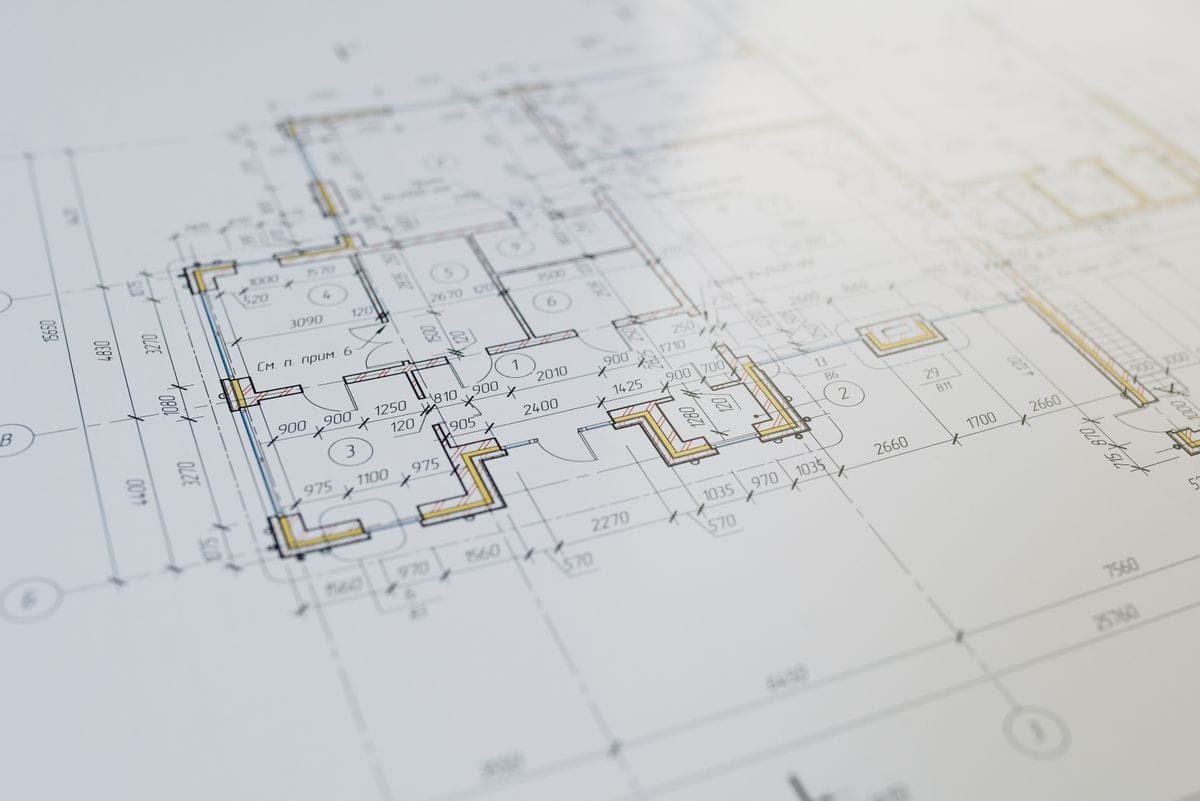
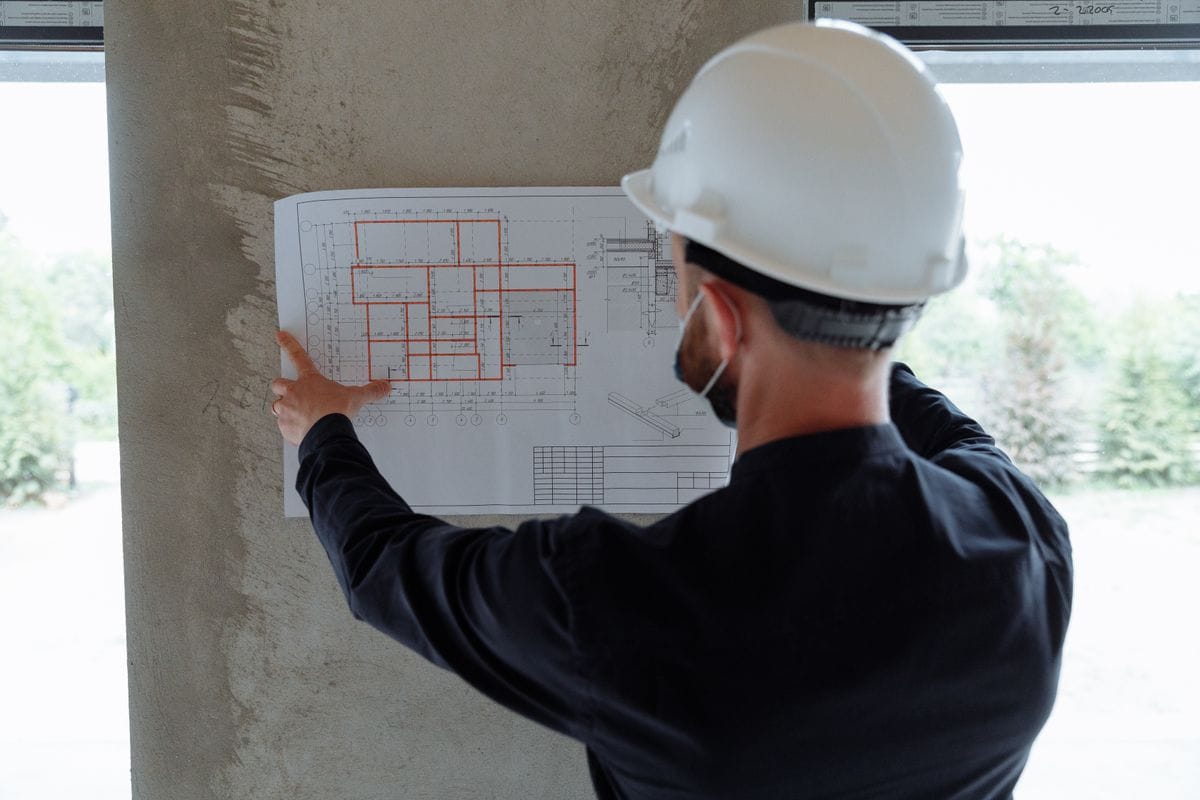
AI-Powered Takeoffs. Contractors upload plan PDFs and Foreman’s AI produces structured quantity takeoffs. This replaces manual measurement and counting, which is particularly time-consuming for remodelers and home builders who are running multiple smaller projects simultaneously and cannot afford to spend two hours on a takeoff for a $150,000 kitchen remodel.
Estimates and Proposals. From the takeoff, Foreman generates a scoped estimate and a professional client-facing proposal with one click. The proposal generation piece is underrated: small contractors regularly lose work not because they bid too high, but because their proposals look unprofessional relative to competitors who have invested in presentation. A polished, accurate proposal generated in minutes is a direct competitive advantage.
Contracts and E-Signatures. Integration of contract execution into the same platform removes the document management overhead of sending PDFs via email and chasing signatures on DocuSign.
Critical Path Scheduling. Foreman generates project schedules with automatic dependency calculation from the project scope. For a contractor managing subcontractors across multiple trades, a visual schedule that updates when dates change is the difference between coordinated execution and daily firefighting.
Invoicing and QuickBooks Integration. Progress billing, final invoices, and two-way sync with QuickBooks completes the financial loop. Getting paid faster is a cash flow imperative for small contractors, most of whom are financing their operations on thin margins.
Document Management. Plans, permits, photos, RFIs, and daily reports in one place rather than scattered across email, Dropbox, and phone photos.
The Market and the Incumbents
Foreman’s direct competitors are Buildertrend, CoConstruct (now part of Buildertrend), Jobber, and Houzz Pro. These are the tools currently serving residential builders and remodelers at the smaller end of the market.
The incumbent tools have a specific weakness that Foreman is positioned to exploit: they were built before large language models made AI-native construction workflows possible. Buildertrend was founded in 2006. Its AI additions are retrofits on a platform architecture designed for a different era. A from-scratch build in 2025 can design the AI layer into the product from the beginning rather than bolting it onto existing workflows.
The specific workflows where AI creates the biggest productivity gap are exactly the ones Foreman is targeting: takeoffs (where AI replaces manual measurement), proposals (where AI generates professional documents from scope data), and scheduling (where AI can calculate critical paths and flag conflicts automatically). These are the workflows where a 2025 build has structural advantages over a 2006 build.
What Small Contractors Actually Need
The underserved contractor market has a peculiarity that matters for product design: the person who evaluates and purchases software is also often the person running the job, managing the crew, and meeting with the client. They have no IT department. They do not have time to implement a complex platform. They will not sit through a multi-day onboarding.
Software that succeeds in this market has to work immediately, visibly save time on tasks the contractor does every week, and fit into workflows that are already in motion. The contractor running eight remodels does not want to restructure their entire operation around new software — they want something that makes the parts of their current operation that are painful less painful, immediately.
Foreman’s emphasis on speed — proposals in one click, estimates from plan uploads in minutes — reflects an understanding of this. The platform has to demonstrate value in the first use for a contractor who has tried three tools before and abandoned all of them because the time to value was too long.
The Two-Person Company Problem and Why It Matters Less Than It Sounds
At the time of YC’s Winter 2026 Demo Day, Foreman was a two-person team operating from San Francisco. This is not unusual for a YC company at Demo Day — many of the most successful YC companies have been two-person operations at the beginning of their public existence.
What matters more than team size at this stage is the question of whether the product works well enough, and whether the founder is the right person to sell it to contractors. Both questions appear answerable: Nolan Rossi’s construction background gives him credibility in conversations that a purely software-background founder would have to earn. And the construction software market for small contractors, while competitive, is not a market where incumbents are defending aggressively with AI-native products.
The W26 cohort is one of the most AI-dense in YC’s history — more than 60 percent of S25 companies explicitly referenced AI, and W26 skewed further in that direction. That context matters: a construction management platform built in 2025 by someone who grew up in the industry and trained at Amazon is a different product from what was possible when Buildertrend launched in 2006. The question is whether contractors who have been burned by overpromising software before will give another new entrant the chance to prove it.