Rayon shipped V4 on 12 November, adding a 3D canvas and an agentic AI to its browser-based 2D drawing tool. The date is the company’s own: Rayon’s V4 post, bylined to co-founder Stanislas Chaillou and dated 12 November 2026, says “V4 is available today to the thousands of companies already using Rayon”. AEC Magazine published a hands-on account on 18 November, written by Martyn Day, saying it had seen the new release ahead of launch; that account is the source for the demonstration detail below.
Both new capabilities ship in beta, and Rayon says so in the same post, setting out a 2027 ambition to “refine and bring 3D and AI out of beta”. Rayon’s site carries a BETA label on 3D; the agent’s beta status rests on that sentence and on the magazine, which writes that “Both capabilities launch in beta”.
That makes this the answer to a question this publication left open in September. When Rayon announced a €10 million Series A led by Partech in late September, the round funded a version of the product that had not shipped, and the piece ended by saying the thing to watch was “whether V4 arrives before the end of the year, and whether the agentic features in it operate on the geometry or merely alongside it.” It arrived with seven weeks of the year to spare. On the second half, the answer from the magazine’s demonstration is: on the geometry, in one direction.
The 3D, and Which Way the Changes Flow
The magazine opens by placing Rayon outside the main contest — “Much of the BIM 2.0 market is trying to take a piece of Revit, but Rayon has other plans” — and co-founder Stanislas Chaillou told it: “We’re going after the gap between AutoCAD and SketchUp.” The product stays pointed at interiors rather than at Revit’s territory — and Chaillou was blunt about that: “We absolutely don’t want to have it feel like Revit.” His stated complaint about conventional BIM, quoted in the piece, is that “you parameterise, you specify, you never really draw”.
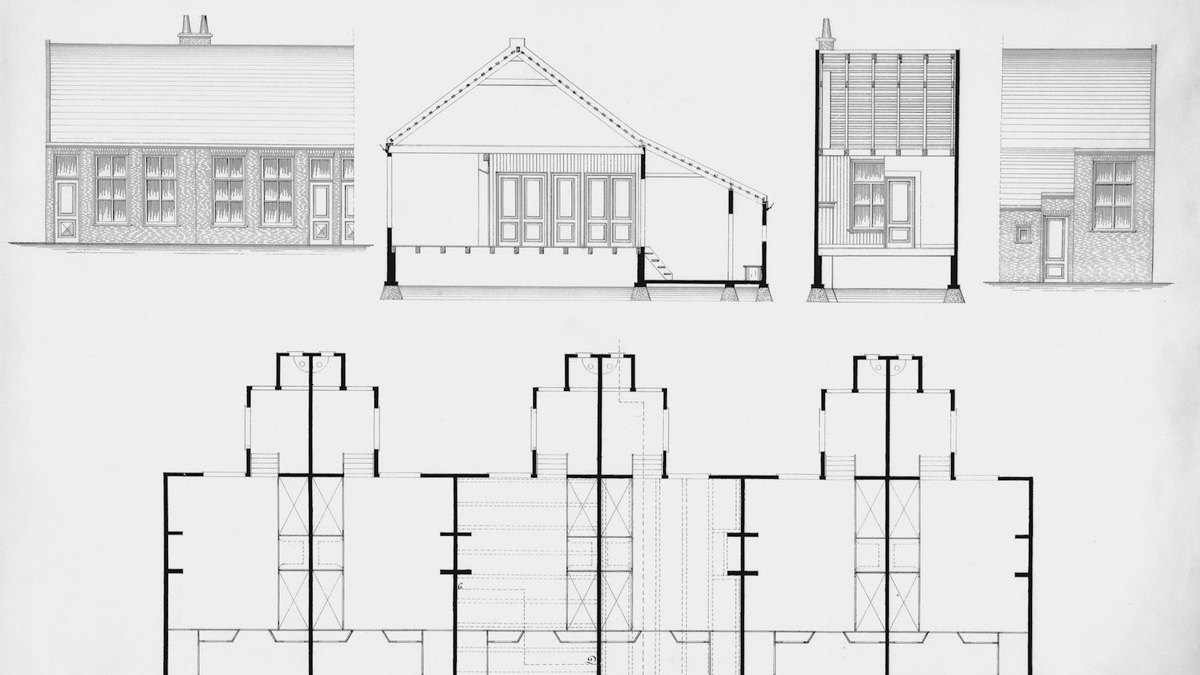
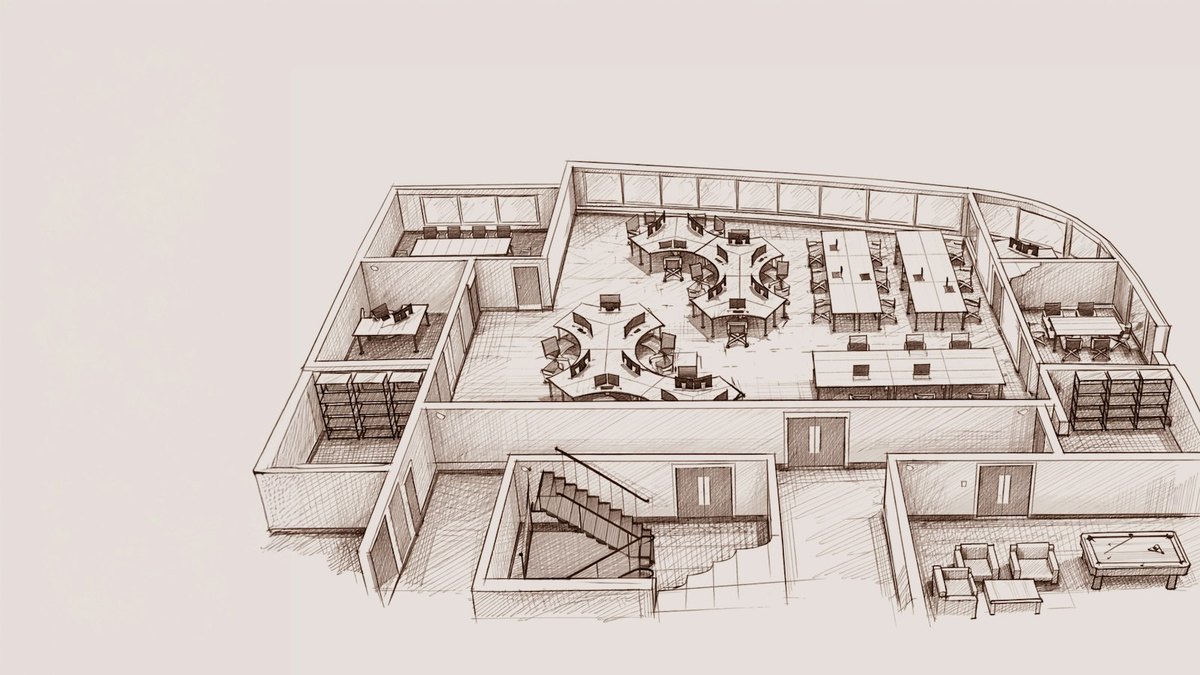
Mechanically, V4 uses what the magazine describes as a tuned AI to turn 2D floor plans into spatial models and generate individually editable 3D blocks, furniture included. Chaillou showed a 3D building with rooms, furniture and a patterned façade that he said had been generated in about 90 seconds; the magazine reports it was fully editable, with walls, openings and slabs alterable using modelling tools, and plans and sections updating from the 3D geometry.
The limit is specific, and the magazine asked about it directly. The magazine asked whether changing a generated section could update the model, and reports seeing changes flow from 3D edits into drawings but not the reverse. Wall assemblies and junctions are not compound build-ups; the magazine reports these are absent from both the 2D and 3D tools, with Chaillou suggesting that level of detail may appear in the first half of 2027.
V4 also adds an AI rendering studio that generates scene images and animates them into video, and mobile access that lets designers inspect plans, take measurements and comment on phones and tablets, with clients able to review presentations in the project.
The Agent, and the Request That Was Not on the Script
On the agent’s advertised scope, the magazine reports Rayon’s own list: turning imported PDFs into editable drawings, zoning and furnishing layouts, styling plans, assembling schedules and preparing presentation pages. Chaillou set the expectation himself — “I’m not telling you that I’m going to vibe model your building” — and described a target split of 80% prompt and 20% hand editing, with daily clicks cut from 10,000 to 1,000. The magazine files that as what it is: “That’s a target.”
One design decision in there is worth more than the feature list. The user can keep drawing while a longer AI task runs, which the magazine notes “matters when a small manual change is quicker than prompting an agent and waiting for the result.”
Two live tests followed. The first was Chaillou’s own; the second was the magazine’s, and AEC Magazine frames it in its standfirst as having “put its AI tools to an unplanned test”.
Chaillou asked the agent to place ceiling spotlights on a 2D floor plan, connect switches and wiring, and produce a table of components, quantities and cable lengths. It returned an editable network and a schedule. The magazine is careful about the status of that: “Neither electrical routing nor lighting-intensity mapping is in the V4 press release as a dedicated feature; these were examples of what the general agent would attempt.” Asked why the software could route wiring and count cable lengths while being unable to describe the construction of a wall, Chaillou’s answer was about his buyer, not his roadmap — for interior designers the priority is “anything that flows through the space, furniture, wiring, HVAC”, adding: “Later on we’ll please the architect, but you can’t please everyone.”
How it does this is the structurally interesting part. The magazine reports the agent draws on Rayon’s structured knowledge base, skills and online information, and that the agent “pretty much writes fresh code for each particular job instead of running a fixed routine.” On the electrical output’s compliance, the magazine’s account is that the layout could be checked against local electrical standards but that country-specific wiring conventions were not supported.
Then the magazine asked for something outside the demonstration: a map of lighting intensity across the rooms, to find areas too bright or too dark. “It’s the first time I do that,” Chaillou said before entering the prompt. The agent produced a colour-coded floor plan with a legend. “This is surreal,” he said.
The magazine’s assessment of that output is the sentence a buyer should read first: “There was no evidence of photometric calculations using actual luminaires, mounting heights or surface reflectances.” The map, it writes, “looked plausible, but we couldn’t establish whether it was right.” Chaillou’s own framing was no less candid — he compared AI to a bad student who offers an answer without having learnt enough, said “What I love about AI is that it’s shameless,” and cautioned: “I don’t want to say that it will replace your lighting engineer.”
For 2027 he described moving beyond a single sequential agent: “This is the first naive pass. You have one agent working sequentially with you, but the goal is to have a swarm.”
Why the Lighting Map Is the Story
This section is analysis.
The lighting map is not a defect in Rayon’s product. The magazine reports it is not in the V4 press release as a dedicated feature, Chaillou said in the demonstration that it was the first time he had asked for it, and he declined to claim it would replace a lighting engineer. That is the correct handling of an unvalidated output, and it is more candour than this beat usually gets.
What it demonstrates is a property of agentic CAD that the category has not yet settled. When an agent writes fresh code per request rather than calling a tested routine, the set of things the software will attempt stops being the set of things its developers implemented — and therefore stops being the set of things anyone has validated. The magazine states the resulting problem better than a paraphrase would: “Engineering information that only looks right is a liability until somebody can show how it was calculated.”
That is a provenance question, and it is the same one running through much of this newsroom’s product coverage this autumn. The vendors making progress on it are the ones attaching a method to the answer rather than only the answer — Linarc shipping Lia with a confidence level and a citation on every output, Newforma buying Lumi AI and making explainability the stated standard, Qapture building a tool that declines to answer when its scan data cannot support one. A general-purpose agent that will have a go at a lighting calculation is a different shape of risk from an assistant that will only answer within a scoped corpus. And the usual mitigation — a caveat in the launch material — cannot reach a capability the launch material never mentions.
None of that is an argument against what Rayon has built. It is an argument that the interesting regulatory and professional-liability questions in CAD are about to move from what software does to what software will try.
Pricing, and the Unknown in It
Rayon’s pricing page lists four tiers, and the AI allowance is part of the product rather than a footnote. Free gives one seat, 7-day version history, a limited block and style selection, “Welcome AI credits to get you started”, and no PDF, DWG or DXF export. Solo is $456 a year, shown as the equivalent of $38 a month, with unlimited version history, the full library of 10,000-plus blocks and styles, PDF, DWG and DXF export, and 1,000 AI credits a month. Studio is $984 a year for three seats, $82 a month equivalent, adding co-editing in the same model, shared team libraries and templates, live support and 3,000 AI credits a month shared across the team, with extra seats at $45 a month each carrying 1,000 more credits. Business, for five or more seats, is priced individually with a custom credit balance and a free admin seat.
AEC Magazine reports 3D is included across all tiers during beta, and names the open question precisely: “how far those credits go when generating models, drawings and visualisations, and what sustained AI use will add to the subscription cost.” Chaillou could not confirm the markup on tokens. That is a pattern worth watching across this category — a seat price that is legible and an AI bill that is not.
The Buyer, Not the Software
Chaillou’s market argument is the least technical part of the magazine’s account, and arguably the part with the longest shelf life. He has, the magazine reports, “little interest in targeting a handful of high-profile architecture firms” — “That’s not my fight” — and framed the distinction as being about demand rather than product category: “I’m not talking about a class of software. I’m really talking about a class of buyers.”
The example he gave was a Paris co-working company with 250 employees of whom 120 need design software. His estimate, reported by the magazine, is that perhaps 100 architectural practices worldwide have seat counts like that, against 20,000 to 30,000 comparable interior and brand businesses. That is his figure rather than a market study, and it is reported here as his.
On traction, the magazine reports that Rayon “claims its platform is used by thousands of businesses, including Virgin Atlantic, Goldbeck, JLL and Amazon” — a company claim relayed by the magazine, and treated as such here. Rayon’s own customers page backs the shape of it: the page is headlined “The design software behind thousands of companies” and runs a logo wall whose alt text names Virgin Atlantic, Amazon, JLL and Goldbeck alongside Carlsberg, Unibail Rodamco Westfield, Joe and the Juice, Numa and Colonies. The customers it documents with full published case studies are smaller operators: the co-living businesses CityHub and Coloc, the furniture supplier Live Light, the co-working businesses Morning and The Engine, SEG architects in Berlin, Studio Kestrel, Charlie Luxton Design and the designer Adrien Dupuy.
The magazine’s conclusion is that the 3D work “changes the scope and scale of the product”, that it is “beautifully executed”, and that whether the AI-assisted modelling and conversion are dependable enough for daily use “is now for customers to establish”. On the broader bet it asks whether the next generation of CAD still needs thousands of predefined commands each written and tested by its developer, “or will a lightweight modelling environment and increasingly capable AI do much of the work?” Its answer about Rayon’s position is one sentence long, and it applies to rather more of this market than one French company: “Rayon is betting on the latter. It is unlikely to be the only one.”